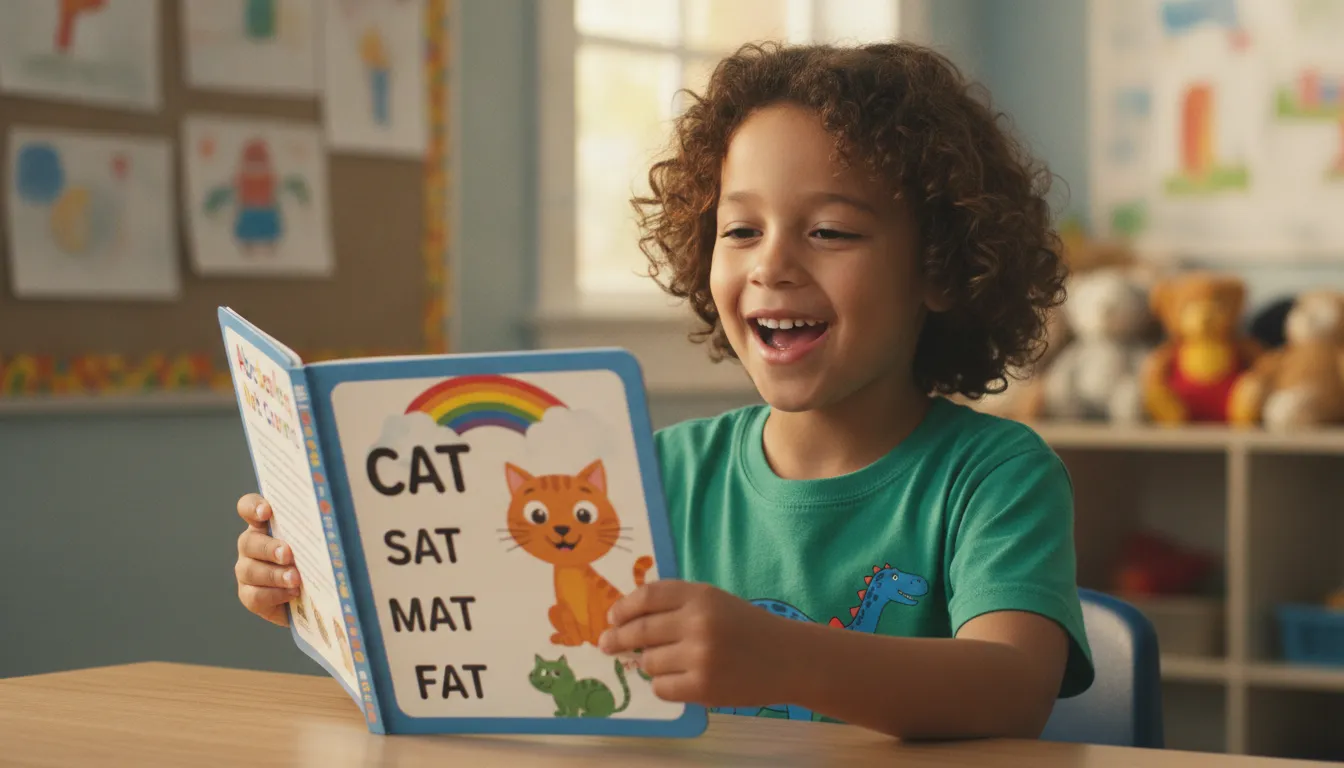
Many children struggle to read smoothly even after they learn basic letter sounds. When a child stumbles over every word, reading feels like a chore instead of an adventure.
Reading fluency practice helps children read with speed, accuracy, and proper expression so they can focus on understanding the story. While word recognition is vital, building automatic habits requires structured oral practice with controlled texts. Research from the National Institute of Child Health and Human Development shows that guided oral reading with feedback is the most effective way to help young readers improve. With regular, short practice sessions, kids can bridge the gap between sounding out individual words and grasping the full meaning of a book.
Helping your child or students reach this level of confidence does not have to be a mystery. To get started, it is helpful to look at the exact skills your child needs to build. Let us explore What Is Reading Fluency and Why Does It Matter? to find out.
When a child begins to read, they often focus all their energy on sounding out words. They stop at each letter, blend the sounds, and slowly piece the word together. While this step is a needed part of learning, it is not the final goal. To truly understand what they read, students must shift from basic decoding to fluent reading.
According to the National Institute of Child Health and Human Development, fluent readers can read text with speed, accuracy, and proper expression. This means they do not stumble over words or read in a flat tone. Instead, their reading sounds like natural speech. They group words into phrases and pause at commas and periods. This skill is one of the five core pillars in the Science of Reading framework.
Why is fluency so critical for young learners? Research shows a close relationship between reading fluency and reading comprehension. When a child reads too slowly, their brain is too busy decoding individual letters. They have no mental space left to think about the story. Fluent reading frees up the mind. Once word recognition becomes fast and automatic, the brain can focus on the meaning of the text. This makes reading fluency practice for struggling readers an essential step in their growth.
Despite its importance, fluency is often neglected in classroom instruction. Many reading programs focus on phonics or comprehension but skip the practice needed to link them. This gap has serious results. Studies show that about 44% of fourth graders are disfluent, even when reading basic grade-level books. Without targeted help, these students will continue to struggle as schoolwork gets harder. Explicit fluency instruction is not an extra task, but a needed key to successful reading development.
To help children build strong reading skills, we must look at what makes up reading fluency. Fluency is not just about reading fast. Research from the National Institute of Child Health and Human Development shows that true reading fluency has three distinct parts. These parts are accuracy, rate, and prosody. When a child masters all three, their reading becomes smooth and natural.
Accuracy means reading words without making mistakes. It is the first and most critical step in building fluency through decoding practice. If a child stops to guess or struggle with letters, they cannot focus on the story. To read with accuracy, children need a strong phonics foundation. They must learn how to connect sounds to letters so they can decode new words with ease.
Rate refers to how fast a child reads. This is not a race to see who can finish first. Instead, a fluent reader maintains a steady pace that matches the flow of spoken language. When a child reads too slowly, they often forget the start of the sentence by the time they reach the end. Practicing with controlled, decodable text helps children increase their speed without losing their grasp on the words.
Prosody is the ability to read with expression, proper phrasing, and correct tone. It is how a child raises their voice for a question or pauses at a period. Prosody shows that a child understands what they read. When children read like they speak, they can group words into meaningful phrases. This expression bridges the gap between basic word recognition and deep comprehension.
These three parts of reading must develop together. If a child reads fast but makes many mistakes, they are not fluent. If they read every word correctly but in a flat voice, they will miss the meaning. Fluent reading serves as a vital bridge. It connects simple word recognition with deep comprehension. When we guide kids through practice reading fluency with decodable books, we give them the tools to master all three parts at once.
To check if your reading fluency practice for struggling readers is working, you must learn to measure it. Experts look at how fast and how well a child reads. This is called Words Correct Per Minute, or WCPM. Measuring this score tells you if a child needs more help with basic phonics or is ready for harder books.
You can run a quick test with any book the child is reading. Set a timer for one minute. Let the child read aloud until the timer stops. Mark any words they miss, skip, or struggle with for more than three seconds. When the timer goes off, count the total words they read. Subtract the mistakes from that total to get their WCPM score. The National Institutes of Health provides research on how these skills build strong reading comprehension in young children.
Once you have a score, you can compare it to national norms. Educators use the 2017 study by Jan Hasbrouck and Gerald Tindal to track student progress. By the end of the year, children should meet the target scores for their grade level. A child who meets these targets can focus on understanding the text rather than sounding out words.
| Grade Level | End-of-Year Target (WCPM) | Accuracy Target Rate |
|---|---|---|
| First Grade | 60 WCPM | 90% to 95% |
| Second Grade | 100 WCPM | 90% to 95% |
| Third Grade | 112 WCPM | 90% to 95% |
Speed is not the only goal. A child must read with 90% to 95% accuracy to truly master a text. If accuracy is too low, the book is too hard. In that case, you should shift to practice reading fluency with decodable books that match their phonics level. With four to six readings of the same text, most students will reach their grade-level targets.
Research shows that reading a text multiple times is a highly successful way to build strong reading habits. When a child reads the same passage again and again, they stop struggling with hard words. Instead, they begin to read with ease. This method is called repeated oral reading, and it is a key tool for improving how children read.
To get the best results, children should not practice alone. Guided repeated oral reading gives kids the direct feedback they need to correct mistakes. A teacher or parent can model good reading first. When a child hears how a fluent reader sounds, they learn where to pause and how to use expression. This guided feedback ensures that the student does not repeat mistakes during reading fluency practice for struggling readers who are working to build their skills.
You can use a simple, structured routine to guide your child through repeated reading. Reading the same text four to six times is usually enough to see real growth. This routine builds a bridge between slow word recognition and deep understanding of the story.
This systematic strategy works because it takes the stress out of decoding. When a child does not have to focus all of their energy on sounding out words, they can focus on the meaning. Using a structured three-read routine makes practice reading fluency with decodable books an easy and highly helpful daily habit.
Effective reading instruction must include classroom routines that help students read with ease and expression. Under the Science of Reading, reading fluency practice is not just about speed. It connects phonics skills to deep comprehension. Using structured routines during daily lessons helps build these vital skills.
Classroom teachers can achieve great success by focusing on small groups. Small-group instruction is a highly powerful setting for targeted learning. It lets teachers hear each child and give prompt feedback. In these groups, children can practice reading fluency with decodable books that match their phonics knowledge. This targeted support prevents frustration and keeps children moving forward.
Teachers must recognize that beginning readers and struggling readers have different needs. Beginning readers need first-time instruction that follows a logical, systematic phonics scope and sequence. They learn to blend sounds into words step by step. On the other hand, struggling readers often need remediation to fill specific gaps. For these students, focused reading fluency practice for struggling readers helps them rebuild key decoding skills.
To keep students active and engaged, teachers can use several core routines. Guided oral reading with feedback is a highly effective way to build skills. Paired reading allows two students to take turns reading text to each other. Choral reading, where the whole class reads aloud in unison, builds confidence. Radio reading and reader’s theater also turn oral reading into a fun, shared task. These engaging reading fluency practice activities give children many chances to hear and model fluent speech.
Classroom materials should support both teacher-led instruction and independent student practice. During teacher-led time, the instructor models fluent reading and guides the students through new texts. During independent practice, students read controlled, decodable texts on their own. These texts reinforce taught phonics skills. This balance ensures that students get the direct help they need while also building the stamina to read on their own.
Bringing reading practice into your home does not have to feel like schoolwork. Parents and homeschooling families often seek simple reading fluency practice routines that fit into daily life. By making practice regular, you can help your child build skills in a way that is both effective and enjoyable. The goal of at-home practice is to make reading a natural part of your family day.
Fluency needs are unique, so it helps to know your child’s current level. Beginning readers are still learning to match letters to sounds. They need controlled texts to build a strong foundation. On the other hand, struggling readers need targeted remediation to fill phonics gaps. Matching your practice to these specific needs ensures your child gets the right support without feeling overwhelmed.
There are many easy ways to practice reading aloud together. You can try echo reading, where you read a line with proper expression and your child reads it back to you. You can also pair a printed book with a high-quality audiobook so your child hears fluent reading. For kids in the early grades, the goal is natural speech. Experts suggest that second graders should read text the way they talk, which helps them transition from naming words to understanding stories.
Building strong skills requires regular work. Steady work is key to making reading smooth and natural. To keep practice low-stress, you can try engaging reading fluency practice activities that focus on short, daily sessions. Using decodable books for independent practice is a great choice because they use words your child can already sound out. This builds confidence and keeps reading fun.
When young learners begin reading, they must learn how to connect letters to sounds. This basic skill is called decoding. But to understand a story, kids must read words with speed, accuracy, and proper expression. This skill is known as reading fluency. The National Reading Panel reports that reading fluency is built on a strong phonics foundation and practice with controlled text. This is where decodable books play a major role in your daily practice reading fluency with decodable books routine.
Traditional leveled books often use words that kids cannot sound out yet. This forces young readers to look at pictures and guess words. Guessing does not build real reading skills. In contrast, decodable books only use phonics rules that children have already learned. When kids read books with controlled text, they can sound out every word with success. This regular practice builds deep letter-sound habits. It is the first step toward fast and automatic word recognition. You can learn more about how building fluency through decoding practice helps kids connect phonics rules to real reading.
Children learn to read at different speeds, and their needs change as they grow. Beginning readers need simple texts that match their very first phonics lessons. This first-time instruction builds confidence from the start. But some older students miss key phonics steps. These struggling readers need targeted remediation to fill in their learning gaps. Decodable books work well for both groups because they offer clear, graded steps. Teachers and parents can use these texts to target specific phonics gaps. This focused approach makes reading fluency practice for struggling readers both simple and effective.
At first, sounding out words is slow and takes a lot of mental work. Kids must focus all their energy on decoding each letter. They have no mental space left to think about what the story means. Decodable books help kids cross this bridge. When kids read the same phonics patterns over and over, they stop struggling with individual words. They begin to read whole phrases with a natural rhythm. This repeated success allows them to read faster and with better expression. Once word recognition becomes automatic, they can finally focus on the meaning of the text.
Reading fluency is the ability to read a text with speed, accuracy, and proper expression. According to the National Institute of Child Health and Human Development, fluent reading is a key bridge to reading comprehension. When children read fluently, they can focus their minds on understanding the meaning of the words rather than just sounding out each letter.
Families can practice by reading aloud with their children every day. Using controlled, phonics-based books helps children build confidence. It is best to have the child read the same short story four times to improve speed and expression. Keep these sessions short and fun to build good habits, as regular practice is key to growth.
Fluency has three main parts: accuracy, speed, and expression. Accuracy means reading the words correctly. Speed means reading at a natural pace. Expression means using the right tone of voice. A study by the National Reading Panel shows that guided oral practice with feedback is the best way to develop all three skills.
Repeated reading is a proven method where a child reads the same passage multiple times. This technique helps children recognize words faster and decodes them with less effort. Research supported by the federal government shows that repeating a text improves word recognition, oral reading rate, and overall comprehension skills.
Without the right practice, children who struggle to decode can fall behind their peers quickly. This gap grows wider each year, making reading feel like a chore instead of a joy. Starting today with structured phonics practice helps children build confidence and master critical reading skills before frustration sets in.
Ready to browse our decodable books to build reading fluency? We invite you to browse our decodable books to find the perfect phonics resources for your home or classroom today.