Mid-July is the perfect time to transform summer boredom into shared learning experiences. While the “summer slide” is a common concern, you can protect foundational literacy by making reading a natural, joyful part of your daily adventures. As noted by the Child Mind Institute, consistent access to print helps maintain hard-won skills throughout the break.
The best part is that you don’t need to replicate the classroom at the kitchen table to sneak reading into summer. Summer offers the perfect freedom to weave foundational literacy into the activities your child already loves. You can sneak reading into summer by turning everyday moments into empowering learning experiences. This approach protects your child’s confidence, fuels their natural curiosity, and keeps those early reading skills sharp while creating wonderful, low-stress memories together.
Before diving into the “how,” it is important to understand why this mid-summer window is so crucial. Reading is not a natural milestone like walking; it is a complex cognitive skill that requires consistent practice to maintain neural pathways. When a child takes a complete multi-month break from text, several things happen quickly:
Words that your child spent all spring mapping to memory suddenly require intense effort to decode again.
Complex rules—like vowel teams or r-controlled vowels—are often the first to fade when not explicitly practiced.
Returning to school in the fall only to find that reading feels harder than it did in June creates immediate frustration.
Research from Reading Rockets confirms that creating low-stakes, consistent access to print is the most effective way to protect these hard-won skills. The goal isn’t hours of heavy studying. Instead, just 10 to 15 minutes of embedded literacy interaction each day keeps the brain primed for the upcoming school year. Here is how you can sneak reading into summer:
The kitchen is a goldmine for functional literacy. Cooking requires step-by-step sequencing, precise interpretation, and close attention to print—making it an ideal environment to practice early reading skills.
Instead of reading the recipe yourself, pass the cookbook or tablet to your child. Have them act as the “Head Chef’s Assistant,” whose job is to read the instructions aloud.
Have them read the labels on ingredients. Look for simple consonant-vowel-consonant (CVC) words on cans or jars, such as salt, jam, or milk. Have them point out the initial sounds or identify basic sight words on boxes.
Let them tackle the actual steps of the recipe. This provides excellent decoding practice for multisyllabic words and structured vocabulary like blend, whisk, measure, and temperature.
If your child hits a tricky word, don’t just give them the answer. Encourage them to look at the vowels, look for recognizable syllable patterns, and blend the sounds together from left to right. This reinforces structured literacy methods right on the kitchen counter.
Running errands like grocery shopping or trips to the hardware store can feel like a logistical hurdle in July, but they double as highly effective reading environments. “Environmental print“—the print we see all around us on signs, labels, and billboards—is one of the earliest tools children use to bridge the gap between spoken language and written words.
To turn a grocery trip into an engaging game, try a Target Sound Scavenger Hunt. Give your child a specific phonics target based on what they learned during the school year.
By turning word recognition into a competitive hunt, you provide meaningful cognitive processing without a single book in sight.
If you want to sneak reading into summer routines daily, you need to put text where your child’s eyes naturally wander when they are bored. Two of the best places for this are the back seat of the car and the bathroom counter.
Replace the digital tablets during short car trips with print materials that have high visual appeal and low-density text.
Do not dismiss these as “not real reading.” The pairing of illustrations with text bubbles provides exceptional contextual support for struggling readers and builds narrative comprehension.
Magazines like Highlights, National Geographic Kids, or The Week Junior feature short articles, fun facts, and text features like captions and diagrams that keep attention spans engaged.
Reading a joke requires precise decoding and proper phrasing (prosody) to deliver the punchline correctly. Your child will willingly reread a joke three or four times to perfect the delivery for an audience, which is excellent, self-motivated fluency practice.
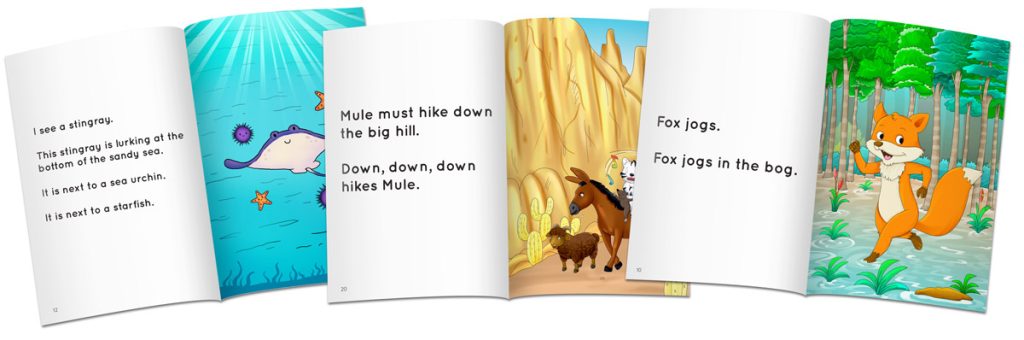
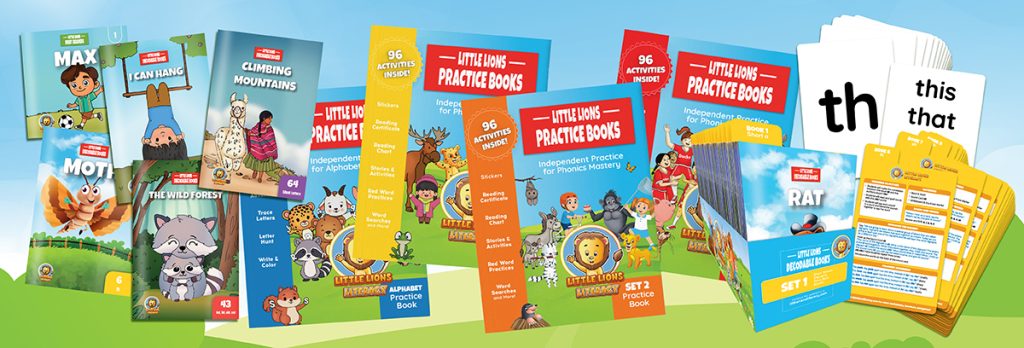
These are perfect for independent reading. Because their split-page layout separates text from illustrations, they encourage children to focus on decoding instead of guessing, making Little Lions Decodable Books an excellent, low-pressure option for car rides or downtime.
One of the most common mistakes parents make is stopping read-alouds as soon as their child learns to decode independently. However, according to experts at the Child Mind Institute, reading aloud to older children is one of the best ways to build high-level vocabulary, model oral reading fluency, and develop complex listening comprehension.
A child’s listening comprehension level is typically much higher than their independent decoding level. When you read a rich, complex chapter book aloud at bedtime, you expose them to sophisticated sentence structures and background knowledge that they cannot yet access on their own.
To make it interactive:
Read a sentence with expressive phrasing, then have your child “echo” it back to you, tracking the print with their finger.
Pause at cliffhangers and ask open-ended questions: “Based on what we know about this character, what do you predict they will do next?”
Pick a specific rule, like the short e sound. Tell your child to gently tap your arm whenever they hear a word featuring that target sound.
Curious about how to spot specific reading gaps before the school year starts? Check out our guides on structured literacy at Little Lions Literacy to find practical, evidence-based strategies tailored for early readers.
On those hot afternoons when energy is running high, you can sneak reading into summer by moving the literacy work outside. Using physical movement helps kinesthetic learners map language concepts into their brains much more effectively than stationary reading.
Grab a pack of sidewalk chalk and turn your driveway into an interactive word map.
Draw a standard hopscotch grid, but fill each square with a specific vowel team (like ai, oa, ee, ea) or a blend your child found difficult during the school year. To step into a square, your child must say the correct sound and name a word that uses it.
Write 6 to 8 words your child is working on inside chalk circles on the ground. Give your child a wet sponge or water gun. Call out a word, or give a phonetic clue (“Splat the word that has a short i sound and ends with a blend!”), and let them splash the correct target.
Using these highly active physical games bridges summer play with essential orthographic mapping skills, all while burning off extra energy.
Turn a trip to the local park, a hike, or even a backyard fort-building afternoon into an interactive reading challenge. Instead of bringing books, have your child “read” the environment using a custom-made guide or checklist.
Create a simple checklist of things to find: “a sign that says ‘Do Not Pick’,” “a label on the trash can,” or “a map at the park entrance.”
If they are building an outdoor fort, have them read the “blueprints” (you can sketch a simple diagram of the structure with labels like base, roof, door, and support). Reading labels on materials or following simple written steps for the construction provides authentic decoding practice in a high-engagement setting while at the same time you will sneak reading into summer.
Museums are incredible environments for functional literacy, as they are filled with descriptive text that is both educational and engaging.
Turn every exhibit into a reading challenge. Ask your child to read the plaques to find specific information, like a date or a fun fact about the display.
Before you start exploring, create a simple list of keywords or topics you expect to see. Have your child hunt for those words within the exhibit descriptions.
Put your child in charge of navigation. Hand them the museum map or visitor guide and have them read the layout, legend, and directions to lead the way through the galleries.
Turn reading into an anticipated summer event by hosting a “Read-It, Watch-It” challenge. This strategy leverages the excitement of a movie night to provide a powerful incentive for finishing a book, while also developing critical comparison and analysis skills.
The process is simple and highly engaging for readers of all levels:
Choose a book that has a well-known movie adaptation. For younger readers, consider The Bad Guys or The Lorax. For older children, classics like Harry Potter or The Chronicles of Narnia are excellent choices.
Set a goal to finish the book first. You can read it aloud as a family or have your child tackle it independently if they are ready for the decoding practice.
Once the book is closed, host a special movie night. Afterward, spend a few minutes discussing the differences. Ask: “What did the movie leave out? Did the characters look how you imagined while reading?” This reinforces narrative comprehension and visualization skills in a fun, celebratory way while at the same time you will sneak reading into summer.
Visiting the library should be a highlight of the summer, not another chore on the checklist. To truly sneak reading into summer routines daily, you must empower your child with independent choice. Rather than focusing on “level-appropriate” constraints or playing games like Book Bingo, which can make reading feel like a performance, let your child explore the stacks freely.
Allow your learner to gravitate toward what genuinely interests them, whether that is graphic novels, niche hobby magazines, or non-fiction books about dinosaurs or space. When a child chooses their own material, their internal motivation to decode and understand the text increases significantly, preserving their early reading skills through authentic enjoyment rather than forced drills.
Sometimes the best way to get kids writing and reading is to make it a game of mystery. Set up a dedicated “mailbox” area in the kitchen or hallway.
Leave sticky notes for your child with clues for a surprise, instructions for a fun activity, or just a sweet message. Encourage them to leave notes back for you.
Before heading out, have your child write the “To-Do” list for the day or the shopping list. It doesn’t have to be perfect—the goal is to get them writing for a real purpose and reading their own work back to you. This builds orthographic mapping through meaningful, functional writing while at the same time you can sneak reading into summer routines.
You don’t need to turn your home into a structured classroom or engage in daily arguments over worksheets to protect your child’s hard-won literacy progress. When you intentionally sneak reading into summer routines, you transform everyday moments—like making lunch, running errands, or playing outside—into powerful, low-stress opportunities to reinforce early reading skills. Keep the interactions light, focus on consistency, and choose active engagement over tedious drills. By making text a natural, stress-free part of their summer environment, your reader will head back to school in the fall feeling confident, capable, and ready for the year ahead.
Curious about how to spot specific reading gaps before the school year starts? Check out our guides on structured literacy at Little Lions Literacy to find practical, evidence-based strategies tailored for early readers.
Ready to take these summer strategies a step further? Little Lions Literacy provides evidence-based, practical guides designed to help your early reader build lasting confidence and skills at home. Whether you’re looking for decodable resources or structured phonics support, we’re here to help make literacy a joyful part of your family’s routine. Explore our full library of resources and expert tips at Little Lions Literacy today.
Don’t push standard books if it causes constant arguments. Instead, pivot to alternative text formats. Graphic novels, audiobooks paired with print, interactive video game text, recipes, or building instruction manuals (like LEGO booklets) all provide authentic reading opportunities. The goal is to keep them processing print, regardless of the format while at the same time you can sneak reading into summer.
Aim for 15 to 20 minutes of total literacy engagement per day. This does not have to happen all at once. Five minutes of reading signs in the grocery store, ten minutes of a bedtime read-aloud, and five minutes of playing a phonics game on the driveway counts toward their daily total. Consistency is far more powerful than duration.
Word-guessing usually happens when a child lacks confidence in their tracking skills. Instead of letting them guess, use a blank index card or your finger to cover up everything except the first vocal unit (grapheme). Guide them to look closely at the letters from left to right, sounding out each part before blending the whole word together. If they continue to struggle, incorporating targeted phonics instruction alongside high-quality [decoding practice] resources can help retrain their eyes to track words sequentially.
It’s natural to worry about screen time, but total restriction often backfires. Instead of viewing it as a binary choice between ‘screens’ and ‘reading,’ focus on balanced digital consumption. Use digital tools strategically—like pairing a favorite movie with the book it’s based on, or listening to audiobooks while coloring. This keeps them engaged with narrative and language, even if they aren’t holding a paper book.