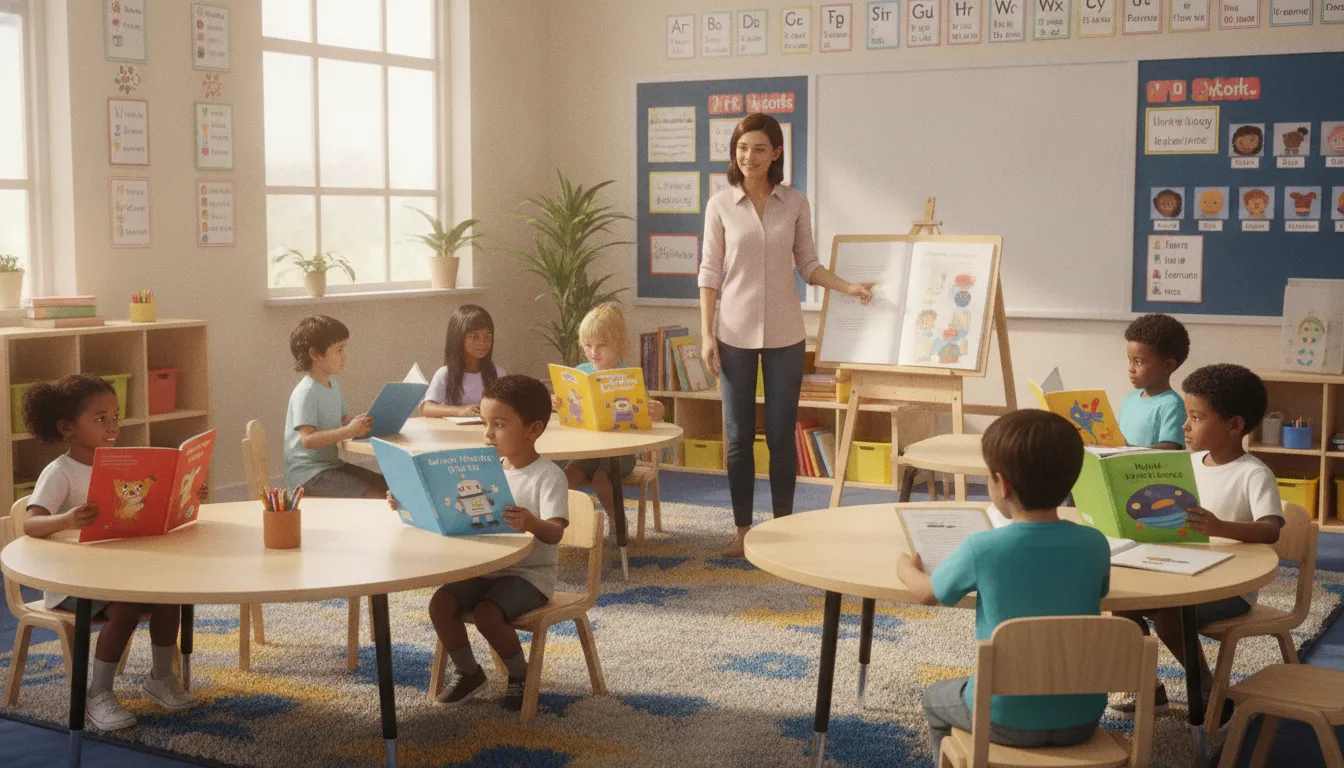
Pairing UFLI lessons with decodable text is one of the most effective ways to build strong foundational reading skills. If you are looking for certified, Science of Reading-aligned resources, browse our decodable books now.
UFLI lessons provide an explicit and systematic way to teach foundational reading skills to students in primary grades. To maximize the impact of this teaching, teachers should pair every lesson with highly aligned decodable text that matches the program’s specific scope and sequence. The UFLI Foundations program introduces extra decodable passages starting in lesson 8 to help children practice new concepts and review old ones at the same time. According to UFLI Foundations, this routine helps students build automaticity and improves their reading comprehension over time. By using more decodable books that follow the same phonics progression, teachers can give students the extra repetition they need to reach mastery of each new sound. This intentional pairing ensures that students apply what they learn in their phonics block to real reading tasks every day.
Teachers often wonder how to move from whole class instruction to independent reading without losing the focus of the lesson. Finding the right balance between direct teaching and student practice is essential for building strong readers. This article covers why pairing matters, how to integrate passages into the UFLI routine, and where to find the best decodable books for your classroom.
Pairing UFLI lessons with decodable text ensures students apply newly taught phonics skills immediately in connected reading. This practice builds automaticity, comprehension, and reading confidence by giving learners text they can actually decode.
The UFLI Foundations program works best when kids read real books that match their daily work. These lessons teach kids how to link sounds to letters in a clear way. But learning the rules is just the start of the path. To become good readers, kids must use those skills in real stories. Decodable books act as a bridge from the lesson to smooth reading. When kids see the same patterns in a book, the lesson feels real and useful.
The UFLI Foundations program is a step-by-step way to teach core reading skills. It follows a path from simple sounds to hard ones. You should pair these ufli lessons with text that matches what you just taught. This helps kids see why they do the work. They do not have to guess at words they do not know. Instead, they use the phonics they just learned to read each part of the story. This builds trust in the rules and helps them feel like real readers.
Matching the text to the lesson means the child is never asked to do what they cannot do. In some classes, kids face books with sounds they do not know. This leads to stress and a lack of focus. With UFLI, the text is a safe place to practice. Every word is a chance to show that they know their letters and sounds. This success is what keeps young learners glad to come back to the table for the next day of phonics work. For teachers who need materials that follow this exact sequence, our decodable books for UFLI are built to match each lesson step.
Reading decodable passages helps kids build word-level speed. This speed is what experts call automaticity. When a child can sound out words fast, they do not struggle with each letter. This lets the brain focus on what the story says. These ufli lessons use lots of practice to make these skills stick. Reading linked text makes sure kids can use their skills in long books without getting stuck. It turns new skills into habits that last for a long time.
Speed is not just about moving fast. It is about how easy the work feels to the child. When sounding out words is slow, it is hard work. When it is fast, it feels like fun. By pairing the right books with the right lessons, we help kids reach that state of ease much sooner. They start to know words by sight after seeing them in stories. This mix of phonics and practice turns a slow reader into a fast one who loves books.
Some think phonics is just about sounds, but it leads to a better grasp of the text. The University of Florida says these texts help kids know what they read. If a child spends all their time sounding out words, they forget the plot. By using books that fit their ufli lessons, kids can enjoy the tale. They feel happy when they finish a book on their own. This win builds the heart to try harder books as they grow. It shows them that reading is more than school work.
When kids can read words with ease, they can think about the meaning. They can talk about the people and what happens next. This is the goal of all reading teaching. Pairing UFLI with the right text makes sure meaning is always part of the task. We are not just teaching them to bark at print. We are teaching them to think and learn from every page they turn. This builds strong learners who have the skills to succeed in all subjects.
The UFLI Foundations 8-step routine systematically moves students from phonemic awareness to connected text reading. Decodable passages are introduced in steps 7 and 8, where students apply new skills in real reading practice.
The UFLI-aligned classroom resources teachers use every day help children move from single sounds to whole words. This method follows a set path of eight steps. Each step builds on the one before it to make sure kids can read with speed and ease. Using ufli lessons in this way keeps the focus on clear and steady growth for every young reader.
Most ufli lessons begin with a quick review of sounds and blending skills. This fast warm-up helps kids get ready for the hard work ahead. Teachers use the first few steps to check what students recall from past days. This quick drill keeps the class on track and sets a solid base for the new concepts that come next in the day.
Steps five and six shift the class focus to a new phonics rule or sound. The teacher shows a new sound and then asks kids to build or map words with it. This work is a key part of the UFLI Foundations program which uses a planned approach to reading. Once kids can read these new words on their own, they are ready to try them in a short story.
Moving from words to text requires a steady hand and clear goals. Teachers must guide students to see how the rules they just learned apply to full sentences. This bridge between single sounds and real reading is what makes the routine so strong. It ensures that students do not just learn words by heart but truly know how to decode them.
The final part of the lesson plan is where students put their new skills to use. This stage is the most vital part of the routine for building real reading power. It pulls together the sounds, the rules, and the special words that do not follow the normal phonics patterns. By the end of this stage, students feel more sure of their skills.
Using this eight-step routine ensures that every child gets the right kind of help at the right time. It keeps the focus on phonics but also makes room for reading real stories. When you follow this path, you help your students become strong and skilled readers who truly love books. For more support with your daily routine, explore our UFLI-aligned classroom resources to find matching books and practice texts.
Regular use is the secret to success with these lessons. When teachers stick to the routine, students know what to expect and can focus all their brain power on the new sounds. This steady pace prevents gaps in learning and keeps the whole class moving forward together. It creates a safe space where every child can grow into a fluent reader.
Official UFLI passages are built into the daily lesson routine starting in Lesson 8, while supplemental passages provide extra practice with the same phonics skills across different stories. Both types follow the UFLI scope and sequence, but they serve different instructional purposes.
Good decodable books for UFLI are a key part of phonics work. In the UFLI Foundations program, teachers use two main types of text to help students build reading skills. These include the official passages built into the daily routine and extra texts used for more practice. Both options focus on matching the scope and order of the ufli lessons.
Official decodable passages are a core part of the daily schedule. Teachers first use these short texts at the end of UFLI Foundations lessons starting with Lesson 8. These passages serve as a bridge between learning a new sound and reading it in a story. They allow students to apply what they just learned in a safe way. This step is vital for building trust in their own reading skill.
The main goal of these texts is to build focus on specific skills. Each passage targets the new skill from the current day. They also mix in practice with skills from past lessons. This method helps students keep old facts while they master new phonics patterns. By reading these daily, children gain skill and see how sounds work together to form real words. It moves them from knowing a sound to using it in a full sentence.
Teachers often need more than one story to help every student win. Extra decodable passages provide the added practice needed to reach full mastery. These texts support the UFLI-aligned classroom resources that many schools use to fill gaps in learning. They offer new stories that use the same phonics skills but keep the reading fresh and fun for the child.
These extra tools are vital for long term memory. Research shows that extra passages help students use skills across different grade levels. If a student struggles with a specific sound, the teacher can use a new passage to provide a second look at the skill. This stops students from learning one story by heart. It forces the reader to use their decoding skills on new words that follow the same rules. This varied practice builds strong readers who can handle any book.
| Feature | Official UFLI Passages | Supplemental Options |
|---|---|---|
| When to use | End of every lesson | Extra practice or review |
| Lesson start | Begins at Lesson 8 | Used for any lesson level |
| Primary goal | Target new concepts | Repeat skills for memory |
| Text variety | One specific text per lesson | Multiple stories for one skill |
| Group type | Whole class or small group | Targeted help or centers |
Choosing the right decodable books means matching the text to your daily UFLI lesson sequence. Books should contain only phonics patterns students have already learned, with regular review of past skills for long-term retention.
Success in ufli lessons depends on high alignment between what you teach and what kids read. When a child learns a new sound, they need a book that lets them use that skill right away. If the text has too many untaught codes, the reader gets stuck. This leads to guessing, which breaks the phonics path. You must pick books that match the exact sequence of your daily routine.
Each lesson in the UFLI program builds on the one before it. In Lesson 8, teachers begin to use decodable passages to wrap up the work. These texts focus on the new concept while also using old ones. This mix helps kids keep their skills sharp. It is not enough to just give them a book. The book must fit the specific step in their learning.
Finding the right decodable books for UFLI ensures students stay on track. High-quality books do not skip ahead to harder patterns. They stick to the scope and sequence taught in class. This lets kids feel like they can win at reading. When they know the code, they feel bold. That joy helps them stay focused on the task. Our decodable book sets are designed to align with each stage of instruction.
Some kids need more time to master a skill. One short story may not be enough for every student to learn a new rule. This is where extra texts come in handy. Teachers can use supplemental stories to give kids more turns to read the same concepts. This helps them keep the facts in their long-term memory over time. It is a key part of the systematic approach to literacy.
Good supplemental books follow the same rules as the main ones. They keep the language simple and direct. They do not add strange words that might trip a child up. Instead, they give more practice with the heart words and new sounds from the latest lessons. This keeps the work hard but fair for every learner in the room.
The goal of using these books is to reach automaticity. This means the child can read words fast and without much effort. When they do not have to work so hard to sound out each word, they can think about the story. This shift leads to better comprehension. Research shows that reading decodable text builds both word-level and text-level fluency.
Teachers should watch how kids work with the page. If a student struggles with more than five percent of the words, the book may be too hard. In that case, you should go back to an earlier lesson text. This keeps the child from feeling bad about their work. It keeps the focus on the science of how we learn to read.
Scaffolding in small group reading means providing targeted support that gradually decreases as students gain independence. Teachers model decoding strategies, use direct prompts, and adjust support based on each student performance.
Scaffolding helps kids move from phonics drills to smooth reading. Good support makes sure each child can use new skills without stress. By using UFLI-aligned classroom resources, teachers give the right help to each student. This builds trust and leads to science of reading classroom success by making sure kids master each step. Explore our classroom sets for ready-to-use small group materials.
Teachers should first show how to sound out new words. Start by reading a sentence out loud. Point to each word as you go. This shows kids how to blend sounds from left to right. When a child hits a hard word, do not just give them the word. Instead, tell them to look at the letters and use their skills. This is a big part of UFLI Foundations, which is a clear and planned way to teach reading.
You can also use choral reading to build ease. In this way, the group reads the same text at once. It gives slow readers a safe spot while they hear the right pace and tone. As they get better, you can move to whisper reading. This lets you listen to each kid and give quick help. These small steps make sure no one gets lost during a lesson. Our set 2 decodable books are great for small group practice sessions.
Asking the right questions can guide a child to the right sound. If a kid stops on a word like chip, you can ask what sound the letters c and h make together. This keeps their mind on the rule instead of guessing from a picture. This work helps build text-level automaticity so that reading feels more natural over time.
Lists and charts can also serve as quick tools for kids. Keep a small card with new vowel sounds on the table. When a kid forgets a sound, point to the card to help them think of the rule. This tool helps their brain and lets them focus on blending the words. It is a simple way to keep the work moving while still giving help.
The goal of this help is to slowly take it away as the kid grows. Watch for signs that a child is ready to read on their own. If they can read three lines with no mistakes, you can step back. But if they start to guess, you should move back in to give more help. Constant check-ins let you meet the needs of each small group.
Write down what each kid finds hard during the class. Use these notes to plan your next work or to pick the best books. Changing your pace based on what you see is key to a good class. It makes sure every child gets the exact help they need to be a strong reader. Small shifts in how you teach can make a big change in how fast a child learns. For even more practice material, check our practice books collection.
According to the University of Florida, students start reading these passages at the end of each lesson beginning in Lesson 8. This practice builds skill at both the word and text levels. By reading these texts, children use the phonics skills they just learned. This step ensures that students move from learning sounds alone to reading them in a story. This move is vital for long-term memory. It helps kids become fast and sure readers.
Yes, many resources for these ufli lessons are available to download. Teachers can get printable materials and guides from the official site. These downloadable files include daily lesson plans, scope and sequence charts, and decodable passage booklets. Having these resources on hand makes planning faster and keeps the instruction aligned with the program.
A decodable passage is a short text that targets one specific phonics skill within a single lesson. A decodable book is a longer text that may cover multiple skills across several lessons. Both play an important role in UFLI lessons, but books provide more sustained reading practice. Our set 3 decodable books offer extended reading that builds stamina alongside phonics mastery.
Look for books that list the specific phonics skills and heart words they contain. Compare these to your current UFLI lesson scope and sequence. The best decodable books for UFLI only include patterns students have already learned. This keeps the reading experience positive and productive. Many publishers like Little Lions Literacy provide alignment guides to help you match books to lessons.
Most teachers use 2-4 decodable books or passages per lesson. One official passage provides the initial practice, while 1-3 supplemental books give students the extra repetitions needed for mastery and automaticity. Building a classroom set of decodable books ensures you always have enough variety for every small group.
Every day you teach a UFLI lesson is a chance to build a stronger reader. The right decodable books turn your phonics instruction into real reading success. Students who practice with aligned text master sounds faster, read with better speed, and understand more of what they read. Missing the right books means missing opportunities for your students to connect lesson skills to real reading. Finding decodable books for UFLI right away saves you time and keeps your lessons on track. Every day you wait is a lost chance to help a child become a strong reader. If you act now, you can give your class the best start for a lifetime of success.
Ready to discover certified, Science of Reading-aligned decodable books? Browse our full collection of decodable books online.