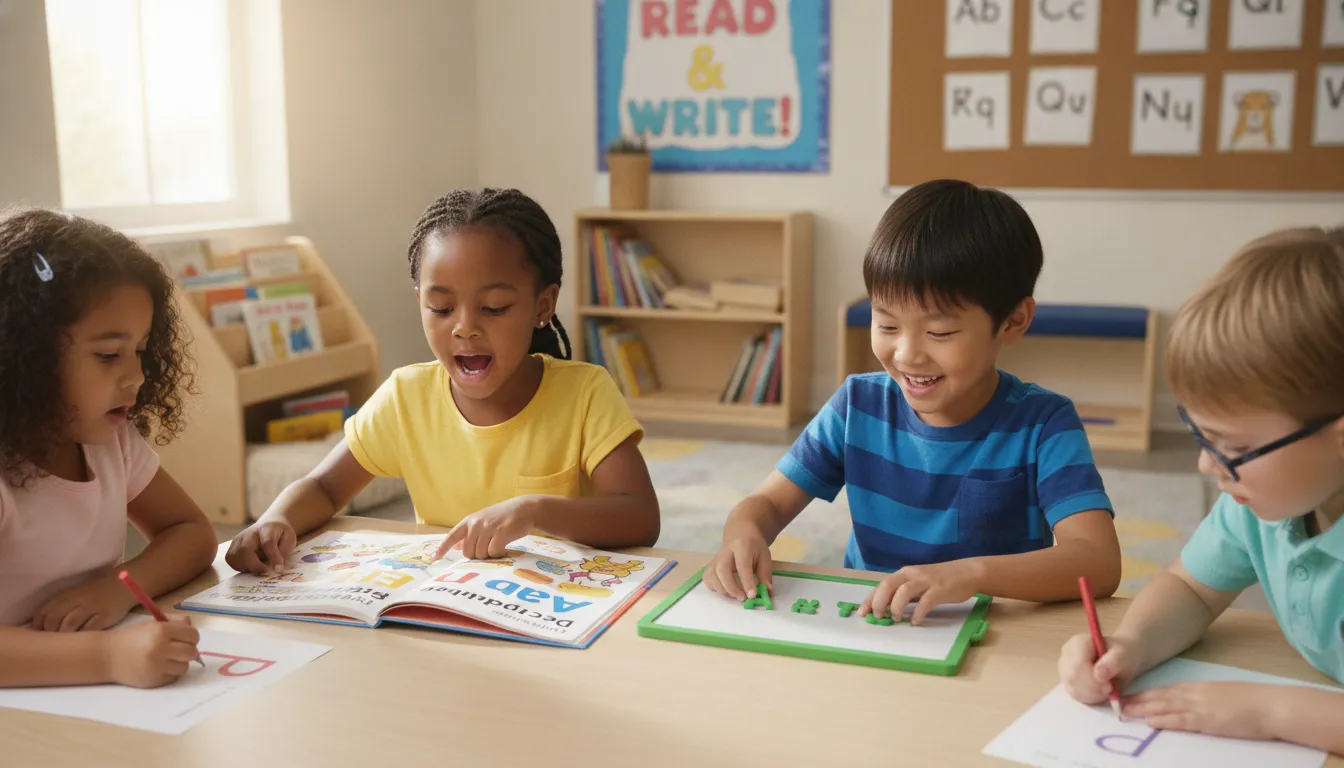
Learning to read needs more than just knowing a few sight words. At Little Lions Literacy, we believe children must link sounds to letters and letters to sounds. This skill allows them to tackle new books with confidence.
Ready to help your early learner succeed? Explore our Science of Reading Aligned Decodable Books today!
decoding vs encoding describes the two sides of the literacy coin that every child must master to become a fluent reader. Decoding is the act of turning printed letters into spoken sounds, which is the main skill needed for reading new words by sounding them out. Encoding is the reverse path where a child takes spoken sounds and turns them into written marks for spelling. While decoding is for reading and encoding is for writing, both rely on a shared base of letter-sound knowledge. The Massachusetts Department of Elementary and Secondary Education notes that decoding lets students find meaning in new words by using sound-symbol links. When children practice both skills together, they build a better grasp of how the English language works. This dual path helps them spot words faster and spell them with more ease.
Knowing how these skills fit together is the first step. To get the full picture, we must look closer at What Is Decoding? The Gateway to Fluent Reading. This basic skill is the base for all that follows, and the process works like
Decoding is the skill of turning printed words into spoken words. It is the tool that lets kids read new words by sounding them out. To do this, a child must use their knowledge of sound-symbol matches. The Massachusetts Department of Elementary and Secondary Education defines decoding as the act of turning print to speech. When a child knows this code, they gain the power to read almost any word they see.
The process of decoding relies on two main parts. First, a child needs to hear the small sounds in words. These sounds are called phonemes. Second, they must know which letters stand for those sounds. The phoneme grapheme mapping process helps kids link these two things in their minds. A child who can decode well uses these steps:
This skill works best when kids get systematic phonics instruction. This means they learn the rules of reading in a clear and plain order. They start with easy sounds and move to hard ones as they grow. This type of word work helps kids feel brave when they meet a new word. Instead of guessing, they use their tools to sound it out the right way. This builds a strong base for all future learning.
To fully know how kids learn to read, you must look at decoding vs encoding. While they seem different, they are two sides of the same coin. Decoding is how a child takes in print and turns it into sound. Encoding is a way of making words, which we call spelling. When a child encodes, they take a sound they hear and turn it into written letters. Both skills rely on the same knowledge of how sounds and symbols work together.
Practice in both areas makes the brain’s links much stronger. When a child learns to read a word, they should also learn how to spell it. This two-way street shows the child that the rules for reading and writing are the same. This base makes learning fast and good. By teaching both together, we help kids become better at both reading and writing.
Strong decoding is the key to smooth reading. Being fluent means a person can read fast and with the right tone. When a child can decode words with ease, their brain is free to do other work. They can focus on what the story means instead of how to say each word. The Mass DOE notes that fluent reading comes from strong phonics and word recognition.
If a child struggles with decoding, they often have a hard time knowing what they read. They spend so much work sounding out words that they lose the meaning of the story. Using decodable vs leveled readers can make a big difference during this critical phase. That is why early help and clear lessons are so vital. Giving kids the tools to decode well opens a world of stories. We help them move from just sounding out words to truly loving to read.
Encoding is the way we turn spoken language into written text. When a child hears a word and writes it down, they are using this skill. It is the base of spelling and writing. Think of it as the path from your ears to your pencil. To write a word, you must take the sounds you hear and turn them into marks on a page. This way of working is the reverse of reading, or decoding. Both are basic parts of learning to read and write well.
Knowing the link between decoding vs encoding is key for early learners. While reading is a task where we take in facts, writing is an active task where we make them. Both skills use the same code to share ideas. Without a strong grasp of how to encode, children may struggle to share their thoughts in writing. This is a core reason why structured literacy is so important for early learners. This can happen even if they can read well.
The first step in encoding is hearing the small sounds in words. These sounds are called phonemes. A child must be able to break a word apart into these sounds before they can spell it. This is often called segmenting. For instance, the word “strip” is made of five sounds: /s/, /t/, /r/, /i/, and /p/. If a child cannot hear these five parts, they will have a hard time spelling the word the right way.
Once a child hears the sounds, they must match them to letters. These letters or groups of letters are known as graphemes. This phoneme grapheme mapping process helps kids build a mental map of how words work. By learning these links, they can move from just hearing a word to seeing it on paper. Research from the University of Florida shows that children who learn these matches can begin to both read and spell much faster.
Encoding does not happen all at once. It takes time and practice to master. Children start with simple words and move to more complex ones as they learn more about phonics. A strong base in systematic phonics instruction gives students the tools they need. It teaches them the rules of the English language so they do not have to guess how to spell a word. To implement this effectively, choosing the best science of reading curriculum is a vital step for any school or home.
When children practice encoding, they are also helping their reading skills. Using the code to build words makes the code easier to see when they find it in a book. This is why many teachers use “word work” tasks that involve both spelling and reading. The Massachusetts Department of Education notes that phonics work is a key part of helping kids learn to build new words.
By focusing on these steps, we help children become confident writers. Encoding turns the mystery of spelling into a simple way to share ideas. It is the engine that drives writing and supports every other part of literacy.
Reading and writing are two sides of the same coin. While they seem not the same, they both rely on how we use the alphabet code. Knowing how the split between decoding and encoding works helps teachers and parents support early learners. It is not just about finding words on a page. It is about how the brain handles sounds and letters in both directions.
Decoding is the act of turning print into speech. When a child looks at a word, they must see the letters and link them to the right sounds. This process uses knowledge of sound-symbol links to work out new words. According to the Massachusetts Department of Elementary and Secondary Education, decoding allows a reader to sound out words they have not seen before. It is a task where the brain takes in sight cues to find meaning.
Strong decoding leads to fluent word reading. This skill needs a solid grasp of systematic phonics instruction to be strong. Readers must blend single sounds together to form a whole word. For example, a child sees the letters b, a, and t. They say each sound and then pull them into one to say “bat.” This is the core of what is phonics and how it helps kids read. Without this skill, reading becomes a guessing game based on pictures or context.
Encoding is the reverse of decoding. It is the process of turning spoken sounds into written symbols. This is what we often call spelling or writing. Instead of looking at a word and saying it, the child hears a word and breaks it down. They must find the single sounds, or phonemes, and then map them to the correct letters. This phoneme grapheme mapping process is vital for building strong writers. When children connect letters and sounds, they are engaging in the mental process that builds a permanent sight vocabulary. To learn more, read about what does orthographic mapping mean and how it helps readers.
Encoding is a productive task because the child makes something new on the page. It often feels harder than reading because it needs more care. A child might spot a word in a book but struggle to spell it from memory. Practicing encoding helps students see how words are built. This work reinforces the patterns they use when they read. Educational resources from the University of Florida Literacy Institute show that spelling activities help kids apply their sound knowledge to written tasks.
The main difference lies in the direction of the task. Decoding goes from print to sound, while encoding goes from sound to print. Decoding relies on blending sounds into one. Encoding relies on breaking sounds apart. Both skills are needed to master how we talk and write. When students practice both at the same time, they build a deep grasp of the English language. This work makes the code feel clear rather than random.
| Feature | Decoding (Reading) | Encoding (Spelling) |
|---|---|---|
| Direction | Print to speech | Speech to print |
| Core Skill | Blending sounds | Breaking sounds |
| Type of Task | Taking in | Making |
| Mental Load | Finding and blending | Recall and mapping |
| Goal | Identify words | Build words |
Reading and spelling may seem like two paths, but they are two sides of the same coin. Understanding the difference between phonics vs phonemic awareness is essential for anyone helping children learn to read. Both skills rely on a deep grasp of how sounds and letters connect. When children learn to read and write at the same time, they build a much stronger base for learning. This link is a core part of the science of reading aligned instruction that helps all kids grow.
Decoding and encoding both start with phonemic awareness. This means a child can hear and play with the small sounds in words. For instance, a student might break the word “cat” into three sounds: /k/, /a/, and /t/. This skill is key for both sounding out words and spelling them right. Phonemic awareness works in two ways: blending sounds helps with reading, while segmenting sounds helps with spelling. Utilizing targeted phonemic awareness activities makes this auditory practice engaging and effective.
Once children know some sound-letter links, they can start reading and spelling words. This phoneme grapheme mapping process helps the brain store words for fast recall. By teaching these skills together, we help students see the logic in each word they meet on the page. This double work makes the code of the English language much easier to master over time.
Encoding, or spelling, is often harder than decoding because it takes more care. When a child writes a word, they must think about every letter and sound. This work strengthens the patterns they see when they read. Spelling a word the right way helps it “stick” in the reader’s memory much better than reading it alone. It forces the brain to pay close attention to the order of letters.
This deep focus leads to what experts call orthographic mapping. This is how the brain turns a new word into one it knows by sight. When kids spell words, they are building their own mental bank of words. Daily practice with spelling also builds reading speed. This is why systematic phonics instruction often includes both reading and writing tasks in every lesson.
Strong readers do not just sound out words; they spot them at once. Mixing decoding and encoding practice helps students reach this goal. It turns reading from a slow chore into a smooth habit. When kids see that the rules for spelling are the same as the rules for reading, they feel more in control. This dual approach gives them the tools they need to reach their goals.
When students segment sounds to spell and blend sounds to read, they use the same mental tools. This makes the most of every lesson. It helps children become more sure in their skill to tackle new and hard words as they grow. By the end of each lesson, they have built a stronger skill set for life.
Teaching reading and spelling at the same time helps kids see how words work. When we talk about decoding vs encoding, we look at the two sides of a coin. Kids must learn to turn print into speech and speech back into print. These tasks build a firm base for young readers.
Success starts with a clear phoneme grapheme mapping process. This task helps kids link the sounds they hear to the letters on a page. When kids map words, they use their ears and eyes at once. This link is key for both reading and writing.
You can use sound boxes to show how each sound fits a letter. Have your child say a word like “sun” and push a coin for each sound. Then, they write the letter that makes that sound in each box. This simple task makes the code of English feel real and clear.
Mapping is not just for small words. You can use this tool for words with two or more parts as well. For a word like “slumber,” you can map out each part step by step. This shows kids that even big words are just groups of sounds they know.
Word work helps kids get fast at blending sounds and moving letters. Good tasks use clear teaching to build skill. Experts say that joining reading and spelling helps kids learn faster. Using tiles or blocks lets kids touch the sounds they learn. This hands-on word work teaches them how to teach blending and segmenting step-by-step.
Start with short words and move to long ones as they grow. You might start with “cat” and ask them to change one sound to make “can.” This helps them see how small changes shift a word. It also builds the focus needed to read new words in stories.
You can also use magnet letters on a fridge or white board. Ask your child to build a word as you say it sound by sound. Then, have them pull one letter away and swap it for a new one. This keeps the work fun and keeps their hands busy while they learn.
A set flow ensures kids practice both skills in every lesson. Use these steps to help your child learn the code. It works well for teachers in a class or parents at home with a few tools.
Building fast word skills is a big goal for new readers. By doing these steps, kids learn that decoding and encoding are parts of one tool. They gain the skill to read new books and write their own ideas with ease.
Empower your child with the ultimate reading foundation. Browse our Decodable Book Classroom Sets and transform early literacy in your classroom or home.
Decoding is when a child looks at a word and turns print into speech by using letter sounds. Encoding is the opposite process where a child turns spoken sounds into written symbols or letters. Both skills are key for literacy. According to the Massachusetts Department of Elementary and Secondary Education, decoding allows kids to sound out new words. Encoding helps children learn how to spell the words they hear.
These two skills work together to help kids master the code of language. Decoding builds the ability to read words with speed and ease. Encoding reinforces those same patterns by asking kids to build words from scratch. Research shows that combining reading and spelling practice leads to better outcomes for students. When kids practice both, they gain a deeper sense of how sounds and letters connect. This foundation is necessary for strong reading.
A clear example of encoding is when a student hears a word like “strip” and breaks it into sounds. They find each sound like /s/, /t/, /r/, /i/, and /p/ to write the letters down. This process of phoneme grapheme mapping helps kids see the link between speech and print. By writing the word, the student learns the spelling pattern. This makes it much easier to recognize the word later when they read it.
Encoding is vital because it proves a student can use the rules of phonics to create words. It is the productive side of language, while decoding is the receptive side. Students need both to fully understand how to communicate. A shared base of phoneme-grapheme knowledge supports both reading and spelling. Without encoding skills, a child may struggle to map sounds to letters. This can lead to gaps in their literacy growth as they move to harder texts.
Waiting to start phonics practice can lead to large gaps that become hard to fix once a child falls behind their peers in the classroom. When you act now with systematic phonics instruction, you give your student the tools and the clear path they need to succeed and grow well. Every day you wait is a missed chance to build the strong foundation they need to feel proud of their own reading skills for life.
Ready to explore our decodable books and early literacy resources? Browse our decodable books and teaching resources online to find the best tools for your student and your whole family.