Watching a child guess words from pictures instead of sounding them out is painful for any parent. This habit often signals a lack of basic phonics skills. Many children fall into this pattern when books do not match their skill level. The good news is you can break this cycle with the right reading materials.
Shop decodable books for struggling readers that use systematic phonics to replace guessing with real reading skills. These books give children the exact practice they need to build confidence from the very first page.
Books for struggling readers must focus on step by step phonics rather than memory or picture clues. Decodable books provide the best help because they use controlled text that matches what a child already knows. This approach follows the Science of Reading, which emphasizes five core components: phonemic awareness, phonics, fluency, vocabulary, and comprehension. By sounding out words rather than guessing, students build the skills they need for long term reading success. These books allow children to practice only the sounds they have already learned. This builds confidence and reduces the frustration that often makes children want to quit reading.
In a first grade classroom in Ohio, a teacher watched a student point to a picture of a dog every time the word “dog” appeared. The student was guessing, not reading. After four weeks of daily work with decodable texts matched to her phonics level, that same student began sounding out unfamiliar words on her own. This is the power of targeted phonics instruction. Many parents and teachers feel overwhelmed by the many reading tools available today. This guide explains how decodable books work and why they are the most effective option for struggling readers.
Decodable books are texts designed to help children learn to read by using words they can sound out. Unlike leveled readers or trade books, decodable books only include words that match a child’s current phonics knowledge. This means every word on the page is decodable based on the letter sound relationships the child has already learned.
Decodable books use controlled text that aligns with explicit phonics instruction. Each book introduces new sounds only after the child has mastered previous ones. This systematic approach prevents guessing and builds decoding skills step by step.
For many students, reading can feel like a guessing game. A child sees the word “horse” and looks at the picture of a barn, then guesses “horse” without ever processing the letter sounds. Decodable books remove this crutch. They use a predetermined sequence of phonics patterns. This means they only introduce new sounds once the child has mastered the old ones. This scaffolded approach builds a strong foundation and helps children feel capable as they learn.
By focusing on words that a child can actually decode, these books for struggling readers make every reading session productive. When a child encounters an unfamiliar word, they have the tools to solve it rather than guess. A second grade teacher in Texas reported that after switching to decodable texts, her struggling readers showed measurable gains in nonsense word fluency within six weeks. This approach aligns with the Science of Reading, which emphasizes five key areas: phonics, phonemic awareness, fluency, vocabulary, and comprehension.
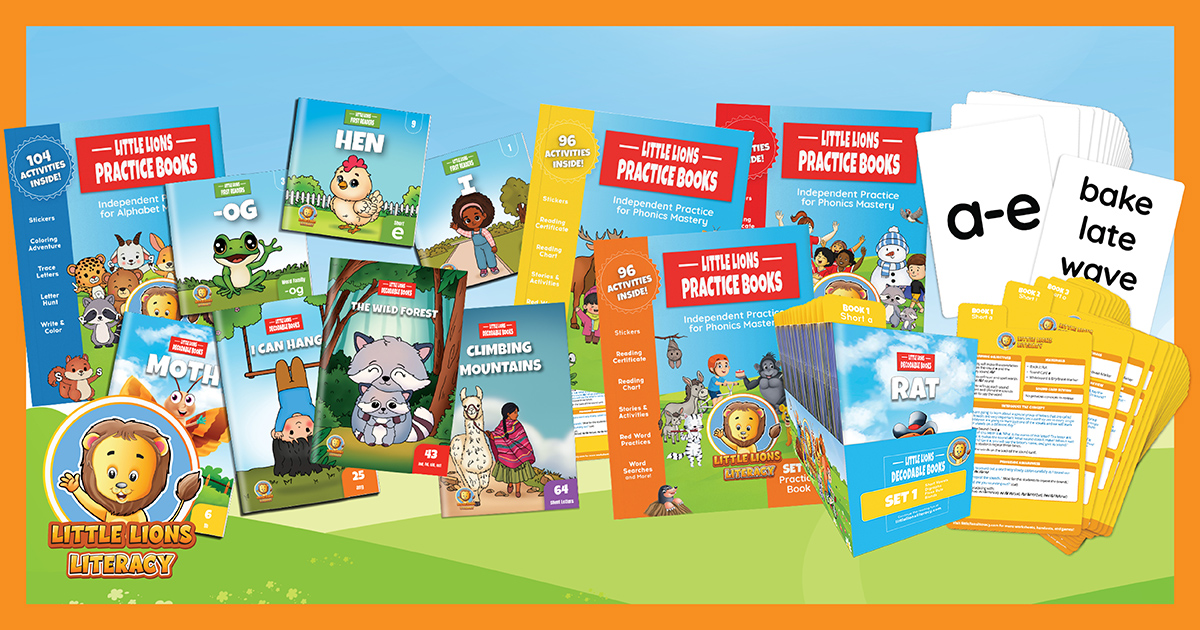
Little Lions Literacy offers more than 64 decodable books organized across four sequential sets. This progression follows the Orton-Gillingham method, a proven multisensory approach to reading instruction. Each set builds on the previous one:
Each set ensures no child feels overwhelmed. By following a cumulative sequence, every new book builds on the skills learned in prior books. This makes the series effective for both beginning readers and students who need remediation. A special education teacher in Florida used these sets with a third grade student reading at a kindergarten level. Within three months, the student moved from guessing CVC words to confidently decoding two syllable words.
Many children who struggle with reading rely on pictures or context to figure out a story. While this might help them finish a page, it does not build real decoding skills. Decodable books break this habit by making the text the primary source of information. This forces children to attend to the letters and sounds, which is the only path to fluent reading.
When children can sound out words independently, they develop the confidence to read on their own. This shift from guessing to decoding is a critical milestone. Using high quality decodable books for beginning readers makes this transition much smoother. It turns a difficult task into a series of achievable wins.
Children who struggle with reading often rely on cueing strategies instead of decoding. When a child looks at a picture to guess a word, they stop attending to the printed text. This “guessing habit” is particularly common among students with reading difficulties. While it may help them complete a page, it does not build the foundational skills needed for reading growth. To make real progress, these students must learn to connect sounds to letters consistently.
Struggling readers need texts they can actually read. Decodable books provide this by matching text complexity to the child’s phonics knowledge. This eliminates guessing and builds the decoding automaticity that leads to reading fluency.
Using decodable books breaks this cycle by requiring children to attend to every letter and sound. A reading interventionist in California documented this change with her second grade intervention group. Students who had spent months guessing words from pictures began tracking print left to right and sounding out each word after just three weeks of daily decodable practice. This kind of measurable progress is common when children use texts matched to their skill level.
Decades of reading research support the use of decodable texts for early readers, especially those at risk for reading difficulties. The National Reading Panel report identified explicit, systematic phonics instruction as a key component of effective reading programs. Decodable books put this research into practice by providing texts that align directly with the phonics skills being taught.
Key research findings include:
These findings explain why schools across the country are shifting toward Science of Reading aligned instruction and decodable texts. Teachers are seeing the difference when they replace leveled reading groups with structured literacy approaches.
Fluency develops when children can decode words quickly and accurately. Decodable books support this process by providing repeated practice with the same phonics patterns. When a child reads “Sam sat on the mat,” they are not just reading a story. They are building neural pathways that connect the letters S, A, M, T to their corresponding sounds. Over time, these connections become automatic.
A third grade teacher in New York tracked her students’ fluency data after introducing decodable books. Students who used the books for 15 minutes of daily practice improved their words correct per minute by an average of 18 words over eight weeks. This kind of growth is difficult to achieve with leveled readers that introduce new, unpredictable words on every page.
Decodable books help struggling readers by removing the guesswork from reading. When a child opens a decodable book, they already know the phonics patterns required to read every word. This creates a successful reading experience from the very first page. Success builds motivation, and motivation leads to more practice. This positive cycle is essential for readers who have experienced repeated failure.
Decodable books provide immediate reading success by matching text to known phonics patterns. This builds the confidence and motivation that struggling readers need to persist through difficulty and develop real reading skills.
A school psychologist in Oregon recommended decodable books for a second grade student who had been diagnosed with dyslexia. The student had developed elaborate guessing strategies to hide his reading difficulties. After six months of structured literacy instruction paired with Little Lions Literacy decodable books. The student was decoding unfamiliar words independently and volunteering to read aloud in class for the first time. Stories like this illustrate why decodable books are among the most effective tools for struggling readers.
Phonemic awareness, the ability to hear and manipulate individual sounds in words, is a strong predictor of reading success. Decodable books reinforce phonemic awareness by requiring children to attend to each sound as they read. When a child reads “ship,” they must blend the sounds sh, i, p together. This process strengthens the phonological pathways that support all future reading.
Teachers can extend this practice by having students tap out sounds before reading each word. A simple routine looks like this:
This routine takes less than two minutes per page but provides powerful reinforcement of the decoding process. Teachers using this method with Little Lions decodable books report faster progress than with traditional guided reading approaches.
Many parents assume all children’s books work the same way. But decodable books and leveled readers use fundamentally different approaches to text selection. For parents of struggling readers, understanding this difference is essential. One approach supports phonics development. The other may unintentionally reinforce guessing habits. Knowing the distinction helps you choose the most effective decodable books for your child.
Decodable books control text based on phonics knowledge. Leveled readers control text based on story length, sentence complexity, and picture support. This difference determines whether a struggling reader practices decoding or guessing.
| Feature | Decodable Books | Leveled Readers |
|---|---|---|
| Text Control | Matches phonics skills | Uses unpredictable vocabulary |
| Picture Role | Supports comprehension | Used to guess words |
| Skill Progression | Systematic, cumulative | Varied, not sequential |
| Phonics Focus | Explicit sound letter practice | Emphasizes whole words |
| Struggling Readers | Builds decoding skills | May reinforce guessing |
Decodable books use controlled text so children can sound out every word on the page. This builds trust in their own abilities. When every word is decodable, the child experiences consistent success. This success fuels the motivation to keep reading. You can browse a full set of decodable books that follow a clear progression from simple sounds to complex patterns.
Leveled readers, by contrast, often include words children cannot yet decode. These books encourage children to use picture cues or context to guess. While this may help a child complete a page, it does not teach decoding. For struggling readers, this pattern reinforces the very habits that slow their growth. Effective books for struggling readers focus on the printed text, not the illustrations.
Decodable books follow a systematic sequence. This ensures children learn new phonics patterns one at a time. Each book builds on skills from prior books. Research from the National Institutes of Health shows that systematic phonics instruction benefits all children and is especially critical for struggling readers. When children use decodable texts, they practice exactly the skills they need to become independent readers.
Choosing the right books for struggling readers means evaluating texts based on phonics content, not grade level labels. Many children who struggle look at pictures or guess based on the first letter. To counteract this, select books that match the child’s specific phonics knowledge. Look for controlled text that the child can actually decode independently. The Reading League has approved our books for meeting rigorous standards for phonics based instruction.
The best books for struggling readers use controlled text aligned to a systematic phonics sequence. Look for books that only include phonics patterns the child has already learned. This ensures successful, independent reading practice every time.
Before selecting books, determine which phonics patterns the child knows. Use a simple phonics inventory or ask the child’s teacher. Start with books that use short vowels and simple consonant blends. If a book includes long vowels or silent letters the child has not learned, set it aside. Decodable books for beginning readers focus on these foundational skills and work well with programs like UFLI and LETRS. When a child can read every word on the page, their confidence grows quickly.
Most struggling readers should begin with Set 1 and progress sequentially. Little Lions Literacy offers 64 books in four sets that build skills cumulatively. Set 1 covers basic phonics, while Set 4 moves to complex patterns like diphthongs and multisyllabic words. This sequence follows the decodable books progression that builds a strong foundation. Using a complete set allows you to track progress as the child masters each new phonics pattern.
Buying a complete set is often the most effective approach. Individual softcover books cost approximately $8.50 to $9.99 each. Purchasing a bundle provides more stories at a lower per book cost. Shop our complete set of decodable books to get 48 stories that carry children through multiple skill levels. Orders over $75 ship for free. This makes it affordable for both home and classroom use.
The best books for struggling readers carry endorsements from reading experts. Look for books with UFLI Featured status or programs aligned to Orton-Gillingham methods. These designations indicate that the books follow Science of Reading principles. When you browse our collection of decodable books, you will find resources created by experienced reading teachers. Each book comes with a 30 day money back guarantee so you can try them with confidence.
Teachers and parents both play essential roles in reading development. When they coordinate their efforts, children progress faster. Using decodable books in both the classroom and at home creates a consistent learning environment. A unified approach helps children see that the skills they learn in school apply everywhere.
Consistent practice with decodable books at home and school creates the repetition struggling readers need. Short daily sessions of 10 to 15 minutes produce measurable gains in decoding accuracy and reading confidence.
Short, consistent practice sessions produce meaningful results. Parents should aim for 10 to 15 minutes of decodable reading each day. This is enough time to build skills without causing fatigue. Teachers can send home the same books used during small group instruction. This lets children demonstrate their growing skills and builds confidence. Consistent practice is a key predictor of reading growth, as documented by researchers at the University of Florida Literacy Institute.
Home practice should feel like a positive experience. When a child gets stuck, parents can prompt them to sound out the word rather than guess. Simple prompts like “say each sound” or “blend it together” keep the focus on decoding. When classroom and home methods align, children feel more secure. This partnership accelerates progress toward reading fluency.
Little Lions Literacy books align with more than 10 major reading programs, including UFLI, Fundations, and LETRS. This means the books follow the same scope and sequence used in many classrooms. When a child learns the sh digraph in school, they can read a book with sh words at home the same day. This alignment reinforces classroom instruction and accelerates learning.
Teachers in Title I schools across 15 states have reported measurable improvements after incorporating these decodable books into their intervention blocks. One reading specialist in Illinois noted that her first grade intervention group moved from the 12th percentile to the 45th percentile in nonsense word fluency after one semester of daily decodable practice.
Decodable books are designed for children in preschool through third grade who are learning to read. They also benefit older students with reading difficulties who need systematic phonics instruction. The books are organized by phonics skill level rather than age or grade.
Most children benefit from reading multiple decodable books at each phonics level. The National Reading Panel suggests that practice with connected text is essential for building automaticity. Little Lions Literacy offers 64 books across four levels, providing ample practice at each stage of development.
Yes. Decodable books are especially effective for children with dyslexia because they provide systematic, explicit practice with phonics patterns. The Orton-Gillingham approach, which many dyslexia interventions use, relies on the same cumulative, multisensory methods that decodable books support.
Modern decodable books include engaging stories and colorful illustrations. Many children find them more enjoyable than leveled readers because they can actually read every word. The confidence that comes from successful reading makes the experience positive and motivating.
Children typically use decodable books until they have mastered basic phonics patterns, usually through the end of second grade. Once children can decode unfamiliar words automatically, they can transition to trade books and chapter books with appropriate support.
The evidence is clear. Decodable books are the most effective tool for helping struggling readers build foundational reading skills. By matching text to a child’s phonics knowledge, these books eliminate guessing and replace it with real decoding ability. Every child deserves reading materials that set them up for success rather than frustration.
Shop our collection of decodable books and give your struggling reader the tools they need to become a confident, fluent reader. Our books are designed by teachers, aligned with the Science of Reading, and trusted by educators across the country.