
Think about the last time you tried to help a child expand their vocabulary. Did you print out a static list of definitions for them to copy down? If so, you probably noticed their eyes glazing over almost immediately. Traditional rote memorization is like a dried-out sponge—it doesn’t hold water, and it certainly doesn’t spark a lifelong love for language.
In the world of structured literacy and early reading skills, we have a much better alternative: Juicy Words.
A Juicy Word is a rich, descriptive, high-utility word that captures a child’s imagination. It is a word with substance—one that is unfamiliar or slightly out of reach but instantly makes a sentence pop. Instead of letting kids get stuck using “tired” words like good, bad, said, or big, introducing them to Juicy Words like spectacular, dreadful, bellowed, or gargantuan transforms how they interact with text.
For parents, teachers, and reading interventionists working with K–3 learners, intentional vocabulary instruction using these vibrant terms is not just a fun writing trick. It is a scientifically proven gateway to advanced reading comprehension, expressive oral language, and stronger decoding practice.
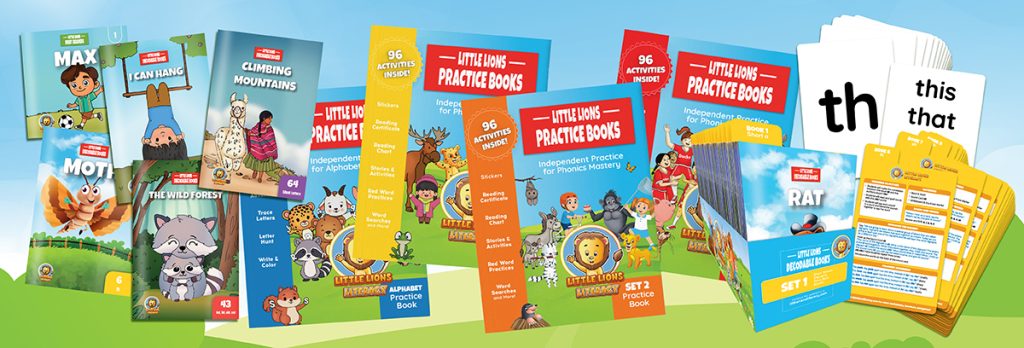
Ready to see how Juicy Words look in practice? Explore our Decodable Books Catalog to find phonics-aligned texts that reinforce these strategies.
For decades, early literacy instruction often isolated phonics instruction from vocabulary development. We know now that this is a mistake. According to the Science of Reading, structural word recognition (sounding out words) and language comprehension must develop together for a child to truly understand what they read.
When a young child comes across a word in a text, their brain performs a rapid matching game. They use their phonetic skills to decode the letters on the page into sounds. But if that decoded word doesn’t exist in their mental oral vocabulary dictionary, the connection breaks down. They can say the word, but they won’t understand the sentence.
Learn more about the Science of Reading >>> Who Created the Science of Reading? Meet the Minds
By explicitly teaching Juicy Words through interactive vocabulary instruction, we build up that mental dictionary. When early readers encounter these terms later during independent reading or while practicing with decodable books for kindergarten, they unlock meaning instantly. This intentional approach directly bridges the gap between basic phonics instruction and true text comprehension.
To select the best words for your early reading skills lessons, it helps to understand how researchers classify language. Educational researchers Isabel Beck, Margaret McKeown, and Linda Kucan developed a highly effective framework known as the Three Tiers of Vocabulary.
| Vocabulary Tier | Description | Examples | Instructional Focus |
| Tier 1: Basic Words | Everyday words that children learn naturally through conversation. Rarely require explicit instruction. | Dog, run, happy, big, house, see | Minimal text focus; focus on spelling patterns. |
| Tier 2: High-Utility Words | Rich, mature, and descriptive language found across many types of text. This is the home of Juicy Words. | Astonished, reluctant, industrious, micro | Primary focus for direct vocabulary instruction. |
| Tier 3: Domain-Specific | Highly specific words tied directly to a single academic subject or technical field. | Photosynthesis, denominator, lava | Taught implicitly within specific science or math units. |
As you can see from the breakdown above, our primary instructional target should be Tier 2. When we deliberately substitute a simple Tier 1 word for a more descriptive Tier 2 equivalent, we are actively injecting Juicy Words into our student’s linguistic toolkit.
How do we move away from dry dictionary copying and move toward active, sensory word learning? Here are four field-tested, Science of Reading-aligned strategies you can implement in your classroom or home literacy routine today.
Children’s picture books and high-quality informational texts contain three times more rare, rich language than our everyday conversations. This makes your daily read-aloud the perfect environment for vocabulary instruction.
Don’t pause every time a rare word appears—that breaks the magic of the story. Instead, select two or three specific words before you open the book. When you arrive at one of your targeted words, draw attention to it naturally:
For example, if the book says, “The tiny mouse felt microscopic next to the elephant,” you can pause and say: “Microscopic. Can you say that with me? Microscopic. That means something is so incredibly tiny you can barely see it. A speck of dust on your desk is microscopic. Let’s see how the mouse handles being that small!”
Young children understand concepts best when they can view them on a physical scale. Word gradation activities help early readers see the subtle nuances between related terms by arranging them in order of intensity.
Draw a simple ladder on a whiteboard or piece of paper. Put a tired, dry Tier 1 word at the bottom, and work together with your young learners to stack increasingly descriptive terms on the rungs above it.
This visual tool shows children that words aren’t just things to spell—they carry varying degrees of emotional and descriptive power.
English is a morphophonemic language. This means our spelling system represents both speech sounds (phonemes) and structural units of meaning (morphemes). When you introduce a new term, don’t miss the chance to link vocabulary instruction with structural decoding practice.
If you introduce the word unfortunate, take a moment to break it down visually:
un- (prefix meaning not) + fortune (root word meaning luck) + -ate (suffix forming an adjective)
By exploring the internal anatomy of a word, you give students independent word-learning strategies. The next time they run into an unfamiliar word starting with un-, they can combine their phonics instruction knowledge with morphological clues to decode the text successfully.
To make word learning a permanent habit, encourage a sense of active curiosity. Turn your students into active “Word Collectors.”
Give each student a small notebook designated as their personal word trophy shelf. Challenge them to find at least five words each week from their independent reading, audiobooks, or family conversations. At the end of the week, give them a chance to share their favorite find with a peer, explaining where they spotted it and using it in an original sentence.
Traditional word walls often focus on high-frequency “sight words,” but a “Juicy Word Wall” is a dedicated, interactive space for Tier 2 vocabulary. When you introduce a new Juicy Word during a read-aloud or lesson, add it to the wall—ideally with a student-drawn illustration or a simple mnemonic icon. This serves as a constant, visual reference point. Encourage students to glance at this wall whenever they feel “stuck” using a tired word like “big” or “happy.” By keeping these rich terms visible, you normalize their use and empower students to integrate them into their own writing and speaking spontaneously.
While vocabulary is learned through listening and discussion, your students need a safe environment to practice applying their decoding skills alongside these rich new words. Decodable books are essential here because they are crafted to align with specific phonics patterns, ensuring that students aren’t overwhelmed by decoding struggles while trying to grasp new vocabulary. By providing texts that match their current phonics proficiency, decodable books allow students to confidently encounter “Juicy Words” in context, reinforcing both their ability to sound out new patterns and their ability to extract meaning from the text.
A common challenge for structured literacy educators is balancing vocabulary growth with phonics guidelines. If a student is currently working through targeted reading intervention pages that focus strictly on short vowel CVC patterns, how can we introduce complex words like astonished without throwing off their phonetic focus?
The answer lies in separating the modalities of oral language and print processing.
You do not need to restrict a child’s oral language to the words they can currently spell. While their independent reading eyes are practicing fundamental decoding mechanics with decodable books for first grade, their listening ears and speaking voices should be swimming in advanced, expressive concepts. Over time, as their phonetic knowledge expands, these two paths merge, creating an exceptionally fluent reader.
Monitoring vocabulary growth shouldn’t feel like a high-stakes test. Instead, focus on gathering evidence of “word ownership” over time through observation and simple documentation.
Building early reading skills requires more than teaching children how to convert letters into sounds. True literacy involves helping young readers appreciate the texture, color, and power of the language they are decoding. By bringing Juicy Words into your daily vocabulary instruction, you give your students the tools to express their ideas clearly and comprehend complex texts confidently.
Let’s retire the tired, dried-out word lists. Grab a high-quality picture book, pick out a few vivid phrases, and watch your young learners transform into passionate, lifelong language collectors.
Ready to put these strategies into practice? Explore our collection of fully decodable books, expertly designed to bridge the gap between structured literacy and expressive vocabulary. Visit our catalog today to find the perfect reading intervention resources to support every step of your child’s journey toward confident, fluent reading.
A word is considered juicy if it is a Tier 2, high-utility word that adds clear sensory detail, precision, or emotional weight to a sentence. These words are typically less common in everyday conversation but appear frequently in high-quality literature and informational texts.
Absolutely. Explicit language instruction is incredibly beneficial for students receiving intensive Tier 2 or Tier 3 reading intervention support. For students with speech or working memory challenges, pairing the word with a physical action, a visual graphic organizer, or an illustrative picture card helps anchor the new meaning firmly in their memory.
To prevent cognitive overload, focus on teaching no more than 3 to 5 new terms during a single book reading or instructional lesson. According to leading literacy research, young minds learn words incrementally through multiple exposures across various contexts over time, rather than memorizing a massive list all at once.
Encourage “word play” by keeping a “Juicy Word” list visible, perhaps on a sticky note or in their personal notebook. When they write, challenge them to “upgrade” one tired Tier 1 word in their sentence—for example, prompting them to change “big” to “enormous” or “sad” to “dismal.” The key is to celebrate when they successfully incorporate these words; positive reinforcement is the strongest way to build their confidence as a writer.
You don’t have to wait! Vocabulary instruction is primarily an auditory and oral exercise. While their eyes are working on simple phonics patterns during decoding practice, their listening ears can be exposed to much more complex, descriptive language through read-alouds. Keep these two tracks separate until their decoding skills naturally catch up; over time, these paths will merge, and they will begin recognizing those “Juicy Words” instantly in their own independent reading.