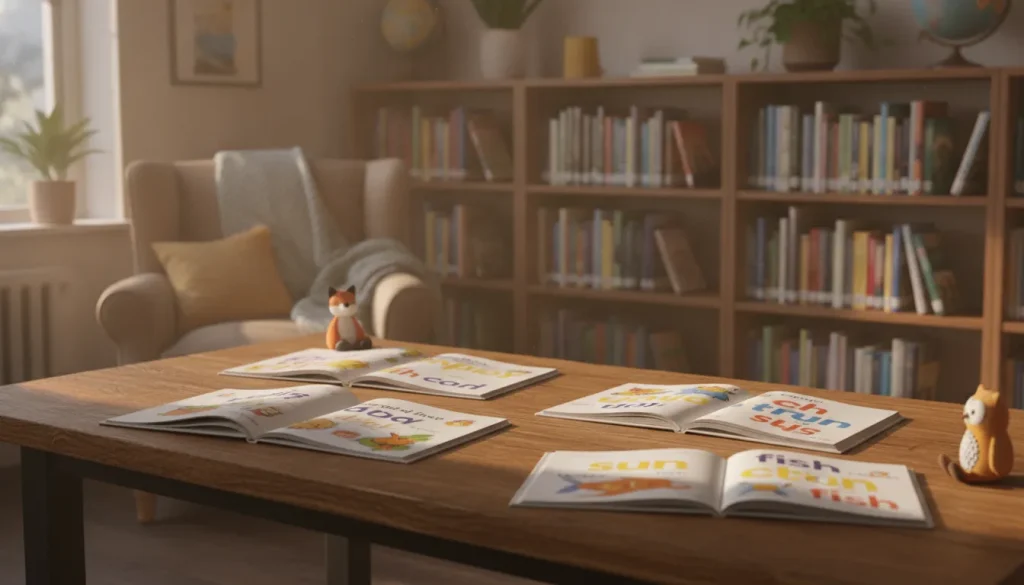
Many parents find standard picture books often teach children to guess words based on pictures rather than phonics. This habit can slow down long-term reading progress and lead to frustration for young students. Choosing books that align with a child’s current phonics lessons is the best way to build their pride.
Knowing how to choose decodable books is a vital skill for anyone helping a young child learn to read using a method based on the science of reading. To start, you must find which phonics skills the child has already learned and which ones they are now studying in class to find the right book level. You should look for books where at least 64% of the words can be sounded out using the sounds and letter patterns the child already knows very well. By matching the text level to the child’s actual knowledge, you build their reading skills and ensure they develop the strong habits needed for long-term and lifelong success.
Finding the right books is easier once you understand the science behind them. You may wonder what makes these stories different from the standard readers in most libraries. We will begin by exploring what decodable books are and why they matter, starting with the basics of phonics instruction.
Decodable books are structured texts that help children practice reading using known letter-sound relationships. By restricting vocabulary to taught phonics patterns, these readers prevent guessing and build confidence as students transition into full, connected stories.
Decodable books are a special kind of text for kids learning to read. They are built so children can use the letter sounds they know to read the words. Experts at Reading Rockets say a book is decodable if at least 64% of its words match the phonics skills a child has learned. These books help kids move from reading single words to reading short lines and stories. This is known as reading in connected text. It is a key step in building a strong base for reading skills.
For a long time, many schools used books with patterns. These books repeat the same line on every page with just one word changing. While they look like real books, they often lead kids to guess. Children might look at a picture of a cat and say “cat” without ever looking at the letters. Decodable books stop this habit. They use fewer pictures and more text that kids must sound out. This teaches them to look at every letter and blend the sounds.
Using decodable books is a better way to teach reading than using patterned texts. Patterned books often rely on cues like pictures to help a child finish a line. This can make a child feel like a reader, but they are not yet decoding the words. According to research from the University of Iowa, decodable readers help kids build good habits. By removing the chance to guess from pictures, kids must use their phonics skills. This leads to more correct reading and better skills for the future.
Reading single words on a card is not the same as reading a story. Decodable books bridge this gap. They allow kids to apply what they know to full pages of text. This practice is vital for making reading feel natural. Experts at Columbia Teachers College note that these texts should be rich and fun. When a child can read a whole book by themselves, their confidence grows. They start to see themselves as real readers.
The main goal of these books is to move kids from reading words by themselves to reading connected text. When kids only practice single words, they may struggle to put them together. Decodable readers give them a safe place to practice. They use a planned path to show new sounds. This means a child only sees words they are ready to read. It cuts down on stress and makes the learning process smooth. It also helps teachers see where a child might need more help.
When you look at how to choose decodable books, you should match the book to your child’s skills. Start by finding out which sounds and patterns they already know. Look for sets that clearly state which phonics skills they cover. A good set will start with simple words and move to more difficult ones. You can find quality reading selections by checking if they follow a clear path. This ensures your child is always challenged but never upset. It also makes reading more fun for everyone.
To choose the right decodable books, you must assess your child’s phonics skills by checking their letter-sound knowledge, blending ability, and recognition of word patterns. Aligning book levels with their current classroom lessons ensures they practice target sounds without frustration or relying on guessing.
Picking the right reading tools starts with a clear view of what your child can do. When you want to choose appropriate decodable books, you must first find their current skill level. This check ensures the books you buy are not too hard or too easy. Decodable books work best when they match the phonics rules your child has already learned in school. If you skip this step, your child might guess at words instead of reading them.
Start by looking at basic letter sounds. Give your child a list of letters and ask them to say the sound for each one. Do not just ask for the letter names. You want to see if they know that “B” says /b/ and “S” says /s/. This helps you see where they might need more help. As stated by the University of Iowa IRRC, tracking error patterns makes it easier to plan what to read next. This simple task can save you time and money when you shop for new sets.
Once a child knows their sounds, they must learn to blend them into words. This is a key part of early reading and learning. You can test this by using simple three-letter words. If they can read “cat” and “dog” easily, they are ready for the next level. If they stop at each letter, they might need more practice with shorter books. You can find decodable book sets for practice that focus just on these basic blending steps.
As your child grows, they will face more complex words. Look for words that have two letters making one sound. Like “sh” or “th.” You should also check for words with “blends,” where two sounds are said close together. Like the “st” in “stop.” If your child can read these, you can look for books that use these rules. Choosing books that are just a bit hard helps them learn without getting mad. It keeps reading fun and helps them build strong habits for the future.
A scope and sequence is the structured roadmap of a decodable reader set, detailing the order in which phonics skills are introduced. High-quality sets build progressively from short vowels to consonant blends, digraphs, silent-e, and vowel teams, matching the child’s instructional path.
Most decodable book sets follow a clear, ordered plan. This plan tells you exactly which sounds and letter patterns are in each book. When you learn what are decodable readers, you look for a set that builds skills one step at a time. This path helps kids master small pieces of reading before they move to harder words. Each book gives them the right amount of challenge without making them feel stuck. For the best results, readers should follow the order of your child’s phonics lessons (Iowa Reading Research Center).
A good set of books starts with the most basic sounds. First, kids learn short vowel sounds in simple words like “cat” or “dad.” Once they feel good with those, they move to consonant blends. These are two or more letters that keep their own sounds. Such as the “fl” in “flag” or “mp” in “jump.” This step helps them see how sounds slide together in longer words.
Next, the books introduce digraphs. These are two letters that make one new sound together, like “sh” in “ship” or “th” in “path.” After digraphs, kids often learn the “silent e” rule. This is when an “e” at the end makes the middle vowel say its name, as in “kite” or “mile.” Finally. They study vowel teams like “ai” in “rain” or “ay” in “play.” This path makes it easy for decodable readers for first grade to grow with the student.
You can find the specific skills a book covers by looking at its cover or box. Most book makers list the phonics focus right on the back. They might show a list of words or the letter patterns used in the story. Some book sets also include word lists for extra work. Reading these lists first helps you see if your child is ready for the book. It also stops them from guessing words based on pictures.
To pick the right book, you must know what your child has already learned in school. The best book is one that uses sounds they already know well. If they are just starting to learn blends, a book with vowel teams will be too hard. Matching the book to their current skill level builds their pride. They will see that they can read a whole story on their own. This win makes them want to keep reading more every day.
Evaluating decodability means comparing phonics-based decodable books, which require sounding out words, with predictable texts, which rely on repetitive patterns and pictures. Authentic decodables should fall within a 64% to 90% decodability range to effectively reinforce healthy decoding habits.
When you learn about phonics decodable books, you must first look at how the words are built. A decodable book is a text where at least 64% of the words can be read using phonics skills the child has already learned. This rule ensures that students can use their new knowledge to sound out words. They do not have to just look at the page and hope for the best.
Many schools use patterned texts for early readers. These books often repeat a single phrase on every page. They also rely on big pictures to tell the story. While they help kids feel like they are reading fast, they do not build the same skills as decodable readers. In fact, these texts often lead to guessing based on images instead of reading the letters on the page.
Decodable books are not the same because they follow a set order of phonics skills. They help students move from reading words alone to reading them in full sentences. By using decodable book sets for practice, children get the work they need to master each new letter sound before they move to harder levels.
| Feature. | Decodable Books. | Predictable/Patterned Texts. |
|---|---|---|
| Primary Goal. | Practice letter-sound skills. | Memorize patterns and phrases. |
| Word Choice. | Words match known phonics. | Words follow a repeat pattern. |
| Use of Pictures. | Support the story meaning. | Provide clues for word guessing. |
| Reading Habit. | Focus on letters and sounds. | Focus on pictures and memory. |
You might think a book should be 100% decodable to be good, but that is not always true. Experts at Reading Rockets note that a book counts as decodable if 64% of the words use known phonics. While you want a high rate for new readers, a rigid 100% rule can make stories feel stiff or boring. It can even ruin the flow needed to write a rich story that kids want to read.
For most students, a range between 64% and 90% is the best fit. This level gives them enough practice to build pride without making the text feel like a simple word list. If a book is too easy, the child might stop their focus. If it is too hard, they might get upset and quit. Finding that middle ground is key to helping them grow as they read on their own.
The main reason to choose these books is to stop the habit of guessing. When a child sees a word they do not know, their first move should be to look at the letters. According to the Iowa Reading Research Center, decodable readers strengthen good habits by not using pictures that allow kids to skip the hard work. This builds a strong base for all the reading they will do in the years to come.
When you check a book, look for a word list at the back. High-quality sets will clearly mark which phonics skills are inside. This makes it easy to match the book to what the child is learning in class. Using the right book at the right time helps kids see that they can read a whole story on their own. This is a big win for their self-trust.
Matching books to grade levels requires selecting simple CVC stories for kindergarten. First grade readers focus on blends and digraphs, while older students need complex vowel patterns to stay engaged while getting targeted skill practice.
Knowing how to choose decodable books depends on your child’s phonics skills. You want books that match what they learn in class. This helps them practice letter sounds in real stories. When you select highly rated phonics books, you give your child a clear path to read on their own. These books are helpful for learning and teach kids to use what they know to solve new words.
For kids in preschool and kindergarten, start with very simple books. Look for texts that focus on single vowel sounds and short words. Most early books use three-letter words like “cat” or “sit.” It is also smart to avoid books with many pictures. High-quality books limit images so kids do not just guess. You want them to look at the letters to find the word. This builds a strong base for future reading.
As kids move into first grade, they are ready for harder words. You can look for books with blended sounds like “flag” or digraphs like “ship.” Some decodable readers for first grade also teach vowel teams or silent “e” patterns. A good set will follow a clear order to help kids grow. You should also check for books that name the syllable types used in the text. This makes it easy to match the book to what your child is learning each week.
Older kids who find reading hard need books that look mature but stay simple. They may need to practice basic skills without feeling like they are reading baby books. Pick stories with themes that fit their age. Decodable books help these students feel more proud of their work. They can finally finish a whole book without help. This builds their trust in their own skills and shows them that they can master reading with the right tools.
Before you buy a new set, look at the back of the book. High-quality books should include word lists to help with skill practice. You can use these lists to practice hard words on their own before reading the story. This step helps kids feel ready. It is also a good way to see which sounds they still find hard. If your child makes the same kind of mistake often, you can pick a book that focuses on that specific skill.
To find the right book, you should check the phonics skills it covers. High-quality books often list the sounds or word types they use. According to Ohio State University, parents and teachers should look for sets that clearly mark these skills. This makes it easy to match the book to what the child is now learning. Good readers also include word lists for extra practice and use stories that make sense.
Most experts suggest that at least 64 percent of words in a book should be decodable for a new reader. While no book is perfectly decodable, aiming for a high rate ensures the child can use their skills. As noted by the Literacy Nest, a high rate is very important at the earliest levels of learning. Using books with a high count of known sounds builds child confidence and helps them learn to read on their own.
Matching books to current lessons is key for a child to practice new skills. According to the Iowa Reading Research Center, these books give students the chance to apply specific letter-sound links in real text. If a book includes sounds the child has not learned, they may get stuck or start to guess. When the book aligns with the lesson, it builds good reading habits and helps the student master each skill before moving to the next level.
Decodable books are better for learning sounds because they need students to look at the words instead of the pictures. Patterned texts often use short phrases that let a child guess the words. Reading Rockets says that decodable readers are best because they help children build strong reading habits. This way, students truly learn to read the letters on the page. Using these books leads to more reading on their own over time.
If you wait too long to match books to your child’s skills, they may lose their love for reading and fall far behind their classmates. It is hard for a child to keep trying when the words on the page look like a test they can never hope to pass. The benefit of starting now is that you can find the best decodable books for kids to stop this cycle of worry and stress today.
Ready to help them succeed and grow their skills? You can get started with our team right now. Call (866) 774-3342 to explore our comprehensive collection of science-of-reading decodable books and start your child on a path to better reading today.