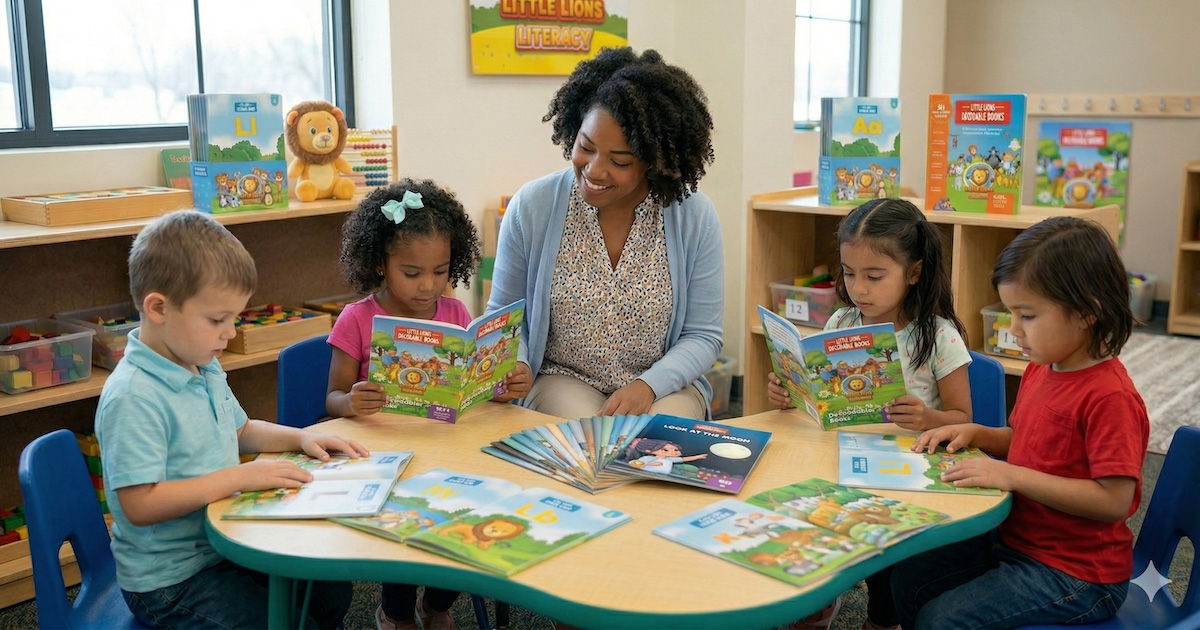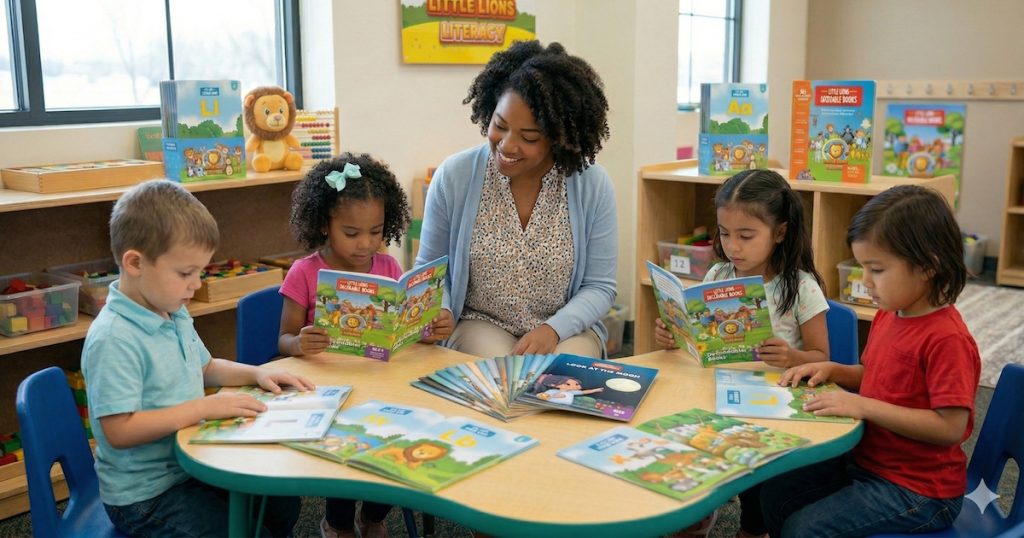
The year 2026 has brought a seismic shift in how we view the classroom. After a decade of 1:1 device initiatives and digital-first learning, the pendulum has swung back with force. Educators, neuroscientists, and parents are embracing what is now known as the Analog Renaissance in Education. From key US states leading literacy reform to the boardrooms of the Los Angeles Unified School District (LAUSD), the message is clear: to move forward in literacy, we must look back to the tactile, physical foundations of learning.
At Little Lions Literacy, we have always championed the power of the printed page and the physical pencil. As the Back to Basics movement 2026 gains momentum, it is becoming increasingly evident that the “magic” of reading doesn’t happen on a backlit screen—it happens in the hands of a child.
This national resurgence of the analog renaissance in education follows years of legislative and educational groundwork laid by early adopter states that enforced curriculum aligned with the Science of Reading:
LAUSD recently enacted a landmark resolution to prioritize physical literacy materials for students in grades K–2. This pivotal shift is a response to a decade of declining scores in deep reading and signals a growing movement across the US to recognize that foundational literacy requires a return to physical tools. When children use physical materials, they engage in spatial anchoring, where the brain remembers information based on where it was located on a physical page.
Why does the Analog Renaissance in Education matter so much for early readers? The answer lies in the brain’s reading circuit. According to Reading Rockets, the physical act of forming letters by hand is neurologically linked to letter recognition and decoding speed.
If you are looking for ways to implement these findings at home or in the classroom, explore our Decodable Books for Kindergarten to see how physical print can accelerate phonics mastery to embark this new wave of analog renaissance in education!

Embracing the Back to Basics movement 2026 doesn’t mean throwing away all technology, but it does mean being “analog-first” for foundational skills. Here is how you can transition:
For pre-K and Kindergarten, use physical alphabet books during read aloud time. As you read, emphasize the sound each letter makes so children listen and develop phonological awareness, and use the physical pages to demonstrate the correct letter formation for early writing skills.
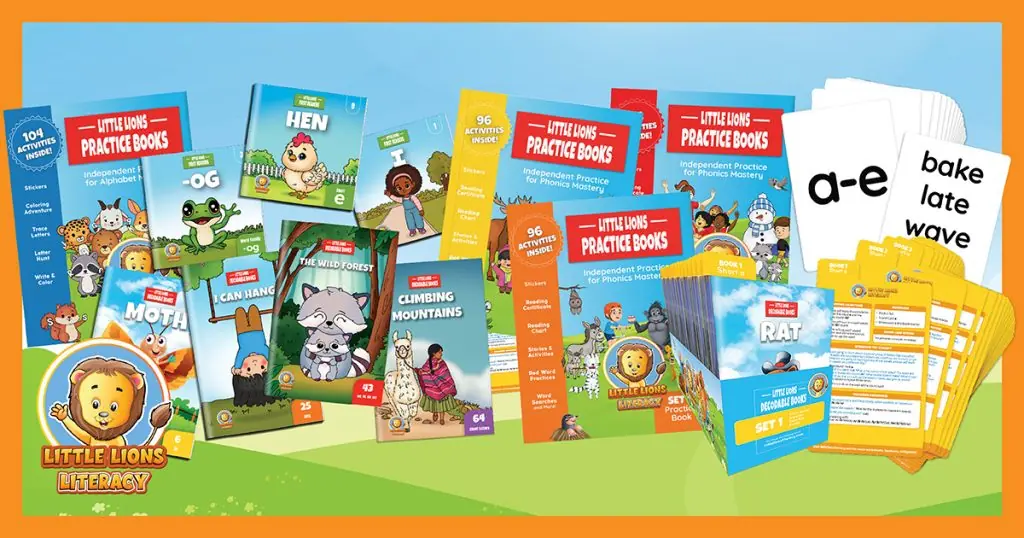
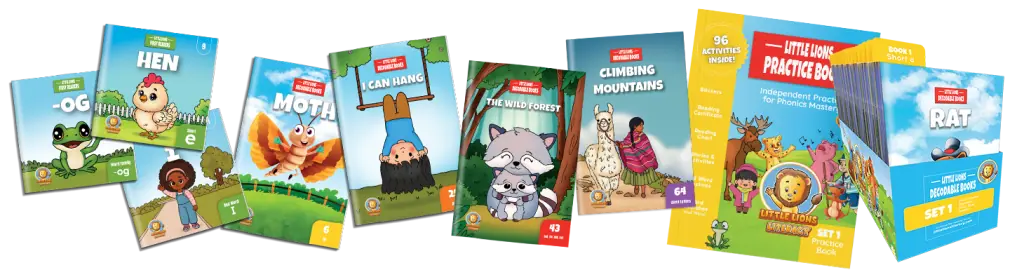
Use physical books, pencils, paper and printed worksheets to embrace the analog renaissance in education? OurFirst Readers Books are designed to provide the tactile feedback children need.
For a child learning to decode, the ability to physically point to a phoneme on a page is critical. Our Classroom Sets are designed to ensure every student has access to high-quality decodable books, allowing teachers to easily implement small-group, differentiated phonics instruction.
In the K–3 window, handwriting is a literacy skill, not just a motor skill. Our Practice Books are designed to provide the tactile feedback children need.
For teachers looking to overhaul their small-group instruction with the analog renaissance in education movement, check out our classroom sets that prioritize high-touch, low-tech engagement.

At Little Lions Literacy, our mission aligns perfectly with the Analog Renaissance in Education. Our materials are crafted to be held, written on, and kept. We believe that a child’s first experience with a “CVC word” should be through a physical object they can manipulate.
Our Physical Literacy Materials include:
By choosing physical tools, you are giving your students a distraction-free environment where the only thing that matters is the connection between the letter, the sound, and the meaning.
The Analog Renaissance in Education is more than a trend; it is a course correction. By returning to physical books and handwriting, we are respecting the way the human brain was wired to learn. Whether you are a parent or an educator, the Back to Basics movement 2026 offers a path toward deeper focus and stronger literacy outcomes.
Ready to bring the power of print back to your learners and embrace this powerful analog renaissance in education movement? Explore our full collection of Structured Literacy Resources and see why physical materials are the future of reading.
A: Not necessarily, but for foundational literacy (K–2), the research suggests physical materials are superior for building the brain’s reading architecture.
A: Students with dyslexia or processing issues often benefit from the multisensory feedback of physical paper and tactile tools, which help “anchor” the letters in their memory.
A: LAUSD recently enacted a landmark resolution to prioritize physical literacy materials for students in grades K–2, citing a response to a decade of declining scores in deep reading.