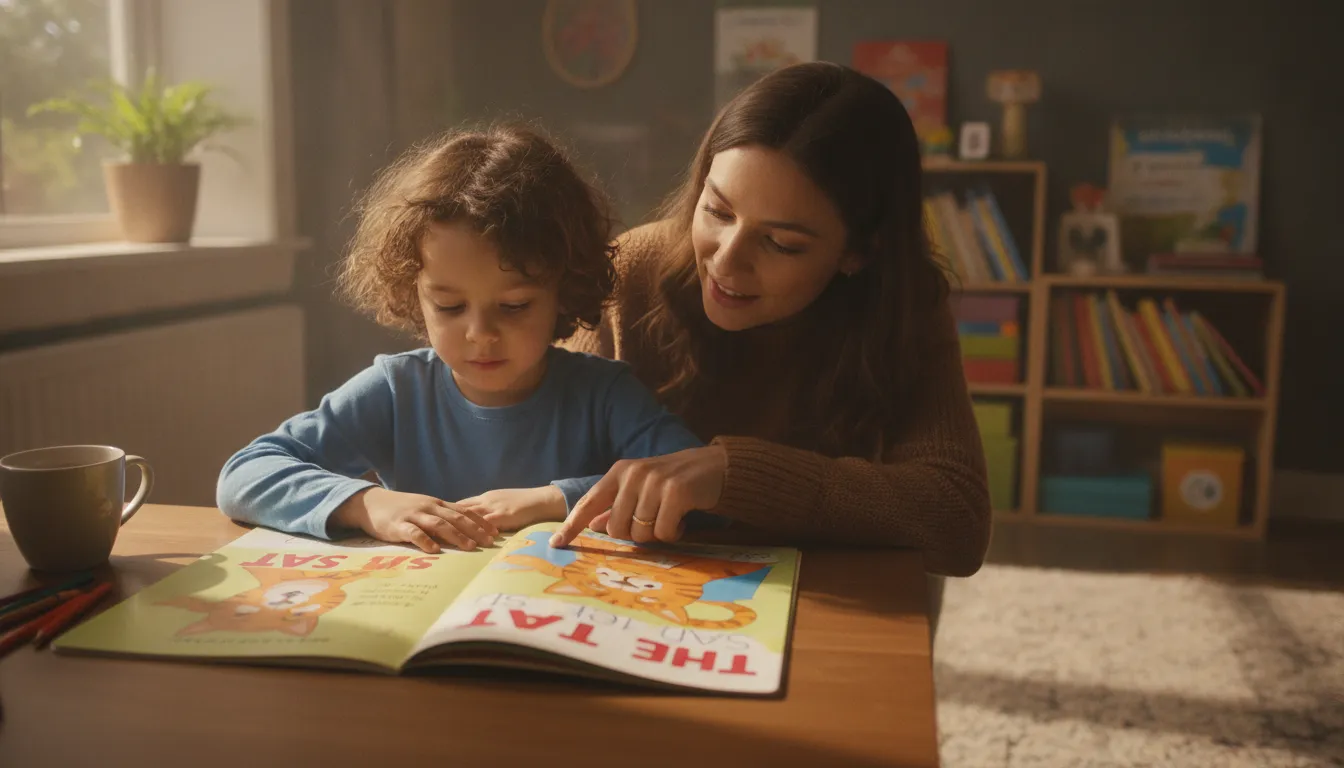
A young child struggling to sound out simple words is a common sign of reading frustration. This hurdle often blocks basic reading growth and lowers a child’s confidence in the classroom.
Phonics practice at home is a proven, evidence-based method to help early readers master letter-sound connections and build lasting reading confidence. According to research by the National Institute of Child Health and Human Development, systematic phonics instruction is highly effective. This evidence-based approach works well for both beginning readers and children having difficulty learning to read. By teaching kids to sound out words step-by-step, parents can reinforce school lessons and prevent reading gaps from growing. Regular and consistent practice helps young minds store common word patterns, which allows them to read more fluently with less daily struggle. Short sessions with decodable books and hands-on games make this home learning process simple, positive, and highly successful for young elementary students.
How can parents make reading practice both easy and effective for their young students? Finding the answer starts with looking at how daily habits build core skills and reading fluency. The journey begins with Why At-Home Phonics Practice Matters for Early Readers.
Learning to read is a big step for young children. When kids practice reading skills at school, they make progress. But school is only part of the puzzle. Regular phonics practice at home helps cement what they learn in class. This extra time helps a lot in how fast they grow.
Children need clear lessons to connect letters and sounds. The National Reading Panel reports that systematic phonics instruction is the most effective way to teach reading. This method teaches kids letter-sound rules in a clear, set order. At-home practice lets children apply these lessons in a quiet, safe space. When parents guide these short sessions, children get the extra practice they need to succeed.
When kids practice at home, parents can see where their child struggles. For example, a child might know each letter sound but struggle to blend them together. Spotting these small hurdles early allows parents to give targeted help. This teamwork between home and school ensures no child falls behind.
Not all children learn to read at the same pace. Some kids pick up letter sounds quickly, while others need more support. Research shows that structured phonics lessons help struggling readers who find reading hard at school. Working on these skills at home removes the pressure of the classroom. It allows struggling readers to slow down and focus on their own needs. At the same time, beginning readers can use home practice to master simple words before they move to harder texts.
For struggling readers, school lessons can sometimes feel too fast. When they fall behind their peers, they may feel sad and lose heart. At-home practice gives a private space where they can repeat lessons without fear of making mistakes. For beginning readers, practicing at home builds a strong start before they face harder books.
Fluent reading depends on how fast a child can decode words. If a child spends too much energy sounding out each letter, they cannot understand the story. Daily phonics practice helps children see spelling patterns without thinking. This quick skill helps them read faster and understand more. Over time, children stop struggling with sounds and start enjoying books.
Many parents worry they do not have enough time for reading lessons. But effective practice does not need hours of work each day. In fact, just five to ten minutes of daily practice can lead to major gains. Small, frequent sessions help keep children focused and prevent brain fatigue.
By practicing every day, children build a strong routine. This daily habit helps them remember letter patterns much better than one long weekly session. When kids feel proud in these short sessions, their confidence grows quickly. They start to see reading as a fun game rather than a chore.
Learning to read is like cracking a secret code. Phonics is the tool that helps kids crack this code. It connects the sounds we say to the letters we write. When kids learn these links, they can start to blend sounds into words.
Most English words follow clear rules. In fact, only a small part of English words have irregular spellings. This means that once kids learn basic phonics rules, they can read almost any word they see. This skill is a great first step to build reading fluency.
Systematic phonics lessons teach kids these rules step by step. Kids do not have to guess how to read. Instead, they learn the exact sounds that letters make. This helps them look at a new word and sound it out with ease.
This process is the core of synthetic phonics programs. In these programs, kids learn to turn letters into sounds. Next, they blend those sounds to read words. For example, a child sees the letters c-a-t, says each sound, and blends them to read “cat”. Read more about this in this government study on reading.
Some teaching styles do not focus on letter sounds. For a long time, the whole-language approach was common in schools. This style asks kids to look at the whole word, use context clues, or look at pictures to guess the word. But guessing can lead to bad reading habits.
Phonics is different because it gives kids a clear way to read. Instead of guessing, kids learn to look at every letter and sound. This clear path helps kids build real reading skills that last. It is a much better way to learn than learning word shapes by heart or guessing from pictures.
Parents play a key part in helping kids learn to read. Classroom lessons are great, but kids also need daily practice. Using short, fun ways to practice letter sounds can make a big difference. For example, a quick session of phonics practice at home keeps these skills fresh.
You can use simple household items to make practice fun. Try writing letters on sticky notes and putting them on the wall. Just ask your child to point to a letter and say its sound. You can also use magnetic letters on the fridge to build simple words together.
Once your child knows a few letter sounds, you can start using decodable books. These books only use words that your child can sound out with the rules they have learned. Reading these books together is a great way to help them apply phonics skills at home. This steady practice builds their confidence and helps them become fluent readers over time.
Teaching children to read does not need hours of desk work. Just play. You can turn daily routines into learning moments. With easy steps, parents make phonics practice at home both simple and fun. Regular practice builds real reading skills.
Good learning happens when children feel safe and proud. Listen to the sounds. When you practice, focus on those sounds first before you look at letters. This simple method builds strong brain paths and keeps your child happy. This helps build trust and makes learning easy.
You do not need costly kits to start. You can start hands-on phonics practice at home using normal items from around the house. Research from the National Institute of Child Health and Human Development supports using step-by-step methods to help children blend sounds into real words. Here is a simple plan of seven games to try this week.
When you choose books for your child, make sure they match the phonics patterns they know. Standard children’s books often have words they cannot yet decode. Using structured tools makes a big difference. Little Lions Literacy offers decodable books that build strong reading paths. These books match what your child learns in school. They provide the best way to practice new skills at home. These books help young readers practice their skills step-by-step without feeling lost or sad.
Learning to read can feel like a mountain to climb for a young child. When children struggle to decode words, they often lose heart and give up. But when they blend sounds with success, they build real pride in their skills. Daily phonics practice at home keeps this success loop going by making sure children feel able to read each page.
A simple cycle drives reading growth. First, the child learns a clear phonics rule. Next, they use that single rule to read a new word. This success boosts their trust in their own skills. They feel more keen to try the next page, which leads to more practice.
Controlled practice is the key to keeping this cycle going. When children read books that match their current phonics skills, they do not have to guess. They can sound out almost every word on the page. This controlled work makes reading feel like a game they can win.
Decodable books are a great tool for this controlled practice. These books only use letter sounds and spelling patterns that the child knows. This design means the child can read the book on their own without getting stuck on hard, untaught words. As they finish book after book, their confidence grows.
Beginning readers and struggling readers have distinct needs. Beginning readers need to learn new letter sounds in a slow, clear way. In contrast, struggling readers need to review past lessons at their own level to fill in old gaps. An official National Reading Panel report shows that effective phonics instruction helps both beginners and children who have difficulty learning to read. Struggling readers need a safe space to practice without feeling bad about their pace.
For children who struggle, daily review is the best way to build reading fluency. Using consistent at-home phonics practice helps these kids review old patterns until they become second nature. This steady practice keeps them from falling behind. Over time, the child stops fearing books and starts to enjoy reading.
You do not need to practice for hours to see results. In fact, short and frequent sessions are much better for young minds. To keep learning fun, keep your daily work short and light.
Many parents want to help their kids learn to read. But standard books often have too many hard words that children cannot yet sound out. When you do phonics practice at home, you need books that match your child’s skills.
Decodable books are the best tool for this job. They let kids use what they know to read on their own. This helps them feel proud of their work and keeps them eager to learn more.
These books use controlled text. This means they only include words with letter sounds your child has already learned. Research from the National Reading Panel shows that clear phonics instruction helps children learn to read by teaching letter sounds step by step. Decodable books are a key part of this process.
They allow children to apply these skills in real books. This builds real confidence because the child does not have to guess at words. They can look at each letter, say the sound, and blend them into a word. It is perfect for both new readers and struggling readers who need consistent at-home phonics practice to build trust in their own skills.
The Little Lions Literacy system offers a clear path for young learners. The full line has 64 decodable books split into four sets. These sets cost $79.95 each. They guide your child step by step from basic CVC words to complex patterns.
These harder patterns include r-controlled vowels and diphthongs. Each book starts with a list of new words to review before reading. This warm-up helps children feel ready for the text.
It also ends with simple questions to check what they read. This careful design ensures that your child never feels lost or stuck while they read. Instead, they can focus on just enjoying the story.
| Feature | Decodable Books | Leveled / Picture Books |
|---|---|---|
| Word control | Uses only phonics patterns the child has learned | Uses any words, including irregular and complex patterns |
| Reading strategy | Sound out letters and blend | Guess from pictures, context, or memorized shape |
| Best for | Beginning readers and struggling readers | Fluent readers with strong decoding skills |
| Confidence impact | High, child can read every word | Low, child may guess and feel stuck |
| Phonics alignment | Follows a systematic scope and sequence | No specific phonics sequence |
To get the most out of each lesson, you can also use our matching practice books. Each of these books gives you over 96 worksheets per set for extra help. These pages help children practice spelling and writing the same phonics patterns they read. Spelling is a key part of learning to read.
It helps kids connect sounds to letters in a deep way. You can buy these sets for $79.95 each to support your lessons. By pairing books with worksheets, you create a complete system for phonics practice at home. This hands-on way keeps learning active and fun.
If you are ready to help your child read with ease, you can explore our complete line of learning tools. You can shop our decodable books online to find the perfect fit for your child’s current level. We also offer targeted phonics practice books to help build these vital skills. Our step-by-step tools give you everything you need to build strong readers at home.
Phonics practice at home should be short to prevent fatigue. Keep your daily sessions to about 10 to 15 minutes. Practicing every day is much more important than the length of each session. Short daily lessons build strong reading habits and strengthen reading skills over time without making your child tired.
If your child struggles to blend sounds, start by modeling the process. Say the sounds slowly and blend them together for your child to hear. You can also use simple tools like plastic letter tiles to help them see how sounds fit together. Having your child touch each letter as they say its sound also helps them learn to blend.
Decodable books use words that match the specific letter sounds your child has already learned. Regular picture books often have complex words with spelling patterns your child cannot sound out yet. Using decodable books ensures early readers can read every word on the page. This builds reading speed and boosts their confidence.
Yes, extra practice at home is highly effective for children who find reading difficult. According to the National Institute of Child Health and Human Development, phonics instruction is key for children who struggle to read. Regular home practice reinforces school lessons and helps struggling students build the skills they need to succeed.
Delaying reading help can cause early learners to fall far behind their classmates. When children struggle with basic letter sounds, they often lose interest in learning and feel discouraged. Fortunately, starting systematic phonics practice today prevents future reading struggles and builds real confidence. We make it simple to support your young reader with proven tools and step-by-step guides you can use right at your kitchen table. With consistent support, your child can master phonics and discover a lifelong love of books. Every small step you take now helps your child feel proud of their daily progress.
Ready to help your child read? Request your set of decodable books to shop our decodable books collection.