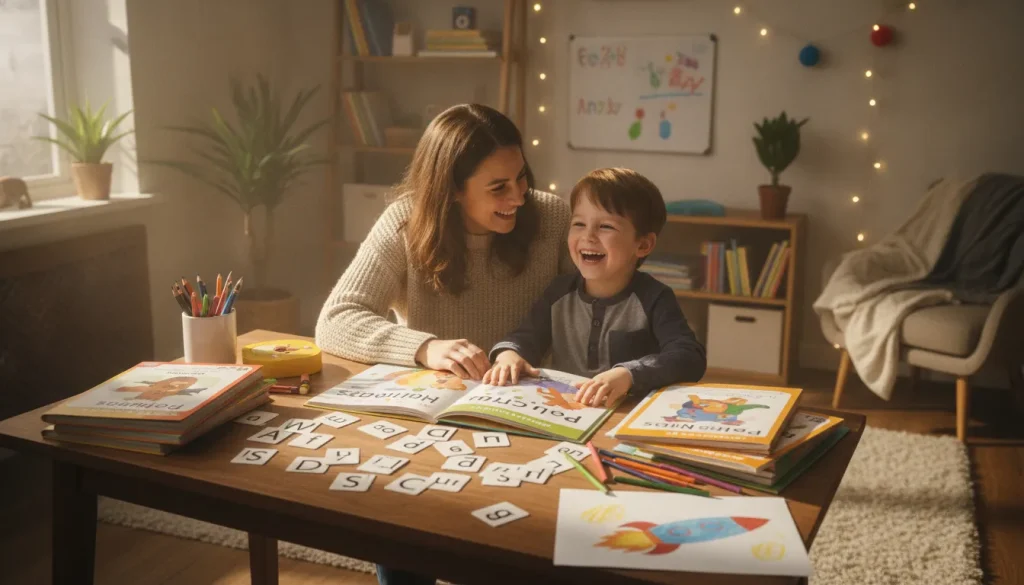
A child crying over a list of sight words is a common sign of a weak reading program. Parents do not need to cycle through endless books to find a solution that works.
Browse our decodable books to find a homeschool phonics curriculum that builds confident readers.
A high-quality homeschool phonics curriculum must teach letter-sound relationships in a direct, clearly defined sequence rather than relying on guessing or predictable books. According to research from Reading Rockets, systematic and explicit phonics instruction makes a much bigger contribution to reading growth than other methods. Parents should select programs that feature easy, scripted lesson plans, hands-on multisensory practice, and plenty of reading practice using decodable books. Since no single magic program fits every learner, families need flexible tools they can easily adapt to their child’s specific reading level. This structured approach ensures that both beginning readers and struggling learners build essential reading skills and make rapid, noticeable progress.
Choosing among the many options can feel overwhelming when you want the best for your young reader. To make this decision simple, we have outlined the core features of a successful program. The path begins with understanding what makes systematic and explicit instruction so important.
When looking for science of reading homeschool curriculums, the terms systematic and explicit will appear often. These are not just trendy sales words, but rather core teaching methods that help children learn to read. For both early readers and struggling readers, having a clear and structured path is the key to literacy. If a homeschool phonics curriculum lacks this groundwork, children may struggle to connect letters to sounds.
Systematic teaching means that the program follows a logical roadmap. It does not leave reading to chance or guessing. Instead, systematic phonics instruction involves the direct teaching of letter-sound relationships in a clearly defined sequence. This idea is backed by research on phonics instruction basics from Reading Rockets.
A good curriculum should be systematic and sequential, moving from simple to complex skills. For example, children will learn single letter sounds like /s/ and /t/ before they learn blended sounds like /st/. They will practice short vowels before they move on to long vowels or complex vowel teams. This stepwise path ensures that learners master each small step before they face harder tasks.
Explicit teaching means the parent or teacher explains the rules clearly. The child is not asked to guess words based on pictures or context. Instead, effective homeschool phonics programs should include explicit instruction in sound-symbol relationships. You teach your child that the letter f makes the /f/ sound, and you show them how to blend that sound with others.
This direct approach is a main part of structured literacy, which helps children understand how the English language works. National research funded by the National Institutes of Health shows that children learn to read best when they are taught letter-sound relationships directly. Without this explicit guidance, many children pick up bad reading habits, like guessing a word based on its first letter.
Homeschool parents are often not trained teachers, which can make teaching reading feel scary. A program with systematic and explicit lessons removes the guesswork. It tells you exactly what to teach, how to teach it, and when to move on. This structure offers clear guidance for busy families who want to make sure their children are on track.
When choosing a homeschool phonics curriculum, looking for these two features will ensure your child gets a strong start. Learning to read does not have to be a struggle. With the right systematic and explicit program, you can guide your child toward reading success with confidence and ease.
An effective homeschool phonics curriculum must do more than teach letter sounds. Without the right practice, young learners quickly forget these sounds. Decodable books solve this problem. These books help kids practice reading by using only the sounds they have already learned.
When children first learn to read, their brains work hard to match letters to sounds. Books with too many untaught words can overwhelm them. Scientific research shows that controlled text is vital for reading practice at a child’s specific skill level, reducing cognitive load. By limiting the words to matching phonics patterns, children do not have to guess. This simple setup reduces frustration.
For beginning readers, this reduced load means they can focus fully on decoding. They never get stuck on untaught words. For struggling readers, this steady structure is even more vital. It takes away the fear of failure and makes reading feel possible. Over time, this success builds a strong reading habit.
According to the National Reading Panel, phonics teaching must be systematic. As noted on Reading Rockets, effective phonics programs provide plenty of practice in applying letter-sound knowledge through decodable texts. In contrast, standard leveled readers often use predictable words that encourage children to guess. Guessing does not build real reading skills. Decodable books force children to look closely at letters to blend them.
To make the most of your homeschool phonics curriculum, choose books that match your lessons. For example, a child who only knows short vowels should not face long vowels. Selecting matching books lets kids use their skills right away. This turns abstract rules into real-world skills. It also keeps them from getting confused by untaught spelling patterns.
Phonics practice should not stop with reading. Good programs also give children chances to spell words and write stories using the letter-sound relationships they learn. This active practice helps kids connect what they read with what they write. When children spell words, they solidify the phonics patterns in their minds.
When children write, they must turn sounds back into letters. This process is called encoding, and it acts as the flip side of reading. Working on both skills at the same time speeds up learning. You can ask your child to spell simple words from their decodable readers. Writing these words helps them remember the rules faster.
Finding books that fit your homeschool phonics curriculum does not have to be hard. You can find high-quality decodable books to match your phonics system. If you want a complete set of tools, you can also browse our decodable book bundles. With the right books, your child will grow into a confident reader.
Young kids learn best when they use more than one sense at a time. Strong reading programs connect what children see, hear, and feel. This simple three-way link forms the core of multisensory learning. When children trace a letter while saying its sound, they build a strong path in the brain. This method helps early readers connect letters to their real sounds.
Early readers learn a lot from multisensory play because it makes early lessons feel like a game. It turns abstract letters into real objects they can touch and move. For struggling readers, these tools are even more helpful. They give other paths to reach the same reading skills when standard visual or auditory methods fall short.
Using more paths is also helpful for struggling readers. Some kids find it hard to look at a page and remember a sound. But if they write the letters in sand, or tap their fingers to the beat of each sound, the lesson sticks. These hand and body movements make abstract concepts real. They reduce stress and make the process fun for young minds.
You might wonder: Is an Orton-Gillingham approach good for homeschoolers? Yes, it is highly useful. When you choose a science of reading curriculum, look for these key principles. They guide parents to teach step by step without guessing. You do not need to be a trained teacher to use these tools at home.
The Orton-Gillingham method is a proven way to support students who struggle to read. Published Orton-Gillingham reading interventions show that this explicit, multi-sensory teaching style helps children who struggle with basic decoding. It breaks big tasks into small, clear steps. This structured setup ensures that no child gets left behind or feels lost.
A great homeschool phonics curriculum must combine active sensory practice with cumulative review. This means kids do not just learn a sound and move on. When you compare the best science of reading homeschool curriculums, check for daily review tools. Children should use their eyes, ears, and hands to review past sounds while they learn new ones. This constant practice builds deep, lasting reading skills.
These tactile tools help children connect symbols to real speech sounds. When kids move letter blocks or trace letters, their brains form stronger memory bonds. This makes decoding much easier. Over time, these daily active habits lead to rapid growth in reading fluency. Your child will feel more sure of themselves as they master each new skill.
Look for programs that include tactile and auditory tasks like these:
Many parents worry that they cannot teach reading without formal teacher training. Teaching phonics can feel like a big chore if you do not know where to start. But you do not need a teaching degree to help your child succeed. A strong homeschool phonics curriculum can give you the exact tools you need to teach reading at home.
Scripted lesson plans make daily reading practice simple and stress-free. With an open-and-go format, you do not have to spend hours planning your day. The curriculum tells you exactly what to say, what to show, and what to do. This clear support helps parents without formal teaching training teach reading with ease, as noted in homeschool phonics guides. There is no need to make up your own games or look for extra worksheets. You can open the book and start teaching right away.
A structured layout keeps your lessons on track. Each day follows a clear path that builds on what your child learned the day before. This design helps struggling readers who need a steady and clear routine. You do not have to worry about missing important skills because the plan is already laid out for you. When you choose a science of reading curriculum, look for open-and-go lessons that make each step simple.
A strong homeschool phonics curriculum helps any parent teach reading well. You do not need to know complex word rules to be a great teacher. Instead, the curriculum acts as your guide. It does the hard work of planning the lessons so you can focus on your child. This clear plan works well for both beginning readers who are just starting and struggling readers who need extra support. This structure takes away the stress of teaching.
Systematic phonics programs work very well because they teach letter-sounds in a clear, set sequence. This direct teaching is much better than asking children to guess words from pictures. Research shows that direct teaching of letter-sound relationships is the best way to help children understand the English writing system. You can read more about these methods in the Reading Rockets guide to phonics. When you use a structured curriculum, you give your child a solid path to reading success.
Every child has their own needs when they learn to read. There is no single magic bullet program that works for every kid. In fact, research on literacy programs shows that no single curriculum can meet the needs of every student. This is why you must check where your child stands before you start. Finding their skill level will keep them from feeling bored or lost.
A good fit is key for both beginning readers and struggling readers. Keep in mind that kids learn from good teaching, not just from books. No tool can replace your active help. When you choose a science of reading curriculum, you are the teacher. Your job is to find what your child needs and match the lessons to those needs.
Checking skills does not have to be hard. You can find where to start your child in a new homeschool phonics curriculum. Follow these steps to test their skills and pick the right level.
A good homeschool phonics curriculum gives you the tools to adapt each lesson. You can slow down when a concept is hard or speed up when they learn fast. If a child makes many errors, do not rush ahead to the next level. Instead, pause and review. Taking the time to build a strong foundation now will save you time later. It will make reading fun and help your child grow with confidence.
Phonics curriculum prices vary a lot. You can find basic workbooks for under $40 or full multi-year sets that cost several hundred dollars. Knowing what each price range offers helps you find the best homeschool phonics curriculum for your budget.
| Price Range | What You Get | Example |
|---|---|---|
| $30-$50 | Single student workbook or basic lesson guide. Covers one grade level. | Master Books Foundations Phonics ($35.99, Ages 5-7) |
| $50-$150 | Multi-component program with teacher guide and student materials. May include flashcards and decodable readers. | Sonlight K-3 Language Arts (grade-specific packages) |
| $150-$400 | Full multi-year sets with scripted lesson plans, manipulatives, and decodable book collections. | Christianbook PAF program (3-year Orton-Gillingham based) |
A complete homeschool phonics curriculum should include lesson plans, practice materials, and books that match the phonics skills being taught. Some budget-friendly options are enough for parents who want a simple workbook approach. But most families get better results with programs that include decodable readers and hands-on tools. These extra items add to the cost but also add to the results.
Look for programs that let you reuse materials with multiple children. Scripted teacher guides and sturdy manipulatives can be used year after year. This makes a higher upfront cost more affordable over time. Decodable book sets are another smart buy. They support your child through multiple levels of phonics learning and can be passed down to younger siblings.
Shop our decodable books collection today and find the perfect fit for your child’s reading level.
A great program teaches letter-sound relationships in a clear, step-by-step order. It should include scripted lesson plans so parents know exactly what to teach. Look for programs that use decodable books for practice and include multisensory activities like tracing or building words.
Start by giving your child a placement test to find their skill level. Think about your child’s learning style and whether you want a scripted or flexible program. Choose a curriculum that is systematic and explicit, with plenty of decodable reading practice.
Phonics-based programs are much more effective for teaching reading. Research shows that systematic phonics instruction helps children decode words accurately instead of guessing. Sight-word-only approaches often leave children without the tools they need to sound out new words.
Yes. Many homeschool phonics curriculums include scripted, open-and-go lesson plans that tell you exactly what to say and do. You do not need formal training when the program gives you step-by-step guidance for each lesson.
Prices range from $30 for basic workbooks to $400 for comprehensive multi-year sets with manipulatives and decodable readers. Programs with reusable teacher guides offer the best long-term value for families with multiple children.
Little Lions Literacy offers a complete collection of decodable books based on the Science of Reading. Each book uses only the sounds your child has learned, so they build confidence with every page. Whether you are teaching a beginning reader or supporting a struggling reader, our books help turn phonics lessons into real reading success.
Browse our decodable books to find the right set for your child’s reading level.