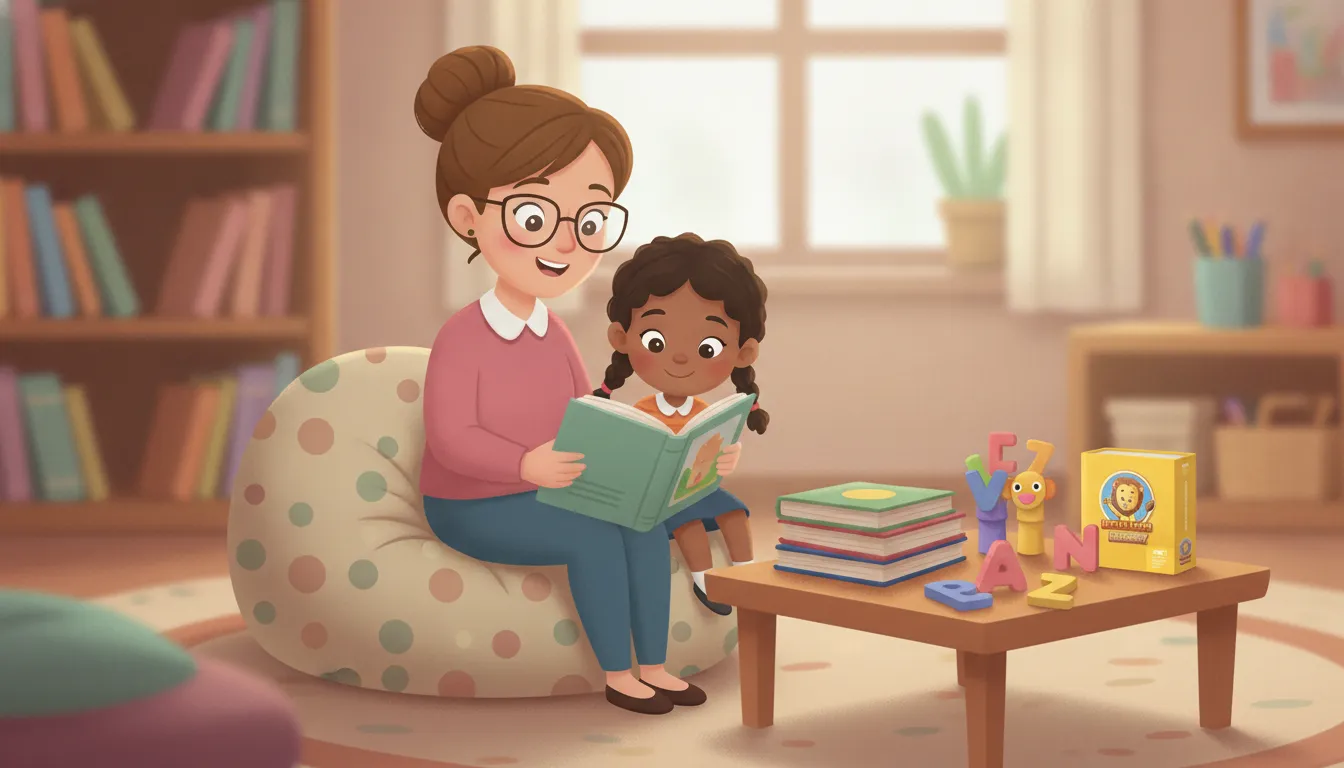
A useful phonics lesson supply list does not need to be long. Start with a few tools that let a child hear a sound, connect it to a letter or spelling pattern, build and read words, and practice in connected text. Then add materials only when they serve a clear purpose. This guide explains what to keep on hand, how to organize it, and how to choose supplies for a classroom, tutoring table, or home lesson.
Ask us about finding the right phonics resources
For most short lessons, gather a writing surface, something to write with, letter cards or tiles, a small set of word cards, and a book or passage matched to the skill being practiced. These materials support several kinds of practice without turning the lesson into a craft project.
These are starting points, not a required shopping list. A teacher might already have most of them in a classroom. A family can use paper, a pencil, and homemade letter cards. The important question is whether each supply helps the learner notice, say, read, spell, or apply the phonics pattern.
A compact lesson can use the same few supplies in a clear sequence. The adult says a word, the learner listens for the sounds, and letter pieces are used to build it. The learner then reads the word, writes it, and looks for the pattern in a short text. Not every lesson needs every step, but keeping the materials tied to a sequence helps avoid switching between unrelated activities. If the child is new to a task, demonstrate one example before asking for an independent response.
Choose the materials after deciding what the learner will practice. A lesson focused on hearing and identifying a sound needs different tools from one focused on reading a vowel team in a sentence. Name one clear objective, then match a few materials to it.
If you are still deciding what phonics instruction includes, review what phonics is and how children learn to decode. For a lesson structure, the practical steps in this guide to teaching phonics can help you connect supplies to instruction rather than collecting materials without a plan.
Sound-to-letter practice can be simple. An adult says a word or sound, the child listens, and then the child selects, writes, or moves the letters that represent it. Use objects that make the response visible, but keep attention on the sound and spelling connection.
Use one representation at a time if several tools make the task harder to follow. For a beginning reader, demonstrate how to listen for each sound and move through the word. For a struggling reader who has already received instruction, reduce the number of choices, model the step that is breaking down, and provide more guided practice before asking for an independent response.
Prepare a small, purposeful set of words rather than a large pile of flashcards. Include examples that make the target pattern easy to see, along with a few words that let the learner distinguish it from a similar pattern when appropriate. Read the words aloud yourself before the lesson and make sure the task is suitable for the learner.
A short-vowel lesson might use a few familiar CVC words. A later lesson could focus on a spelling pattern such as silent-e or a vowel team. The available CVC word examples, CVCe word guide, and vowel digraph explanation can help an adult plan examples around a specific pattern.
For blending practice, provide words that use spellings the child has learned. Prompt the learner to look across the word, say the sounds, and blend them together. If the child needs more support with that routine, see how to teach blending step by step. For spelling, say a word, use it in a brief sentence if needed, and invite the child to segment the sounds and write the corresponding letters. Keep the focus on the target pattern, not on completing a long worksheet.
Children need a chance to use taught patterns while reading words in a meaningful sequence. A decodable text provides practice with spelling patterns that have been introduced, while a controlled selection can help a learner attend to the particular code skill in the lesson. It is not a replacement for instruction or for reading a wide range of books. It is one part of a balanced reading experience.
Before choosing a book, check what patterns it expects the reader to use. If the lesson has focused on short vowels, a text built mostly around unfamiliar vowel teams may be a frustrating match. If the learner is ready to practice a newly taught pattern, look for a passage that includes it while keeping other demands manageable. The resource explaining what a decodable text is offers another starting point, and the decodable readers guide can help adults think about selection and use.
For a general reference point on literacy support, the Massachusetts Department of Elementary and Secondary Education provides education and literacy information for families and educators. When using any external guidance, connect it to the child’s current instruction and the specific goal of the lesson.
Use this comparison to plan a lean kit. The “essential” column means useful for many lessons, not mandatory in every setting. Adapt the list to the learner’s age, the lesson objective, and supplies already available.
| Supply | Use | Priority | Simple alternative |
|---|---|---|---|
| Letter tiles or cards | Build, change, and sort words | Core for hands-on word work | Write letters on scraps of paper |
| Pencil and paper or whiteboard | Write words and record responses | Core | Reuse the back of clean paper |
| Prepared word list | Practice the target spelling pattern | Core | Write a few suitable words before the lesson |
| Decodable book or passage | Apply taught patterns in connected reading | Core when the lesson includes reading | Use a short, appropriate teacher-prepared passage |
| Sound boxes or counters | Make sound-by-sound listening visible | Optional support | Draw boxes; tap fingers to track sounds |
| Timer | Keep a brief activity moving | Optional | Use a simple verbal transition |
| Storage pouch or small tray | Keep pieces together and reduce setup | Optional organization aid | Use a labeled envelope or container |
It is easy to spend time making attractive materials that do not add useful practice. Before buying or preparing an item, ask: What will the child do with it? Which skill does it support? Can an existing supply do the same job? If there is no clear answer, leave it out of the lesson for now.
Think about the difference between a tool and the teaching move. Letter tiles are a tool; asking a child to change map to mop by listening for the vowel is the teaching move. A worksheet is a tool; guiding the learner to read each word and explain the spelling pattern is the instruction. Supplies are most useful when they make the learner’s thinking observable and give the adult a chance to respond. They should not add a layer of decoration or directions that takes attention away from the reading goal.
For a quick check, use a few familiar examples and one new example with the same taught pattern. Watch whether the child can apply the pattern without simply memorizing the order of the cards. If the new example is too difficult, return to a model and provide guided practice; if it is easy, note that the learner may be ready to apply the pattern in more words or text. This is a simple instructional observation, not a formal assessment.
A well-organized kit makes it easier to begin promptly and to repeat a familiar routine. You do not need a separate collection for every child. Sort a manageable set of materials by function, and keep the items used for the current skill within reach.
At home, a folder and pencil case can hold everything for the week. In a classroom, prepare several small kits or a shared station, depending on how learners will use the materials. For group teaching, confirm that the pieces are visible and accessible from where children sit. For a young child, choose sturdy, easy-to-handle materials and supervise small objects.
Keep the kit consistent enough that the child knows where to find familiar tools, but change the examples as the instruction moves forward. An adult can prepare the next word cards in advance while leaving the core letter pieces in the same place. At the end of a session, return the pieces, make a brief note about what the child could do, and set aside any word or book that needs another look. This small reset prevents a later lesson from starting with a search for missing materials.
In a classroom, consider how supplies will be shared. If one set of tiles serves a small group, place it where each child can see and reach it, and have a plan for turns so waiting does not replace practice. If children use individual sets, keep the number of pieces modest and check that every learner has the needed letters. At home, an adult can hold up a card or write on paper instead of building a full kit; the goal remains the same: the child actively responds to the phonics skill.
A beginning reader is learning foundational sound-letter connections and how to blend. Keep tasks short, model the routine, and use a small number of familiar letters and words. Provide many opportunities to respond, and avoid presenting a large collection of new patterns at once.
A struggling reader may need something different. The learner might already know some letter names or spelling patterns but have difficulty recalling them, blending accurately, or applying them in text. First identify the specific point of difficulty from instruction and observation. Then choose a support: larger print or letter pieces for easier handling, fewer choices, a model word, extra guided turns, or a text that revisits the skill. Keep the reading goal appropriately challenging without assuming that every struggling reader needs the same materials.
For either learner, supplies should not become a substitute for explicit instruction, practice, or feedback. If a child repeatedly cannot complete a task even with modeling, simplify the task and share the pattern of difficulty with the child’s teacher or reading specialist, when available. A supply list can make practice easier to deliver; it cannot diagnose a reading difficulty.
Books are the reading-practice part of the kit. Little Lions Literacy publishes decodable books and phonics resources for early readers, with a sequence of four sets of 16 books each. The sets progress through patterns such as short vowels, digraphs and blends, then long-vowel and more advanced spelling patterns. Check the specific book and the learner’s instruction before using it; a numbered set is not a substitute for confirming skill fit.
In a lesson, the adult can introduce or review a pattern, guide word reading or spelling, and then invite the child to read connected text that gives practice with familiar patterns. Pause when useful to ask the child to point to a spelling, reread a sentence, or explain what happened. Keep comprehension and enjoyment in view as well as accurate decoding.
Once you know which spelling patterns the learner is ready to practice, browse the Little Lions decodable books as one option for connected reading. The teaching resources collection is also available to educators and families exploring phonics materials. Choose books and resources to complement the instruction already in place.
Shop Little Lions Literacy books and resources
Start with a writing tool and surface, letters the learner can manipulate or write, a short set of words matched to the skill, and suitable connected text if reading is part of the lesson. Add counters or sound boxes when they make a particular step clearer.
No. Paper, a pencil, and homemade letter cards may be enough to begin. Reusable tiles, whiteboards, and organized kits can make practice easier, but buy a tool only when it supports a specific learning action you plan to teach.
There is no fixed number that fits every learner or lesson. Choose a manageable group of examples that allows accurate practice and feedback. If the child is guessing or becoming fatigued, shorten the list and revisit the skill with more guidance.
Not every brief activity needs to include a book, but connected reading is an important opportunity to apply taught patterns. When the lesson includes reading, select a passage that matches the learner’s current instruction and does not depend heavily on untaught patterns.
Pause and identify the step that is difficult. Model it, reduce the number of choices, and try a simpler example before returning to the original task. Keep a note of what happened so the child’s teacher or reading specialist can help plan next steps if needed.
A practical phonics lesson supply list is a small set of purposeful tools, not a cart full of materials. Match each item to the skill, prepare practice the learner can attempt with support, and leave room for reading words and connected text.