If your child is learning to read, you have probably heard the term “decodable readers” from a teacher, a curriculum guide, or another parent. But what does it actually mean, and why does it matter so much for your child’s reading success? The answer comes down to one simple idea: the books a child practices with should match the phonics skills they have already been taught. That is exactly what decodable readers are designed to do. This guide will walk you through everything you need to know, from what makes a book decodable to how to choose the right ones for your child, so you can feel confident supporting their reading journey.
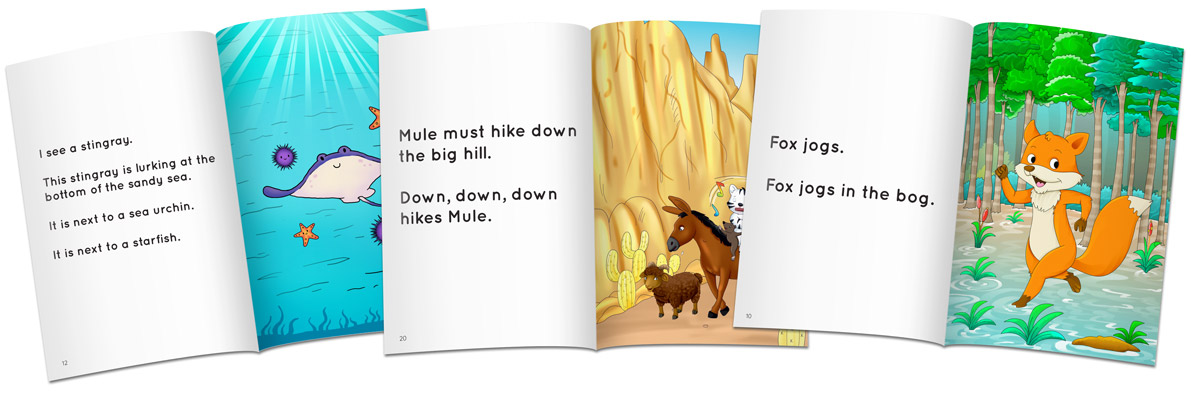
Decodable readers are books written specifically for children who are learning to read. Every word in a decodable book is chosen intentionally. The text uses only the letter-sound relationships and phonics patterns that the child has already been taught in their lessons, along with a small number of high-frequency sight words.
For example, if a child has learned the sounds for the letters s, a, t, p, i, and n, a decodable reader at that level will include words like “sat,” “tap,” “pin,” and “nap.” The child will not encounter words with spelling patterns they have not yet studied. This careful control is what makes the book truly decodable for that reader.
This is different from simply being a “simple” or “easy” book. A short picture book might use common words, but those words could include spelling patterns a beginning reader has not been taught. A decodable text is deliberately structured so the child can sound out almost every word on the page using what they know.
The power of decodable readers comes from their connection to systematic phonics instruction. Here is how the process works:
This approach is grounded in a concept that reading researchers call orthographic mapping. When a child sounds out a word correctly multiple times, their brain stores the letter pattern so they can recognize it instantly in the future. Decodable readers give children the repeated, successful practice they need to make this process work.

Browse Our Decodable Book Sets
This is one of the most important distinctions in early literacy, and it is one that many parents and even some educators find confusing. Both decodable readers and leveled readers are designed for beginning readers, but they take fundamentally different approaches.
Decodable readers are organized by phonics skills. They follow a scope and sequence, introducing letter-sound patterns in a specific order. A child reads books that match the skills they have learned so far.
Leveled readers are organized by overall text difficulty. Books are sorted into levels (often using letters like A through Z) based on factors like sentence length, vocabulary complexity, and the amount of picture support. The focus is on matching a child to a book at their general reading level.
The critical difference is what happens when a child encounters an unfamiliar word. With a leveled reader, a child might be encouraged to look at the picture, guess from context, or skip the word. With a decodable reader, the child has the phonics tools to sound out every word. This builds a habit of looking at letters and connecting them to sounds, which is the foundation of strong reading.
Research from the science of reading consistently shows that children who use decodable texts during early instruction develop more accurate decoding habits than those who rely on leveled texts that encourage guessing strategies. For a deeper look at how these two approaches compare, read our full decodable vs. leveled readers guide.
The term “science of reading” refers to decades of research from cognitive science, neuroscience, and education about how the brain learns to read. One of the clearest findings from this body of research is that explicit, systematic phonics instruction is essential for beginning readers.
Decodable readers are the practical application of this research. Here is what the evidence tells us:
The research is clear: putting the right text in front of a beginning reader shapes the strategies they develop. Decodable readers ensure those strategies are built on a solid phonics foundation.
Understanding the research is valuable, but what does this look like in practice? Here are the specific benefits parents and teachers see when children use decodable readers consistently.
When children can successfully read every word on a page, something powerful happens. They start to see themselves as readers. This is not a small thing. Many struggling readers have developed a negative relationship with books because they have experienced too much failure. Decodable readers break that cycle by ensuring success from the very first page.
Every time a child sounds out a word in a decodable book, they are reinforcing the habit of looking at letters and connecting them to sounds. Over time, this becomes automatic. Children who build this habit early are better equipped to tackle unfamiliar words later, even in more complex texts.
Not all reading practice is created equal. Reading a random easy book gives general exposure to text. Reading a decodable book aligned with a specific phonics lesson gives focused practice on the exact skill a child needs to master. This targeted approach is more efficient and more effective.
For children who find reading difficult, including those with dyslexia, decodable readers are especially valuable. They remove the guesswork and give the child a reliable strategy: look at the letters, connect them to sounds, and blend. This structured approach provides the extra support that struggling readers need to make progress. Learn more about how decodable readers support intervention.
Not all decodable books are created equal. Here is what to look for when selecting decodable readers for your child or classroom.
The most important feature of a quality decodable reader series is a well-organized scope and sequence. This is the specific order in which phonics skills are introduced, starting with simple letter sounds and progressing to more complex patterns like consonant blends, digraphs, and vowel teams.
A good scope and sequence ensures that each book builds on the skills taught in previous books. Children are never asked to read words with patterns they have not learned yet.
Some books are marketed as “decodable” but include too many words that fall outside the phonics skills being practiced. A high-quality decodable reader will have a very high percentage of words (typically 80% or more) that the child can sound out using the skills taught up to that point. The remaining words should be common sight words that are introduced before reading.
Decodable readers are practice tools, but that does not mean they have to be boring. The best decodable books today feature engaging storylines, fun characters, and appealing illustrations. When children enjoy the stories, they want to read more, and more practice leads to faster progress.
Decodable readers should match where your child is in their phonics journey. A kindergarten student just learning CVC words needs different books than a first grader working on consonant blends and digraphs. Choose a series that covers the full progression from beginning sounds through advanced phonics patterns.

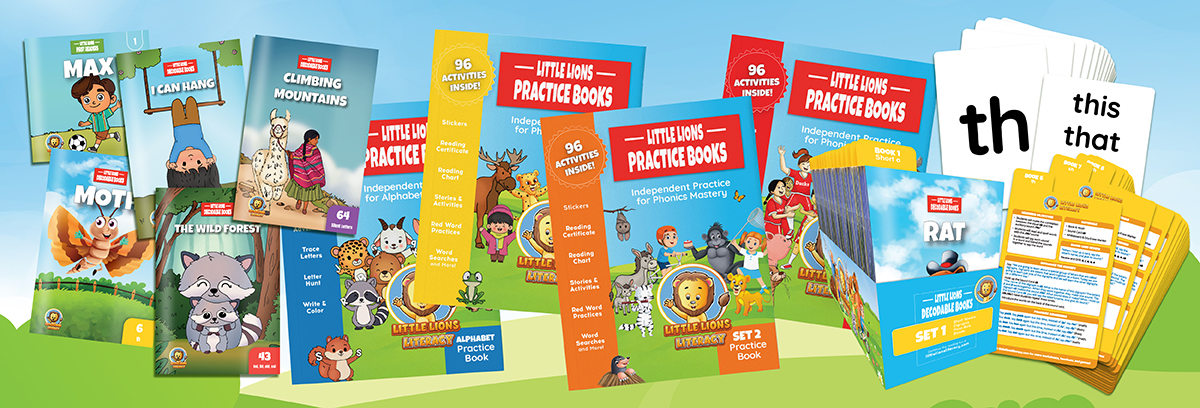
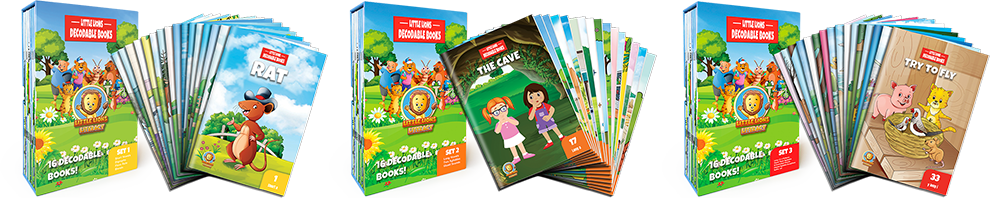
Little Lions Decodable Books were created by Karina Richland, M.A., an educator with extensive experience in structured literacy and working with struggling readers. The series was designed from the ground up to align with the science of reading and provide exactly what children need to become confident readers.
Here is what makes them stand out:
The Little Lions series is not a collection of random easy readers. It is a complete, structured system designed to move children through the phonics skills they need, one step at a time.
Shop Little Lions Decodable Book Sets
Having the right books is the first step. Here are practical tips for getting the most out of decodable readers at home or in the classroom.
Before handing a child a decodable reader, make sure they have been taught the phonics skills covered in that book. If a book focuses on short vowel CVC words, the child should have already learned those letter sounds. A book is only truly decodable if the reader has the skills to decode it.
Most decodable books include a small number of high-frequency words that do not follow regular phonics patterns (words like “the,” “said,” or “was”). Review these words with your child before they begin reading so they are prepared when they encounter them in the text.
When your child gets stuck on a word, resist the urge to say “look at the picture” or “what word would make sense here?” Instead, guide them back to the letters. Say something like, “Let’s look at the sounds. What sound does this letter make?” This reinforces the decoding habit that decodable readers are designed to build.
Reading a decodable book once is good. Reading it two or three times is better. Repeated reading builds fluency and automaticity. Each time a child rereads a familiar text, they get faster and more confident, which strengthens their reading pathways.
Decodable readers are designed for skill practice, but they are not the only books your child should experience. Continue reading rich, complex stories aloud to your child to build their vocabulary, background knowledge, and love of reading. Think of decodable readers as the “practice” books and read-alouds as the “pleasure” books. Both are essential.

Decodable readers are books written for beginning readers using only the letter-sound patterns and phonics skills the child has already been taught. They allow children to practice sounding out words independently, building confidence and strong reading habits from the start.
Decodable readers are organized by specific phonics skills and follow a scope and sequence. Leveled readers are organized by overall text difficulty. The key difference is that decodable readers ensure a child can sound out every word using skills they know, while leveled readers may include words that require guessing.
Children can begin using decodable readers as soon as they start learning letter sounds, which is typically in preschool or kindergarten (ages 4 to 6). The books should match the specific phonics skills the child has been taught, regardless of age.
Most children benefit from decodable readers through the end of first or second grade, or until they have mastered the major phonics patterns and can read fluently. For struggling readers, decodable texts may continue to be a valuable tool beyond second grade.
Absolutely. These books are an excellent tool for parents to support reading practice at home. Choose a series that aligns with what your child is learning in school, preview any sight words before reading, and encourage your child to sound out words rather than guess.
The science of reading supports the use of decodable texts for beginning readers. Research shows that when children practice with text that matches their phonics instruction, they develop stronger decoding skills, read more accurately, and build the neural pathways needed for fluent reading.