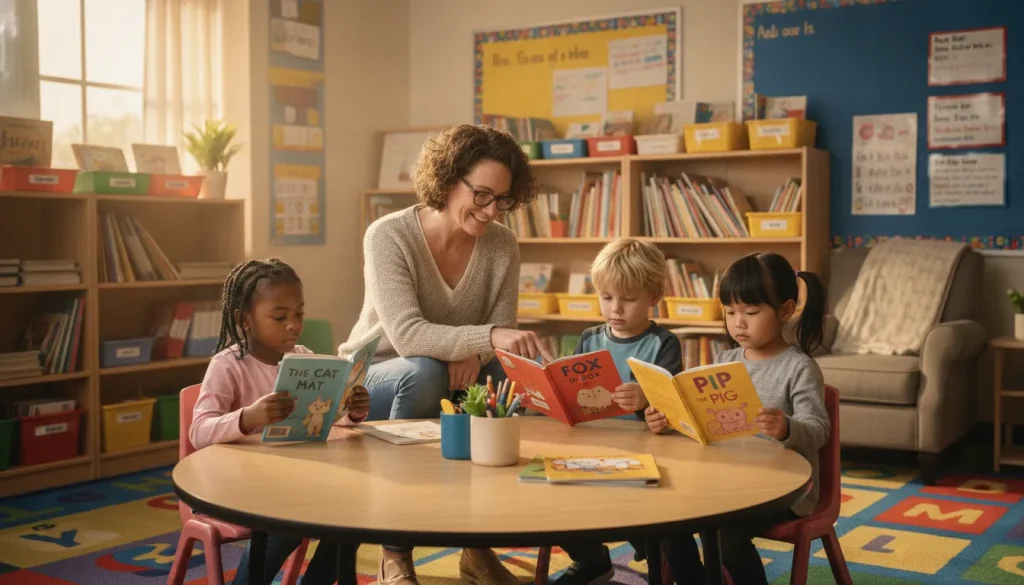
Scattered book bins and lost instructional time drain the power from early reading blocks. When teacher-led groups stall because resources are not prepped, young readers lose the rhythm of learning.
Using decodable books small group reading instruction is the best way to help early readers build letter-sound connections in whole sentences. By grouping these books by phonics skills and setting up clear color-coded bins, teachers can quickly match the right texts to the correct reading groups. According to Reading Rockets, a decodable book must contain at least sixty-four percent words students can sound out. This ensures that beginning readers focus on spelling patterns instead of guessing. An organized, color-coded classroom library keeps student rotations moving smoothly, ensuring every child practices the exact skills they need to build lasting confidence. This setup prevents lost teaching time and lets you focus on helping students master each step during your lesson.
Running effective literacy rotations requires more than just having good books on hand. If you want to keep young readers focused without losing valuable teaching time, understanding why organization matters for small-group reading is the first step.
Teaching small reading groups can feel hectic when books are not in order. Teachers lose precious instructional time when they must hunt for the right texts. A structured setup helps classroom teachers make the most of every instructional minute. This simple organization keeps young students on task and ready to learn.
In active early grade classrooms, every single minute of teaching counts. Research from the Institute of Education Sciences shows that structured phonics lessons help young kids learn to read. But teachers often lose precious minutes when their books are not sorted by skill. Without a system, search time cuts into your teaching block, but good organization lets you start lessons fast.
When books are sorted, rotations run smoothly because kids know exactly where to go. You will not waste instructional time matching students to their daily texts. Instead, teachers can focus their full attention on direct phonics teaching. A solid system makes small group reading instruction simple and helpful for everyone.
Early readers often get frustrated when their practice books do not match their skills. If a text has untaught phonics patterns, kids will guess rather than decode words. Decodable books help students avoid relying on pictures or guessing words from context. This direct focus on the printed word builds confidence for beginning readers.
Unsorted book bins make it hard to find the correct reading level quickly. If a child gets a book that is too hard, they may feel bad and lose focus. Organized storage bins keep your entire library sorted by specific phonics skills. This practical setup makes sure every child gets the correct book at the right time.
The main goal of decodable books in small groups is to reinforce taught phonics skills. When a story matches your phonics lesson, children can easily practice what they just learned. This targeted reading practice helps them move quickly from single sounds to full words. This regular practice turns their new decoding skills into lasting reading habits.
Small groups allow for the use of varied instructional routines that address phonological awareness alongside decoding practice. This active hands-on work helps early readers build deep phonics knowledge over time. These decodable texts provide targeted phonics practice, build confidence, and develop fluency for early readers. Having an organized classroom library makes this targeted phonics practice possible every day.
Setting up a clear system is key for choosing decodable books for small groups. When you use decodable books small group reading lessons become much more structured and helpful. To run a smooth reading group, you must group books by their phonics patterns. This helps you find the right text in seconds.
Sorting your classroom library does not have to be hard. A structured plan will save you time and keep your reading groups on track. You can sort your books using a simple, clear system. This system aligns your texts with your daily lessons.
You can use the Little Lions Literacy four-set system to sort your books. Set 1 covers short vowels, digraphs, and blends, while Set 2 moves to long vowels and two-syllable words. Set 3 includes vowel teams and r-controlled vowels. Set 4 covers diphthongs and advanced spelling patterns.
This clear setup supports phonics instruction by giving kids the right practice text for each step. In small groups, decodable books should be matched carefully to the phonics skills you are teaching. This targeted practice builds pride and helps students learn to read without guessing from pictures.
Some students will need more support to master each level. Explicit instruction in phonics must always come before students read these books. For struggling readers, you should focus on phonics features they have been explicitly taught. By keeping your books sorted by skill, you can quickly grab a text that matches their current level.
Before using any book, you must also review the specific phonics skills needed to read it. This simple check ensures that students are not met with unexpected vowel teams or silent letters. With an organized library, you can spend less time searching for books and more time teaching your students.
Classrooms that use systematic phonics need a strong plan for their daily schedule. Managing small groups can feel hard, but a structured rotation system makes a big difference. Setting up clear routines helps you get the most out of your decodable books small group reading time. By setting up your space and your clock, you can keep students on task and help them grow as readers.
A great rotation system starts with a flexible schedule. When planning your groups, you can choose how often to meet with each set of students. According to Reading Rockets small-group rules, teachers can meet with every group daily or alternate groups on other days. Research on differentiated reading instruction shows that this setup helps you target specific skill needs. Most teachers allot between 10 to 20 minutes for each small group session.
Keeping sessions brief is key to keeping young learners on task. If students struggle to stay focused for more than 10 to 15 minutes, you should change your pace. You can break your lesson parts apart or give students a short brain break. These quick breaks help kids recharge before they return to their reading practice. Shorter, high-energy sessions are much better than long, slow ones.
Good systems are the next step to a smooth rotation. Many teachers use plastic book bins and color-coded tags to keep their decodable texts in order. Each reading group has its own bin with books that match their current phonics skill. Classroom sets of decodable books make this setup very simple for busy teachers. These sets come with pre-made lesson plans, sound cards, word cards, and small whiteboards for your students.
When children sit at the reading table, each student needs their own book. Providing multiple copies of the same text lets every child follow along and read the words on their own. This hands-on work is perfect for your small group phonics practice. Having their own copy keeps students engaged and active during the entire lesson. You can quickly see who is tracking the text and who needs extra help.
The main benefit of a small group is the chance for direct teacher support. During reading time, some students will struggle with tricky phonics patterns. Small-group lessons let you give quick feedback the moment a child gets stuck on a word. You do not have to wait until the lesson is over to fix a mistake. This timely help prevents students from forming bad guessing habits.
You can also model how to sound out new words during the lesson. Try decoding words slowly out loud before you read them at a natural pace. Showing students how to blend letter sounds helps them learn to do it on their own. This explicit practice helps kids read faster and understand more. With the right books and routines, your small-group time will become the most effective part of your day.
Small groups allow teachers to plan phonics lessons for every child. Using small group reading interventions can help teachers match decodable books to different student needs. According to research, small groups are useful for differentiating instruction based on student skill level. This targeted practice ensures that every student works with texts that match their current needs.
Beginning readers should start using decodable books early in school. You should introduce these texts as soon as children know basic letter-sound connections. Early access to these books helps young learners apply their phonics skills to real reading. This regular practice builds their confidence from the very start of their reading journey.
On-track students also benefit from targeted small-group practice. For these students, decodable books reinforce classroom phonics lessons and spelling patterns. They can read slightly more complex texts as they learn new blends and digraphs. This active practice helps them become fluent readers who can tackle longer stories.
Struggling readers need more intense and frequent support to make progress in their reading skills. Ideally, these students should meet for small-group instruction daily, regardless of any other interventions they receive. This daily practice helps them build their skills over time and close the gap with their peers.
To prevent frustration, books for struggling readers must focus on phonics features they have been explicitly taught. If a book has untaught patterns, students may start to guess words. Controlled practice keeps the tasks manageable and boosts their confidence. It allows them to focus on the sounds they know without getting overwhelmed by hard words.
Repeating the same text is very helpful for these students. Teachers should give students regular chances to re-read decodable books to build fluency and confidence. Re-reading helps students recognize words faster and read more smoothly, turning decoding from a slow struggle into a natural habit.
Small groups let teachers watch students closely as they read aloud. This setting allows teachers to provide immediate feedback when students struggle to decode a word. Instead of guessing, students get instant help to sound out words correctly, which keeps them from forming bad reading habits.
Regular checks ensure that lessons remain helpful. You should monitor student progress through decodable books using formative assessments to know when to introduce more complex phonetic features. When a student reads their current books correctly and smoothly, you can introduce harder phonics patterns. These planned steps keep students moving forward at the right pace without any gaps in their learning.
To build a strong classroom reading library, teachers need the right books for small-group reading instruction. A systematic approach to phonics helps students practice and master their skills step by step. When teachers use the same book for each child in a group, students can track the text together. This shared practice is vital for building confidence and phonics skills as children learn to read.
Every classroom library needs books that match what students are learning during phonics lessons. In systematic instruction, teachers group texts by their phonics focus to help early readers sound out words. The Institute of Education Sciences offers guidelines on how to group and teach these foundational skills in small group reading instruction. Teachers can start with simple short vowels and move up to hard vowel patterns over time.
Our decodable book sets are split into clear levels, with sixteen books in each set that build on the last. Teachers can buy each set for $79.95, or choose a three-set bundle for $199.95. This bundle helps classrooms build a large collection of decodable books without spending too much money. The table below compares the options to help you choose the best fit for your class.
| Classroom Set | Phonics Focus | Individual Price | Classroom Price | Total Books |
|---|---|---|---|---|
| Classroom Set 1 | Short vowels, digraphs, floss rule, and blends | $79.95 | $489.75 | 96 books (6 copies of 16 titles) |
| Classroom Set 2 | Long vowels, two-syllables, and glued sounds | $79.95 | $489.75 | 96 books (6 copies of 16 titles) |
| Classroom Set 3 | Vowel teams and r-controlled vowels | $79.95 | $489.75 | 96 books (6 copies of 16 titles) |
To teach reading well, teachers need enough copies of each book because sharing one copy is hard. To run strong lessons, teachers must give students multiple copies of the same book so each child can track the text. Our classroom sets cost $489.75 and have six copies of sixteen book titles. With ninety-six books in total, a teacher has enough tools to help each small group.
A great decodable library is much more than books on a shelf. To support teachers, our complete sets come with scripted lesson plans that guide every single reading session. These kits also have sound cards and student whiteboards. By using these extra tools, kids can build words and practice sounds together in a hands-on way.
A decodable book is a text built with words that match the phonics patterns children have already learned. According to Reading Rockets, at least 64 percent of the words in these books must be readable using known letter sounds. This design helps early readers decode words with success instead of guessing from pictures or clues.
These books give students targeted practice with the phonics skills they are learning in class. In a small group, you can watch each child read and give quick help when they struggle to decode. According to Reading Rockets, small groups are highly effective for matching books to student skill levels. This focus builds strong reading fluency and boosts trust.
Predictable texts use simple patterns and pictures to help kids guess words. However, Reading Rockets notes that predictable books can lead kids to rely on picture clues instead of the printed word. Decodable books teach kids to look at the letters and blend the sounds. This builds the strong habits they need to read harder books later.
To run small groups with success, each student needs their own copy of the book. According to Reading Rockets, having multiple copies lets each child track the text as they read. This keeps students on task and active. Most classroom small groups have four to six students, so you will want six copies of each title.
A standard small-group reading lesson should take about 10 to 20 minutes per group. According to Reading Rockets, this short window is the sweet spot for keeping young students focused. If students have a hard time staying on task, you can break the lesson into smaller parts or give them quick brain breaks.
Without organized reading books, students will continue to struggle with mismatched lessons, which leads to lost classroom time and growing reading gaps each term. Setting up a systematic phonics library today ensures that every student gets the exact books they need to master core reading skills without delay. You can browse our full set of decodable books now to find tools that align with your phonics curriculum and help your students succeed.
Ready to shop decodable books? Our helpful team is standing by to help you choose the best literacy resources for your classroom today. We make it simple to get the right books for your reading groups. Call (866) 774-3342 to shop decodable books and classroom sets.