Kindergarten sight words are easiest to learn when children study the sounds and letters inside each word. Some words are fully decodable after a child learns the needed phonics patterns. Others have one unexpected spelling that deserves direct explanation.
Teaching kindergarten sight words means sorting words by their regular and unexpected parts, mapping sounds to letters, practicing accurate reading and spelling, and applying each word in decodable text. This phonics-first routine builds automatic recognition without asking children to memorize word shapes or guess from pictures.
The goal is not to rush through a fixed list. It is to help beginning readers build secure word-recognition habits. Struggling readers may need more modeling and review, but they still benefit from explicit attention to print.
Kindergarten sight words are words a child recognizes quickly and accurately. The term describes automatic recognition, not visual memorization. Teach letters and sounds first. Build automaticity through accurate reading, writing, and connected-text practice.
In everyday instruction, sight words and high-frequency words often overlap. They are not identical terms. High-frequency words appear often in spoken and written language. Sight words are words stored for quick recognition, whether the reader learned them through regular decoding or through careful study of an unexpected spelling.
This distinction changes the lesson. A word on a kindergarten list should not automatically become a flashcard for visual memorization. Children need to look at the print, connect sounds to letters, and read from left to right. Pictures and context can support meaning, but they should not replace decoding.
For example, can is decodable after a child knows the sounds for c, a, and n. Say the word, segment its sounds, build it with letters, and blend it. Then place it in a sentence such as, “I can hop.” This process links the word’s pronunciation, spelling, and meaning.
Systematic phonics also gives teachers a useful starting point. Introduce words that match the patterns students have already learned. Use short review cycles. Add writing and connected reading instead of relying on isolated word cards.
The Massachusetts phonics and decoding guidance describes explicit attention to sound-spelling relationships as part of effective early reading instruction. This supports a practical rule: show children how each word works.
Use the existing sight-word list as a reference for vocabulary selection, not as a universal quota. The instructional question is more useful than the list alone. Ask which words fit the current phonics sequence and which words need a brief explanation.

Many high-frequency words are decodable after students learn the required sound-spelling patterns. Other words contain one unexpected part. Teach the regular sounds directly, identify the unexpected spelling, and practice the whole word. Classify a word based on the child’s current phonics knowledge, not its label on a list.
A word can be regular for one student and premature for another. The word in is useful after short i and the consonants are taught. The word said requires attention to its unexpected vowel spelling. The word the may require a special explanation within an early phonics sequence.
| Word pattern | Student action | Teacher prompt | Example |
|---|---|---|---|
| Decodable with taught patterns | Maps each sound to a letter or letter group, then blends. | “Say it slowly. What sound do you hear first?” | can after short a is taught. |
| Decodable with taught patterns | Uses known correspondences to read the whole word. | “Which sounds do you already know?” | in after short i is taught. |
| Partly unexpected | Reads the regular parts and learns the unusual spelling. | “What part follows a pattern? What part is unexpected?” | said with its vowel spelling discussed. |
| Partly unexpected | Connects the known sounds to the word’s pronunciation and spelling. | “Read the part you know, then recall the special part.” | was within the taught sequence. |
Calling a word irregular does not mean the entire word is random. Mark only the part that does not match the expected sound-spelling relationship. Avoid presenting every high-frequency word as impossible to decode.
Use consistent language during reading and spelling. Say, “This part follows a pattern. This part is unexpected, so we will remember it.” That wording keeps the lesson honest and gives children a strategy for new words.
For a broader framework, read how to teach sight words with phonics. This article narrows that approach to kindergarten sequencing, word classification, and transfer into connected text.
A strong kindergarten sight-word routine is short, explicit, and cumulative. Say the word, segment its sounds, map the sounds to letters, build or write the word, and read it in a sentence. For an unexpected spelling, teach the regular part and name the part students must remember.
Choose one or two words that match the current phonics lesson. Keep the routine predictable. Children should know that difficult words receive analysis and practice, not a request to guess.
Say can naturally. Ask the child to repeat it. Stretch the word and have the child tap one counter for each sound. Ask, “How many sounds do you hear?” Keep the first step auditory so the child notices phonemes before focusing on spelling.
Draw three sound boxes for can. Ask which letter spells each sound. The child places c, a, and n in the boxes. Sweep a finger under the word while blending it. For a partly unexpected word, map what is regular and mark the special part.
Have the child build the word with letter tiles. Remove the tiles and dictate the word. Ask the child to say the word, tap the sounds, and write the letters. Check the spelling right away. Then read a short sentence that uses the word.
Begin with familiar words before introducing a new one. Mix regular and partly unexpected words. Review through quick reads, dictation, word building, and sentences. Beginning readers may need modeling at each step. Struggling readers may need fewer new words and more repeated practice.
The orthographic mapping activities on the site offer another way to connect phonemes, graphemes, and word memory. Use those activities as word work, then move into reading so children apply the connection.
Browse phonics-aligned decodable books
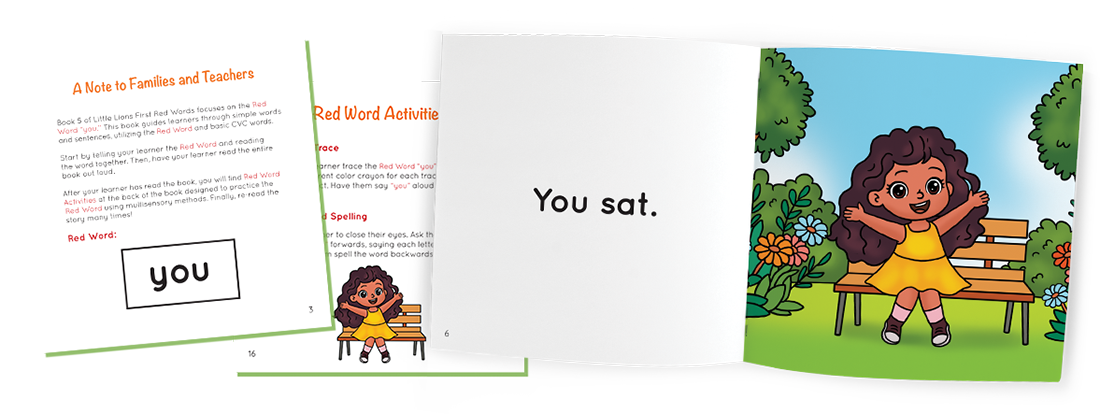
Decodable books reinforce kindergarten sight words by placing practiced words inside meaningful sentences and stories. Choose text that matches the child’s taught phonics patterns. Preview one or two unusual words, prompt attention to letters, and reread short passages for accuracy, fluency, and comprehension.
Word work gives children a close look at a word. Decodable text gives them a reason to use that word. This connection helps children move from deliberate analysis toward faster recognition.
Before reading, preview a focus word that may interrupt the text. Ask the child to examine the letters and say the sounds they know. If one part is unexpected, briefly review it. Then let the child read the word in the sentence.
When an error occurs, point back to the print. Ask, “What sound does this letter or pattern show?” Have the child reread the word and then reread the sentence. Avoid telling the child to use the picture as a substitute for decoding.
The first reading may require careful sounding out. A second reading gives the child another accurate encounter with the same words. The child can then give more attention to phrasing, meaning, and expression.
Keep rereading purposeful. Ask the child to find the focus word, read one sentence smoothly, or explain what happened. Short, successful rereads are more useful than repeated guessing through a difficult page.
The Ohio State family literacy resource on decodable books explains why text should connect to taught phonics patterns. This makes decodable reading a strong application step after explicit word work.
For book-selection questions, see decodable books for kindergarten. The page serves selection intent. This guide focuses on teaching and applying high-frequency words.

A practical weekly routine gives children repeated opportunities to read, analyze, write, and apply kindergarten sight words. Introduce a small number of words, review them across several days, and use connected text. Track accurate reading and spelling instead of chasing a fixed number.
Review familiar words. Introduce one or two words that fit the current phonics lesson. Decide whether each word is decodable with taught patterns or contains an unexpected part. Say the word and discuss its meaning.
Segment each focus word. Use counters for phonemes and letters for graphemes. Build the word with tiles. Mark the unexpected spelling when needed. Keep the explanation brief and precise.
Read the words in mixed order. Dictate each word and have the child write it. Check the spelling by returning to the sound map. Use one short sentence for meaningful practice.
Choose a decodable passage or book that matches taught patterns. Preview a focus word. Prompt the child to look at letters and blend. Reread a short section after the first accurate reading.
Show the words in a new order. Note which words are automatic, which require decoding, and which need more instruction. Keep unsecured words in the next review cycle.
Use the routine in a classroom center, small group, tutoring session, or home lesson. If frustration rises, reduce the number of new words. Return to familiar patterns and provide more guided practice.
Choose a practice text by matching it to the phonics patterns a child has already learned. Look for enough familiar words to support success and enough purposeful practice to build skill. A sight-word list alone should not determine a book’s difficulty.
Ask three questions before selecting a book:
Little Lions Literacy organizes its decodable library into four sequential sets. Set 1 introduces short vowels, digraphs, the FLOSS rule, and blends. Later sets add long vowels, two-syllable words, glued sounds, vowel teams, diphthongs, and open syllables.
The sequence is a guide, not a kindergarten placement rule. A child may need Set 1 practice at one point and more advanced text later. Beginning readers need a close match to first phonics skills. Struggling readers may need shorter readings, more modeling, and additional cumulative review.
Each reading should preserve the same expectation: look at the print, use known sounds, and reread accurately. This routine supports word recognition while keeping comprehension part of the experience.
Shop Little Lions decodable books for phonics-first practice

Kindergarten sight words are words children recognize automatically during reading. The term does not mean children should memorize word shapes. Teach each word through sounds and letters, then build automatic recognition through accurate reading and writing.
They should learn both. Regular high-frequency words can be decoded after students learn the needed phonics patterns. For partly unexpected words, teach the regular sounds and identify the specific spelling that needs special attention.
No. Many high-frequency words contain regular patterns. A word may also contain one unexpected spelling. Classify each word according to the phonics patterns the child has learned, rather than treating every word as a memorization word.
There is no single number that fits every kindergarten student. Progress depends on phonics knowledge, language development, prior instruction, and word regularity. For quantity and progress expectations, read how many sight words a kindergartener should know.
Yes. Decodable books let children apply taught sound-spelling patterns and recently practiced words in connected text. Choose books that match instruction, prompt attention to letters, and reread familiar pages for accuracy and fluency.
Browse Little Lions decodable books and build a phonics-first reading routine