
Kindergarten readers need books that let them apply the phonics patterns they have already been taught. When a text includes too many unfamiliar patterns, children may rely on pictures or guesswork instead of reading each word.
The best decodable books for kindergarten follow a clear phonics sequence, begin with accessible patterns such as short vowels and CVC words, and give children repeated practice in connected text. For teachers, the right collection should also support small-group instruction, independent practice, and easy progress monitoring.
A strong classroom library is not simply a large set of books. It is a carefully ordered resource that matches instruction and grows with students as they move from hearing and blending sounds to reading words and sentences with increasing confidence. The first step is understanding why this match matters for early readers.
Browse our decodable books for kindergarten classrooms
Kindergarten readers need text that matches the phonics skills they are learning. Decodable books provide that match through a planned sequence of sounds, spelling patterns, and word structures.
Unlike books that ask children to guess from pictures or surrounding context, decodable books give students repeated opportunities to apply phonics knowledge. They look at the letters, connect them to sounds, blend those sounds, and confirm the word in the sentence. This process builds the habit of decoding instead of guessing.
The University of Iowa explains that decodable readers introduce words through a carefully planned scope and sequence. The same resource recommends encouraging early readers to use phonics and decoding skills rather than relying on illustrations to guess unfamiliar words.
Phonics lessons introduce a skill directly. Decodable books then give kindergarteners a chance to use that skill in connected text. A child who has practiced blending short-vowel words can read those patterns across a short story, rather than completing disconnected word lists.
That application matters because reading requires children to coordinate sound-symbol knowledge across words and sentences. Controlled text keeps the task focused. Students can spend their effort blending and reading smoothly instead of facing spelling patterns they have not learned.
When a book stays within a child’s taught patterns, successful reading becomes more attainable. Teachers can prompt students to point to each sound, blend again, or reread a sentence without asking them to memorize words from pictures.
Consistent patterns also make errors easier to notice. If a student regularly struggles with short vowels or digraphs, the teacher can provide targeted review and choose text that offers more practice. For children who need additional support beyond core instruction, decodable books for reading intervention can provide focused, phonics-based reading practice.
For kindergarten, the goal is not simply to finish a book. It is to help each child use taught phonics knowledge accurately, repeatedly, and independently while reading meaningful text.
A strong kindergarten sequence moves from simple sound work to words children can decode independently. Each step prepares students for the next pattern.
Instruction commonly introduces a small group of consonants first. Teachers may begin with sounds such as m, b, t, s, and f.
This order gives children usable sound knowledge before they read many words. The sequence should include clear modeling, blending practice, and regular review. See the kindergarten scope and sequence reference for one example of systematic progression.
Once students know several consonants, instruction typically adds short vowels. Children then blend sounds in consonant-vowel-consonant words, such as map, sit, and hot.
These words provide a practical bridge from isolated sounds to connected reading. Students should look at each letter, say its sound, blend the sounds, and reread the word smoothly.
Decodable texts often identify their syllable patterns with labels such as VC, CVC, and CV. This information helps teachers select books that match current instruction.
Start with patterns students have practiced. Then increase complexity only after they can apply the skill accurately. This keeps reading practice focused instead of turning every page into a guessing task.
After short-vowel CVC work is established, many kindergarten sequences introduce simple digraphs and consonant blends. Digraphs represent one sound with two letters, as in sh and ch. Blends keep each consonant sound audible, as in st or bl.
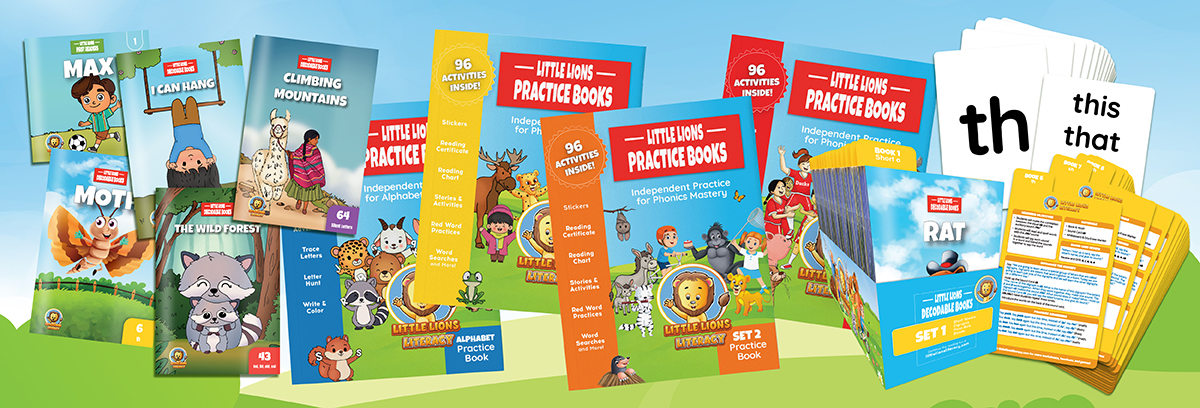
Little Lions Set 1 follows this early progression. It covers short vowels, digraphs, the floss rule, and blends in controlled books. Students can apply newly taught phonics skills in connected text rather than practicing only on word lists.
Choose a book whose patterns reflect the phonics lesson. Prompt students to decode unfamiliar words using their sound knowledge. Do not encourage picture-based guessing.
For a deeper planning framework, review aligning decodable books with phonics scope and sequence. The goal is a steady match between instruction, word patterns, and meaningful reading practice.
Decodable books are not the same as leveled readers. They serve different instructional purposes, even when both appear in a kindergarten classroom library. Decodable books control the words and spelling patterns students encounter. Leveled or predictable readers often use repeated language, illustrations, and broader vocabulary to support meaning-making and fluency.
Use the distinction below when selecting books for phonics practice, independent reading, or shared reading.
| Instructional feature | Decodable books | Leveled or predictable readers |
|---|---|---|
| Skill control | Words follow a planned phonics scope and sequence. The text emphasizes patterns students have been taught. | Text difficulty is organized by broader level features. The vocabulary may include spelling patterns beyond the current phonics lesson. |
| Pacing | Students read the same pattern across connected text. Teachers can introduce new patterns as instruction progresses. | Students may revisit repeated phrases or familiar language. Progression can reflect vocabulary, sentence length, and comprehension demands. |
| Picture reliance | Pictures support engagement and meaning. Students must use phonics and decoding to read the words. | Illustrations may offer strong context clues. Students can sometimes predict an unfamiliar word from the picture or sentence pattern. |
| Who they serve | Best for applying recently taught phonics skills in connected text, including beginning readers who need controlled practice. | Useful for language development, comprehension, vocabulary, and fluent rereading when the instructional goal fits the text. |
Early readers should use phonics knowledge to attack unfamiliar words, rather than relying on illustrations to guess. This approach gives teachers clearer evidence of what a child can decode independently. It also keeps reading practice connected to explicit instruction.
A decodable book should not be judged by its level label alone. Check whether its words match the phonics patterns students know. Look for a purposeful progression from simple patterns to more complex ones. Then decide whether the book supports the lesson goal, small-group practice, or take-home reading.
For practical selection criteria, use our guide to choosing decodable books for your classroom. Keep leveled readers available for appropriate comprehension and language activities, but do not substitute them for controlled phonics practice.
Research support: The University of Iowa explains the role of decodable readers in phonics instruction.
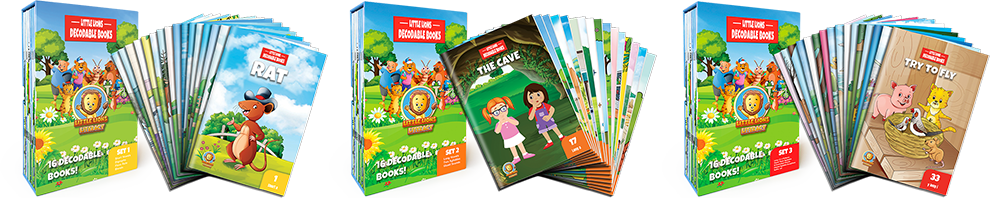
Little Lions Set 1 is a strong starting point for kindergarten classrooms because its 16 books support the foundational skills many students practice first. The sequence gives children repeated opportunities to apply phonics in connected, controlled text rather than guessing from pictures or memorizing unpredictable words.

Set 1 introduces short vowels and CVC words, then builds toward digraphs, the floss rule, and blends. This progression helps teachers match reading practice to instruction and select books that reinforce a skill students have already learned.
For example, after teaching short a and short i, a teacher can choose text that gives students practice blending and reading those patterns in sentences. Later books add consonant teams and blends without requiring students to decode patterns that have not been taught. That controlled progression supports accurate word reading and builds confidence through successful practice.
The books can support shared reading, guided practice, literacy centers, or take-home reading. Teachers can use one title to model sound-by-sound blending, then return to it for partner reading or independent rereading. Repeated reading also gives students more practice with phrasing and fluency while keeping the phonics focus clear.
Little Lions Literacy offers 64+ decodable books across four sequential sets, with 16 books in each set. The full progression serves readers from Pre-K through second grade, so Set 1 can provide a foundation before students move into later skill patterns.
Little Lions Set 1 is priced at $79.95 for the 16-book set, which makes it an accessible starting point for a single classroom. Classroom Sets 1, 2, and 3 cost $489.75 each and bundle the books with Teacher Guide Sets and instructional materials. For schools building a wider library, the three-set bundle of 48 books is $199.95 (regularly $239.85), and individual early-reader titles such as First Readers are $19.95 each.
Prices shown reflect the live Little Lions catalog, so the numbers you plan with match the numbers you see at checkout. To review the Set 1 sequence and available formats, browse our decodable books. Choose titles that match your current phonics lessons, then use them for immediate, purposeful reading practice.
Set 1 works best when each small-group meeting follows the same predictable routine. Keep the lesson focused on the phonics skill students have already been taught. Ask students to read the words, rather than guess from pictures.
Spend two or three minutes reviewing the target sounds. Say a word such as map, then ask students to identify each phoneme. Have them stretch the word, tap the sounds, and blend them together. Use sound cards or letter tiles when students need a concrete prompt.
Preview two or three words that may be unfamiliar. Say each word, explain it briefly, and use it in a sentence. If the book includes an unfamiliar setting or action, introduce that idea before reading. Keep this conversation short so students have time to apply their phonics knowledge.
Ask students to read one page at a time. Prompt them to look at the letters, say the sounds, and blend the word. If a student makes an error, point to the part that needs attention. Then ask the student to reread the whole sentence. Avoid directing students to use illustrations to guess an unknown word.
Return to a few words from the text. Ask students to sort words by short vowel, identify a digraph, or mark the sounds in a CVC word. Choose the task based on the lesson objective. Record recurring errors, such as confusing short a and short i, instead of correcting every mistake without a pattern.
Have students read the book again, individually or with a partner. Encourage smoother phrasing and accurate decoding. Listen for words that caused difficulty during the first read. A brief reread lets students experience success while strengthening their connection between phonics and connected text.
Use your notes to plan the next small-group lesson. Systematic phonics instruction makes error patterns easier to track and use when planning subsequent teaching. Review the explanation of organizing decodable books for kindergarten small groups for additional library and routine ideas.
Shop our decodable books for kindergarten and start small-group reading this week.
Choose books that match the phonics skills students have already been taught. Start with simple VC and CVC words, then add books for digraphs, the floss rule, and blends as instruction advances. Look for a clear progression, controlled vocabulary, and enough copies for whole-group, partner, and small-group practice.
Students can begin when they know enough letter-sound correspondences to blend simple words. For many classrooms, that means starting with short-vowel VC and CVC words after those skills are taught. Begin with supported reading, then increase independence as students build accuracy and confidence.
Map each book to the phonics pattern it practices, and use it after direct instruction on that pattern. Check the text for skills students have not learned yet. A well-aligned sequence lets students apply phonics in connected text without relying on pictures or guessing.
Yes. Decodable books give struggling readers repeated practice with taught sound-spelling patterns in manageable text. Pair reading with explicit modeling, word blending, and corrective feedback. Track recurring errors so small-group instruction can address the specific skill students need next.
Set 1 gives kindergarten classrooms a practical starting point for phonics-aligned reading practice. Browse the Little Lions Set 1 decodable books and classroom sets to choose materials that support your students’ next skills.
Shop Little Lions decodable books and start building your kindergarten library today.