Kindergarten reading programs often require five-year-olds to memorize long lists of words before they can decode. This memorization practice causes unnecessary stress and frustration for young children.
Determining how many sight words should a kindergartener know depends on school standards. Most children are expected to master 20 to 50 words by the end of the year. Some school districts push for up to 100 words, while other programs focus on a smaller core list of 20 high-frequency words. However, research shows that systematic phonics instruction is far more effective than simple memorization (National Institutes of Health). Instead of trying to memorize hundreds of flat shapes, children succeed when they learn how sounds map to letters. Knowing 50 words solidly is much better than struggling through 300 words with weak understanding. A strong foundation allows young students to read with real confidence as they progress.
Understanding these goals helps you guide your child without causing frustration. In the next section, we examine what research actually says about kindergarten sight word benchmarks.
The kindergarten year is fundamental for building the reading skills that will support students in later grades. Parents and teachers often wonder exactly how many high-frequency words a child needs to master by the end of the year. There is no single national standard, but research provides clear guidelines for healthy reading development. You can find lists of these terms on our kindergarten sight words list to help guide your home or classroom practice.
Most school reading programs draw from two historic collections. The Dolch list was made in 1936 and includes 220 words plus 95 nouns, with about 52 words assigned to the kindergarten level. The Fry list was set up in the 1950s and later updated to include 1,000 words. These lists contain words that appear most often in English books. While these lists are long, children only need to learn a small portion of them to start reading with ease.
| Feature | Dolch Word List | Fry Word List |
|---|---|---|
| Year Created | 1936 | 1950s (updated 1980) |
| Total Words | 220 + 95 nouns | 1,000 |
| Kindergarten Portion | ~52 words | ~100 words (first 100 list) |
| Best For | Early readers in Pre-K to Grade 2 | Broader grades Pre-K to Grade 6 |
| Common in Schools | Very common | Very common |
Sight word expectations are not standardized, and goals vary across school districts. Most kindergarteners are expected to master between 20 and 50 words by year-end, though some advanced programs target up to 100. Leading reading experts, such as Timothy Shanahan, suggest that mastering 60 high-frequency words by the end of kindergarten is a strong benchmark. This research-backed pace prepares children to reach 100 words by October of first grade. You can read more about early literacy growth in studies hosted by the National Institutes of Health.
It is always better for a child to know 50 words solidly than 300 words poorly. Rote memorization of long lists without phonics support can actually slow down reading progress. Focusing on a smaller set of words helps children build real orthographic mapping skills. This process connects sounds to letters for permanent storage in the brain. Giving children deep practice with a tight list of words builds true reading confidence.
Many classic reading programs ask children to memorize lists of words by sight. But modern research shows a better path. In a science of reading phonics instruction model, we do not treat all high-frequency words the same way. We look at how letters and sounds work together. This helps kids map words to memory instead of guessing.
To teach high-frequency words well, you must split them into two groups. The first group has regular decodable words. These words follow standard phonics rules. Children can easily sound out words like “can,” “in,” and “up” once they know their basic letter sounds. Memorizing these is not needed because decoding is a faster and more reliable skill.
The second group has irregular high-frequency words, often called “heart words.” These words have parts that do not follow normal phonics rules. For example, in the word “said,” the “ai” makes a short “e” sound. We teach kids to decode the parts that make sense, like the “s” and “d.” Then, we help them learn the tricky part by heart. Research on systematic phonics instruction shows that this method builds a much stronger path to fast reading than pure rote memorization.
When you focus too much on rote memorization, you can slow down a child’s reading growth. A kid who memorizes a list might look like a fast reader at first. But they will soon hit a wall. Rote memory has limits. When these readers meet new or long words, they cannot sound them out. They often start to guess based on pictures or first letters. This is why systematic phonics is key. It teaches children the code of the English language so they can read any word they see.
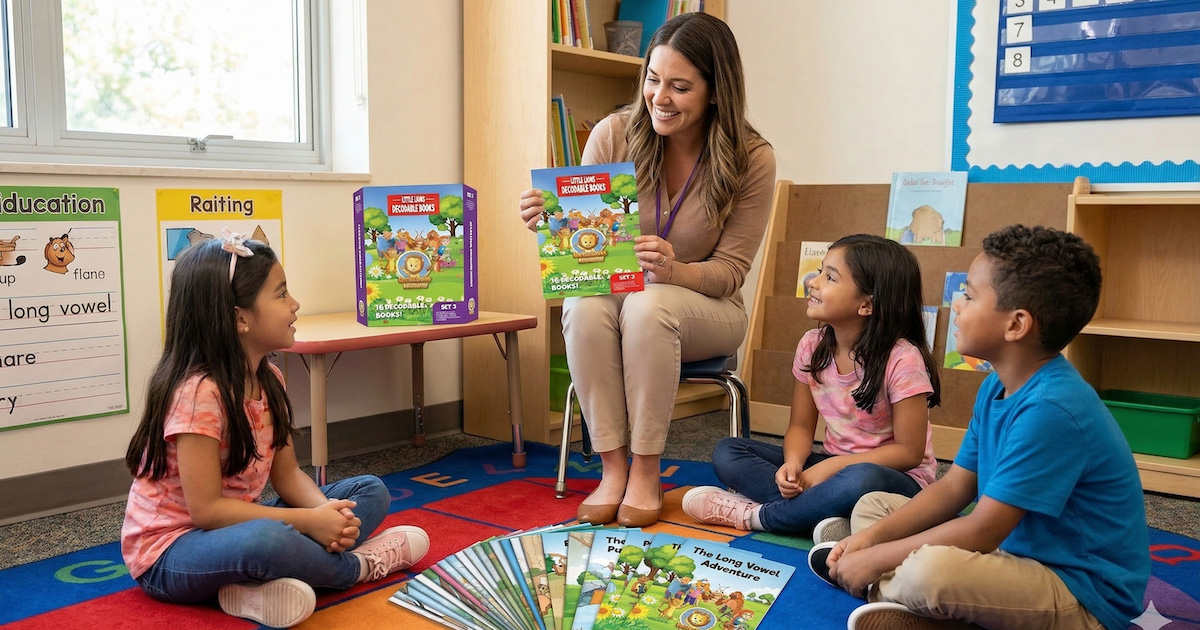
To keep learning easy and fun, teach words in a planned, logical sequence. You should introduce high-frequency irregular words only after a child knows basic letter sounds. Little Lions Literacy uses a clear path in its decodable books for early readers. In Set 1, children practice short vowels, digraphs, and blends alongside simple high-frequency words. Once they master those skills, Set 2 moves on to long vowels, two-syllable words, and more complex high-frequency words. This building-block method ensures children apply their phonics skills to real books without feeling overwhelmed.
When planning reading lessons for early learners, pacing is key. Introducing too many words at once can overwhelm young minds and lead to rote guessing. A slower, more structured pace ensures children build deep, lasting memory paths for each word.
You should teach three to five sight words per lesson. These are common terms that children must learn to recognize instantly. High-frequency words like “the”, “a”, “I”, and “can” are excellent starting points for early instruction. Keeping the group small allows you to focus on the spelling and sound structures of each word.
To ensure real learning, you need a clear definition of mastery. Do not move on to a new set of words just because a child read them correctly once. Real mastery means the child can recognize the target word instantly three times in a row on three separate days. This rule prevents false signs of progress and ensures long-term retention.
To help your students succeed, use this structured step-by-step approach to plan your weekly pacing and lessons:
A common question from parents is: how many sight words should a kindergartener know? While school standards vary, most kindergarten students are expected to master between 20 and 50 words by the end of the year. Remember that knowing 50 words solidly is much better than knowing 300 words poorly. Focus on a steady weekly pace to build a strong reading foundation.
Children enter kindergarten with diverse literacy experiences, making differentiated instruction essential. While some kids can sound out simple letters, others are just starting to learn them. Studies show that early identification and intervention are crucial for children who struggle with word-level reading. By adapting your teaching to meet each child’s needs, you can help every student grow. Knowing how many sight words should a kindergartener know helps you set fair goals, but the right methods make those goals reachable.
Young learners build strong memory paths when they use multiple senses. You can have students write words in sand, build them with clay, or trace them on textured cards. These hands-on tasks keep young kids engaged and help them remember word shapes. A classroom word wall is also a great tool. Group high-frequency words by their starting letters so kids can refer to them during writing. However, do not just post words and walk away. Point to the wall daily, play quick trace games, and connect the words to your daily phonics lessons.
When teaching sight words, do not use pictures next to the written words. Many people think images help, but research shows that typically developing children learn sight words better without accompanying pictures. Pictures can lead to guessing, which stops kids from looking at the letters. If a child makes a mistake, correct it immediately. Do not wait until the end of the game or lesson to fix an error. Quick feedback stops bad habits before they take root and ensures the child practices the correct word form.
Reading words in isolation is not enough to build real fluency. To build lasting reading skills, you must pair sight word practice with decodable text. Using using decodable books in the classroom prevents children from guessing words based on context or pictures. It forces them to decode the letters. Practicing sight words within decodable sentences helps children understand their usage and increases engagement. This practice builds reading confidence and helps kids move from sounding out single words to reading whole books with ease.
Learning does not stop when the school bell rings. Parents can support literacy development at home by reading decodable books and reinforcing school lessons. Send short, decodable stories home with children so they can show off their progress. Advise parents to keep home practice short, fun, and free of pressure. This simple daily link between home and school speeds up word mastery. It gives early readers the extra practice they need to feel proud of their skills.
Most schools expect children to master 20 to 50 high-frequency words by the end of the kindergarten year. According to Little Lions Literacy, this range can vary because school curricula are not standardized. Some advanced programs target up to 100 words. However, it is much more important for a child to know 50 words solidly using phonics rules than to memorize a larger list without understanding them.
No, children in kindergarten are not typically expected to spell these words. The primary goal at this stage is recognition and fast reading. Early writing and spelling standards focus on basic letter-sound mapping. According to a study in PubMed Central, spelling and expressive vocabulary develop over time. Teachers generally introduce formal spelling lists in first grade once children have a stronger phonics foundation.
No, reading goals are not the same for every child. Children enter school with different skills and background knowledge. Research shows that explicit phonics instruction helps all students, but pacing must fit individual needs. It is best to focus on building a strong sound-letter foundation. Learning a few words well is better than rushing through a long list.
Delaying structured phonics practice can cause early readers to fall behind. When kids only memorize word lists, they often struggle when they meet new texts. Giving them the right tools today builds a strong reading base for the rest of their lives.
Ready to help your child read with confidence? Browse decodable books to find the perfect resources for your home or classroom.