Phonemic awareness is the ability to hear, identify, and manipulate the individual sounds (phonemes) in spoken words. It is a purely auditory skill, meaning it has nothing to do with letters on a page. When a child can tell you that the word cat has three sounds (/k/ /a/ /t/), or that changing the /k/ in cat to /b/ makes bat, they are demonstrating phonemic awareness.
This skill is one of the strongest predictors of reading success. Decades of research show that children who develop strong phonemic awareness in preschool and kindergarten learn to decode words faster, spell more accurately, and read with greater fluency by the end of first grade.
These two terms are often used interchangeably, but they are not the same thing. Phonological awareness is the broader umbrella skill. It includes recognizing rhymes, counting syllables, and noticing word parts. Phonemic awareness is a specific subset of phonological awareness that focuses only on individual phonemes, the smallest units of sound in speech.
Think of it this way: clapping out the syllables in butterfly is a phonological awareness activity, while identifying the three separate sounds in sun (/s/ /u/ /n/) is a phonemic awareness activity. Both matter, but phonemic awareness is the skill most directly tied to learning how to read and spell.
Before children can connect letters to sounds (phonics), they need to hear those sounds clearly. A child who cannot isolate the first sound in dog will struggle to understand why the word starts with the letter d. Phonemic awareness builds the mental framework that makes phonics instruction click.
Research from the National Reading Panel confirms that explicit phonemic awareness instruction significantly improves reading and spelling outcomes, especially when it is combined with systematic phonics and practice with decodable books.
The activities below are organized by phonemic awareness skill, from simplest to most advanced. Start where your child or student is comfortable and build up gradually.
Sound isolation means identifying a single sound at the beginning, middle, or end of a word.
Gather a set of picture cards or small objects. Ask your child to name each item and tell you the first sound they hear. Sort the items into groups by beginning sound. For example, sun, sock, and seal all start with /s/. This is one of the simplest phonemic awareness activities and works well with children as young as three or four.
Play “I Spy” with sounds instead of colors. Say, “I spy something that starts with /m/,” and let your child look around the room for a match (mat, mug, mirror). For older children in first or second grade, switch to ending sounds or middle vowel sounds for an extra challenge.
Blending means pushing individual sounds together to form a whole word.
Speak like a robot by stretching out each sound in a word: “/d/… /o/… /g/.” Your child’s job is to blend the sounds together and shout the word: “Dog!” Start with two- and three-sound words for PreK learners, then move to four-sound words like /s/ /t/ /o/ /p/ for kindergarteners and first graders.
Lay out three stepping stones (paper plates, felt squares, or chalk circles). Say a word sound by sound. As your child says each sound, they step on the next stone, then blend and jump to a finish line while saying the whole word. The movement makes blending memorable and is a favorite phonemic awareness game for active learners.
Segmenting is the reverse of blending. The child breaks a whole word into its individual sounds.
Say a word and ask your child to tap the table once for each sound. The word ship gets three taps (/sh/ /i/ /p/). Use counters, coins, or blocks if your child benefits from moving a physical object for each sound. This activity connects naturally to spelling, because segmenting is exactly what a child does when they sound out a word to write it. As learners grow more confident, you can introduce words with consonant digraphs like ch, sh, and th so they practice treating two letters as one sound.
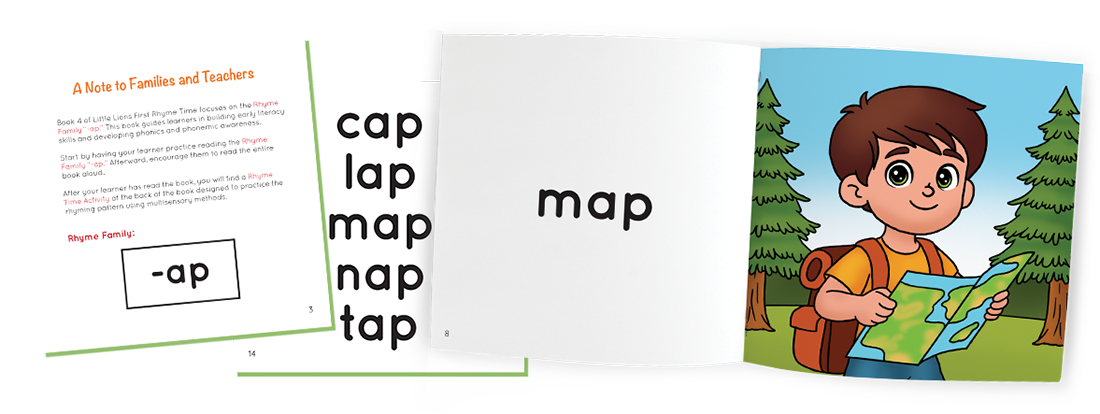
Draw a row of connected boxes on paper, one box per sound. Say a word and have your child push a token into each box as they say each sound. For map, they push three tokens into three boxes: /m/ /a/ /p/. Elkonin boxes are one of the most research-backed phonemic awareness activities for kindergarten and first grade.
Deletion means removing a sound from a word and saying what is left.
Say a word, then ask your child to say it again without a specific sound. “Say stop without the /s/.” (Answer: top.) Start with removing the first sound, which is the easiest. Then progress to removing the last sound (“Say cart without the /t/,” answer: car). Deletion is a more advanced skill and is most appropriate for kindergarteners through second graders.
Write a simple word on a whiteboard (or say it aloud for a purely oral version). Tell your child to “take away” a sound and discover the mystery word hiding inside. For example, take away /p/ from plant to reveal lant, or take away /s/ from smile to reveal mile. Children love the surprise element, and this game builds the mental flexibility that helps with reading longer words, including multisyllabic words later on.
Substitution means swapping one sound for another to make a new word.
Start with a simple word like cat. Ask, “Change the /k/ to /b/. What word do you get?” (bat.) Then keep going: “Change the /a/ to /i/.” (bit.) See how long you can keep the chain going. This is one of the most powerful phonemic awareness games because it requires the child to hold the word in memory, find the target sound, remove it, and insert the new one, all without seeing any letters. It works well for kindergarten through second grade, and you can increase difficulty by swapping middle or ending sounds.
Pick a familiar song or nursery rhyme and swap the beginning sounds. Sing “Binkle, Binkle, Bittle Bar” instead of “Twinkle, Twinkle, Little Star.” Let your child choose a sound to substitute, and sing the whole verse together. Younger children (PreK and kindergarten) find this hilarious, and the repetition provides dozens of phoneme substitution reps in just a few minutes.
While rhyming is technically a phonological awareness skill rather than a strict phonemic awareness skill, it lays the groundwork for finer sound work. Two quick activities:
Say three words, two that rhyme and one that does not: cat, hat, dog. Ask your child which word does not belong. This sharpens listening and prepares children to notice individual sounds.
Give a word and set a timer. How many rhyming words can your child (or the whole class) generate in 30 seconds? This fast-paced format works especially well as a warm-up for children who also practice blends and digraphs during phonics time.
| Age / Grade | Focus Skills | Best Activities |
|---|---|---|
| PreK (ages 3-4) | Rhyming, beginning sound isolation | Picture Sort, Sound Spy, Silly Song Substitution, Odd One Out |
| Kindergarten (ages 5-6) | Blending, segmenting, beginning deletion | Robot Talk, Sound Bridge, Tap It Out, Elkonin Boxes, Say It Without |
| 1st Grade (ages 6-7) | Deletion, substitution, advanced segmenting | Sound Swap Chain, Mystery Word Reveal, Elkonin Boxes with digraphs |
| 2nd Grade (ages 7-8) | Substitution, multisyllable segmenting | Sound Swap Chain (longer words), Mystery Word Reveal, Rhyme Race |
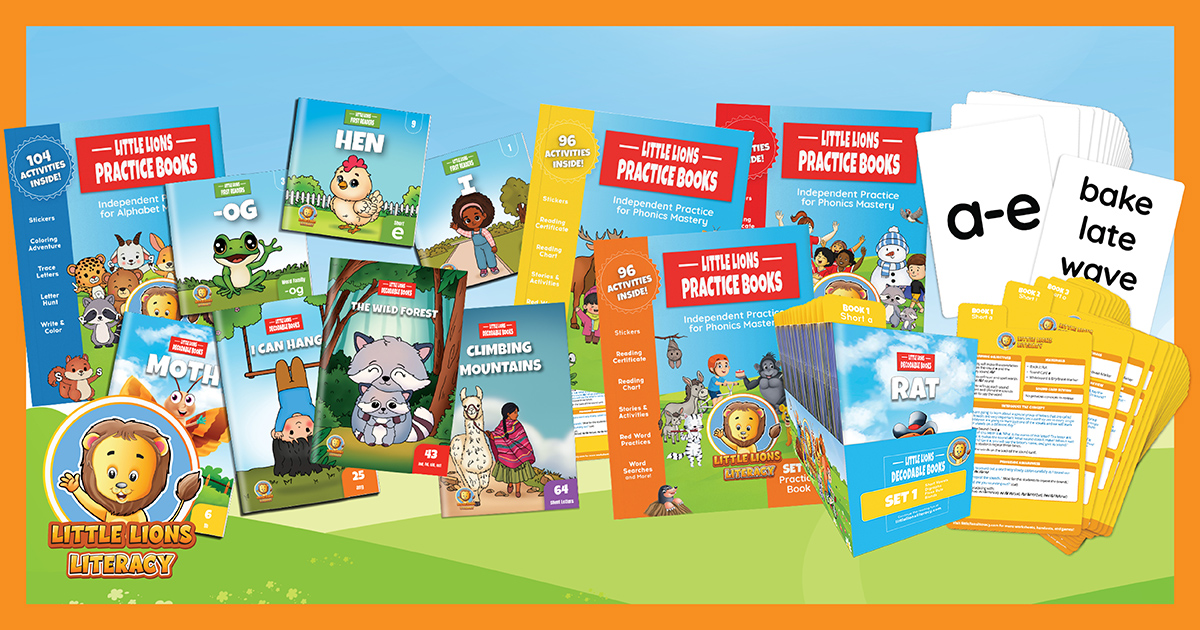
Phonemic awareness gives children the ears for reading. The next step is connecting those sounds to letters on the page, and the best way to do that is with systematic phonics instruction and plenty of practice in decodable books. Little Lions decodable readers are designed to match the phonics skills your child is learning, so every page reinforces the sounds they already know. When phonemic awareness meets the right books, reading clicks.