As soon as a child starts learning to read, they find out pretty quickly that English doesn’t always follow the rules. While a lot of simple words can be sounded out easily—think cat, hop, or pin—there are plenty of others that are just plain confusing for a beginner.
At Little Lions Literacy, we call these non-phonetic or irregular high-frequency words Red Words. Understanding what Red Words are—and using structured, multisensory techniques to teach them—is key to helping early readers build automaticity, confidence, and fluency. Here is everything you need to know about teaching red words…
In Orton-Gillingham and Science of Reading-aligned frameworks, high-frequency sight words are often categorized using color coding:
Because Red Words don’t follow standard decoding rules, children cannot rely on sounding them out phonetically. They require explicit instruction, orthographic mapping, and dedicated practice so young readers can recognize them instantly.
Memorizing words purely by visual shape (flashcard drill style) isn’t effective for long-term retention. Instead, use a multisensory approach that engages visual, auditory, and kinesthetic channels simultaneously:
Print the target Red Word clearly in red ink or marker. Say the word out loud, and have the child repeat it.
Break down which parts of the word do follow standard rules and which part is the “heart” or “tricky” red sound. For example, in said, the /s/ and /d/ are regular, but the ai making the short /e/ sound is the irregular red part.
Have the child extend their non-dominant arm. Using their dominant hand, they tap the shoulder for the full word, tap down their arm for each individual letter name (e.g., S – A – I – D), and sweep down their arm to read the full word (said).
Trace the word onto textured paper, a mesh screen, or a sand tray while saying each letter name aloud to lock the muscle memory into place.
Put the word immediately into context! Practicing Red Words inside connected stories is where true fluency develops.

The best way to keep kids motivated is to make learning feel like play! Here are four multisensory activities that children absolutely adore and will have them begging to practice their Red Words:
This is a total favorite! Kids love getting their hands messy as they write Red Words in a tray of shaving cream. It’s a wonderful tactile, sensory experience that transforms a lesson into a real treat.
Take the learning outdoors! Children have a blast creating giant, colorful Red Words on the driveway or sidewalk. It’s a fantastic way to turn the whole pavement into a vibrant practice space.
Get those creative hands moving! Rolling out Play-Doh “snakes” to form the letters of Red Words is a super engaging way to build fine motor skills while locking in those tricky spellings.
Turn practice into an adventure! Hide Red Word index cards around the room and let the kids loose. They absolutely love the thrill of the chase and the excitement of reading each word aloud as they find it!
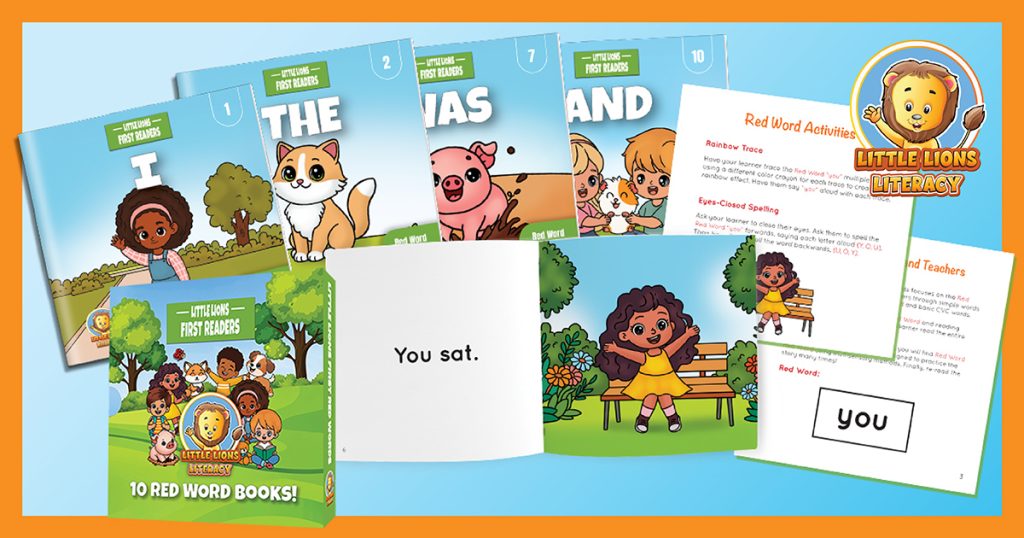
Practicing a Red Word on an index card is a great start, but young readers need to see these target words repeatedly in meaningful context to achieve true mastery. That’s where the Little Lions First Red Words set comes in.
Designed specifically for Pre-K and Kindergarten learners, the Little Lions First Red Words set features 10 engaging, beginner-friendly books—with each story specifically tailored around practicing key high-frequency Red Words.
Here is why educators and parents love teaching red words with the First Red Words series:
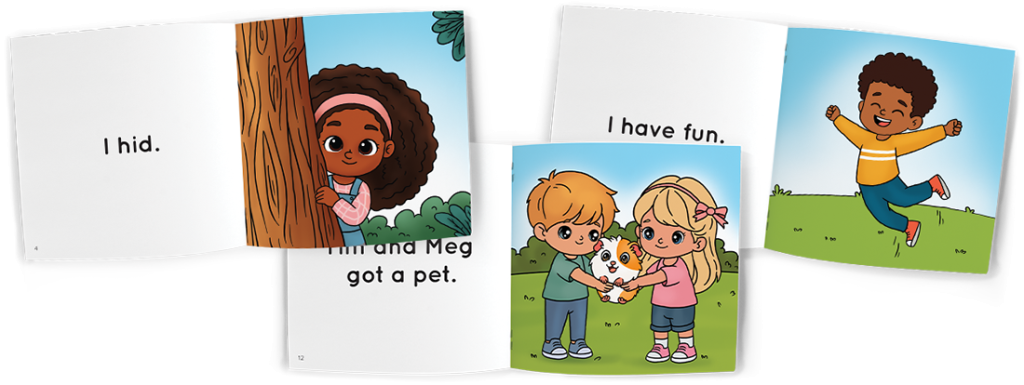
Each story targets essential high-frequency Red Words paired with simple CVC (consonant-vowel-consonant) decodable patterns.
Simple stories and repetitive, predictable text patterns prevent cognitive overload, helping new readers feel successful right away.
Every book comes packed with fun, hands-on activities that kids absolutely love, making practice feel more like playtime than work!
Whether you are a classroom teacher, reading specialist, or homeschool parent, combining explicit multisensory instruction with Little Lions Literacy First Red Words sets your young reader up for a lifetime of reading success!
How Many Sight Words Should A Kindergartener Know
Sight Words List by Grade: Kindergarten Through 3rd Grade
Little Lions Literacy Earns ESSA Validation!
Our Little Lions First Red Words book set is here to make teaching red words feel like a joyful adventure. Let’s turn those ‘Red Words’ into ‘Read Words’ together—click here to bring home the magic of the Little Lions First Red Words collection and help your little reader shine!