
The short o sound is the vowel sound in words like hot, dog, and mop. It is one of the five short vowel sounds every beginning reader needs to master, and it shows up in dozens of common words children encounter every day.
This guide gives you a complete list of short o words organized by word family, example sentences for practice, and hands-on activities you can use at home or in the classroom right away.
The short o sound is the vowel sound you hear when you say the word octopus. Linguists write it as /ŏ/, and it is produced with the mouth open in a rounded shape and the tongue low in the back of the mouth. If you say the words hot, dog, and mop out loud, the middle sound in each word is the short o.
Short o is different from the long o sound. Long o says its own letter name, like in hope or boat. Short o is quicker and more open, like in hop or bot. Try these pairs out loud to hear the difference:
Understanding this difference is a foundational phonics skill. When children can reliably hear and produce the short o sound, they are ready to start decoding short o CVC words.
In most systematic phonics programs, the short o sound is taught after short a and short i because:
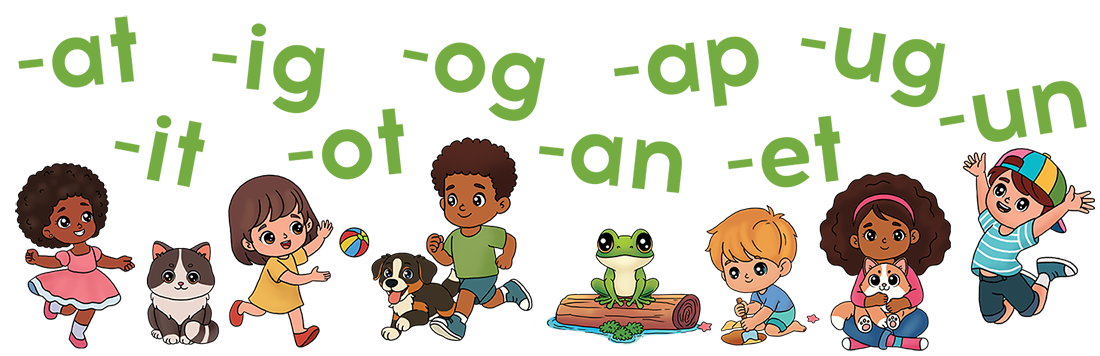
Grouping short o words by word family is one of the most effective ways to teach them. A word family is a set of words that share the same ending sounds (the rime). When a child learns the -ot pattern, for example, they can quickly read hot, pot, dot, got, and lot just by changing the beginning consonant.
Below are the most common short o word families, starting with simple CVC words and moving into patterns with blends and digraphs.
| cot | dot | got | hot | jot |
| lot | not | pot | rot | tot |
| blot | clot | knot | plot | shot |
| slot | snot | spot | trot |
Example sentences:
– The pot is very hot.
– She found a good spot to jot a note.
| bog | cog | dog | fog | hog |
| jog | log | tog | blog | clog |
| frog | smog | slog |
Example sentences:
– The dog ran through the fog.
– A frog sat on the log.
| bop | cop | hop | lop | mop |
| pop | sop | top | chop | clop |
| crop | drop | flop | plop | prop |
| shop | slop | stop |
Example sentences:
– He will mop and then stop.
– The bunny likes to hop to the top.
| bob | cob | fob | gob | hob |
| job | lob | mob | nob | rob |
| sob | blob | knob | snob | throb |
Example sentences:
– Bob has a new job.
– She turned the knob on the hob.
| cod | god | mod | nod | pod |
| rod | sod | plod | prod | trod |
Example sentences:
– He gave a nod and picked up the rod.
– The farmer plodded through the sod.
| box | fox | pox | sox |
Example sentences:
– The fox hid in a box.
– Put the sox in the box.
| dock | jock | lock | mock | rock |
| sock | block | clock | flock | knock |
| shock | smock | stock |
Example sentences:
– He put the sock on the rock.
– The clock went tick-tock.
| con | Don | Jon | on | ton |
| son | won | upon |
Example sentences:
– Don put the hat on.
– The box weighs a ton.
Teaching Tip: The -on family can be tricky because some words like son and won have an irregular vowel sound that sounds closer to short u (/ŭ/) in many dialects. Point this out to children so they are not confused when the /ŏ/ sounds slightly different in these words compared to hot or dog.
| bond | fond | pond | blond | frond |
Example sentences:
– The duck is in the pond.
– She is fond of the blond cat.
| bong | dong | gong | long | pong |
| song | tong | prong | strong | wrong |
Example sentences:
– He sang a long song.
– The bell made a loud gong.
Teaching Tip: Words in the -ong and -ond families contain “glued sounds” where the vowel is influenced by the nasal consonant /n/. The short o sound may be slightly different from what children hear in hot. This is normal. Acknowledge it and move on rather than overcomplicating the lesson.
| boss | loss | moss | Ross | toss |
| cross | floss | gloss |
Example sentences:
– The boss had to toss the old moss.
– Do not forget to floss!
| mom | pom | Tom | romp | stomp |
Example sentences:
– Mom and Tom went for a romp.
– He likes to stomp in puddles.
A word list is a starting point, not the finish line. How you practice matters just as much as what you practice. Here are four research-backed strategies that turn these short vowel words into real reading skills.
Write short o words on index cards. Have your child sort them into piles by word family (-ot, -og, -op, and so on). This trains the brain to notice patterns instantly, which is the foundation of fluent decoding.
Use magnetic letters, letter tiles, or even Scrabble tiles. Start with a rime like -ot and have your child swap out the beginning consonant to make new words: h-ot, d-ot, p-ot, g-ot. This is called onset-rime blending, and it is one of the most effective phonics strategies for early readers.
Read a simple sentence aloud and have your child write it. Start easy:
– The dog sat on top.
– A fox got in the box.
– Mom had a hot pot.
This builds encoding skills (spelling) alongside decoding skills (reading). When children can both read and write short o words, the sound-letter connection is locked in.
The most powerful practice tool is a decodable book. Unlike leveled readers that encourage guessing from pictures, decodable books use only the phonics patterns your child has already learned. Every word is an opportunity to practice real decoding.
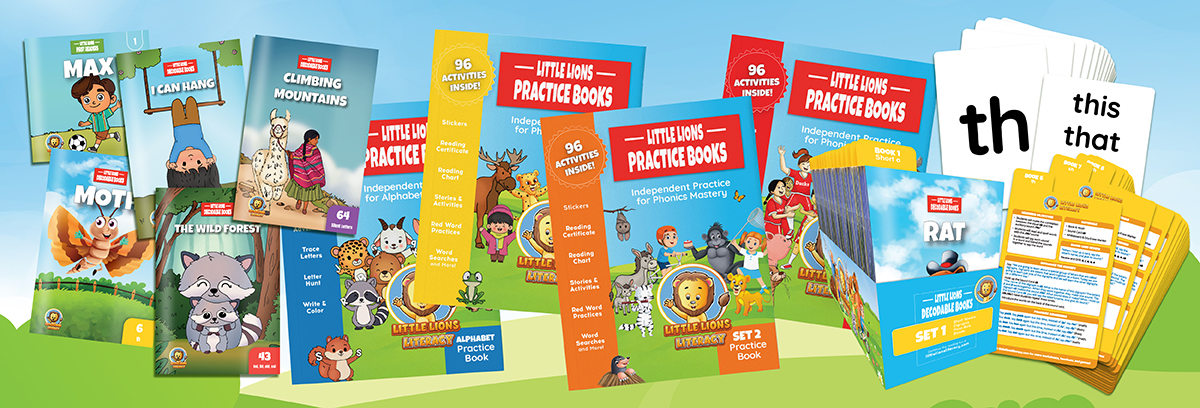
The Little Lions Decodable Books include stories that focus on short vowel CVC words, giving your child practice with the exact patterns from the word lists above in a real reading context. With 64+ titles that follow a carefully controlled scope and sequence, each book builds on what came before.

These hands-on activities keep kids engaged while reinforcing the short o sound. Each one takes less than 15 minutes and needs minimal materials.
Pick a room in your house or a page in a book. Challenge your child to find every word with the short o sound. Keep a tally. Can they beat their record tomorrow? This builds phonemic awareness, the ability to hear individual sounds within words, which is essential for strong reading.
Fill a bowl (the “hot pot”) with folded slips of paper, each containing a short o word. Children take turns pulling out a word and reading it aloud. If they read it correctly, they keep it. If they pull the “HOT POT” card (which you sneak in), they put all their words back. Simple, zero-prep, and surprisingly competitive.
Start with a word like hot. Change one letter at a time to make a new word:
– hot → hop → top → tot → dot → dog
Word ladders teach children that changing a single sound changes the entire word. This is a core phonemic awareness skill that directly supports reading and spelling.
Write short o word family words on cards and spread them face-down on a table. Children flip two cards at a time. If the words rhyme (same word family), they keep the pair. If not, they flip them back. This is a memory game that sneaks in serious phonics practice.
Give kids three piles of cards: beginning sounds, word family endings, and simple sight words (the, a, on, is, in). Challenge them to build the silliest sentence they can using only short o words. “A hot dog sat on a log in the fog” becomes a source of giggles and real reading practice.
One of the most common points of confusion for beginning readers is the difference between short o and long o. Short o says /ŏ/ as in hot. Long o says its letter name /ō/ as in hope.
Here is a quick comparison to practice with your child:
| Short O | Long O |
|---|---|
| hop | hope |
| not | note |
| rob | robe |
| cod | code |
| mop | mope |
| tot | tote |
| rod | rode |
| cop | cope |
Read these pairs out loud together. Ask your child: “Which word has the short o? Which has the long o?” This kind of minimal pair practice trains the ear and builds the foundation for understanding long and short vowels.
The key pattern to point out: when a silent e appears at the end of a word, the vowel usually changes from short to long. This is called the “magic e” or “silent e” rule, and recognizing it helps children decode both patterns confidently.

Once your child can confidently read and spell short o CVC words, they are ready for the next step. In most systematic phonics programs, the typical short vowel progression is:
After mastering all five short vowels, children move on to consonant blends, digraphs, and eventually long vowel patterns. The key is to not rush. Let your child build fluency with short o before introducing the next sound. Rereading decodable books at this level multiple times builds speed and confidence.
The short o sound is the vowel sound /ŏ/ heard in words like hot, dog, and pop. It is produced with an open, slightly rounded mouth and the tongue low in the back. It is different from the long o sound (as in hope), which says the letter’s name.
Common short o words include hot, pot, dog, log, hop, mop, top, pop, box, fox, rock, sock, stop, and frog. These follow the CVC (consonant-vowel-consonant) pattern, making them ideal for beginning readers to decode.
Start by introducing the /ŏ/ sound in isolation. Have your child say words like octopus and otter to hear the sound clearly. Then practice blending simple CVC words like hot and mop. Use word family sorts to help your child notice patterns, and read short vowel decodable books together to practice in context.
Short o is the sound in hot and mop. Long o says the letter’s name, as in hope, boat, and go. The key difference is in the vowel pattern: short o appears in closed syllables (CVC words), while long o appears in silent-e words, vowel team patterns (oa, ow), and open syllables.
Word families group words that share the same ending pattern (rime), like -ot (hot, pot, dot) or -og (dog, log, fog). When children learn one pattern, they can read many words by simply changing the beginning consonant. This makes decoding faster and builds reading confidence quickly.
Written by Karina Richland, M.A., author of the Little Lions Decodable Books and the PRIDE Reading Program. Karina has an extensive background in working with students of all ages and various learning modalities, with many years of research into learning differences and differentiated teaching practices.