The short a sound is one of the very first sounds children learn when they begin reading. It is the vowel sound in everyday words like cat, map, and ran. Mastering this single sound opens the door to hundreds of simple words and gives new readers the confidence to keep going.
This guide provides a complete list of short a words organized by word family, along with example sentences and hands-on activities you can use at home or in the classroom today.
Explore Our Short A Decodable Books
The short a sound is the vowel sound you hear when you say the word apple. Linguists write it as /ă/, and it is produced with the mouth open and the tongue low and flat. If you say the words cat, man, and flag out loud, the middle sound in each word is the short a.
Short a is different from the long a sound. Long a says its own name, like in cake or rain. Short a is quicker and more relaxed, like in cap or ran. Understanding this difference is a foundational phonics skill that every beginning reader needs.
In systematic phonics instruction, the short a sound is almost always taught first because:
One of the most effective ways to teach short a words is to group them by word family. A word family is a set of words that share the same ending sounds (called the rime). When children learn the -at pattern, for example, they can quickly read cat, bat, hat, mat, and sat just by changing the first letter.
Below are the most common short a word families, organized into CVC patterns and beyond.
| at | bat | cat | fat | hat |
| mat | pat | rat | sat | vat |
| brat | chat | flat | slat | that |
Example sentences:
– The cat sat on the mat.
– She wore a flat hat to school.
| an | ban | can | Dan | fan |
| man | pan | ran | tan | van |
| clan | plan | scan | span | than |
Example sentences:
– Dan ran to the van.
– The man has a plan.
| cap | gap | lap | map | nap |
| rap | sap | tap | yap | zap |
| chap | clap | flap | slap | snap |
Example sentences:
– Look at the map on my lap.
– She took a nap after a clap of thunder.
| cab | dab | gab | jab | lab |
| nab | tab | crab | grab | scab |
| stab | slab | blab |
Example sentences:
– The crab hid under a slab.
– Mom called a cab to the lab.
| ad | bad | dad | fad | had |
| lad | mad | pad | rad | sad |
| Brad | glad | grad | shad |
Example sentences:
– Dad was glad to see the lad.
– She felt sad, then she felt glad.
| bag | gag | lag | nag | rag |
| sag | tag | wag | brag | drag |
| flag | snag | stag | shag |
Example sentences:
– The dog will wag and drag the rag.
– He put a tag on the bag.
| am | bam | cam | dam | ham |
| jam | Pam | ram | Sam | yam |
| clam | cram | gram | slam | tram |
Example sentences:
– Sam likes ham and jam.
– The clam sat by the dam.
Teaching Tip: Words in the -am and -an families can sound slightly nasal because the vowel comes before /m/ or /n/. These are sometimes called “glued sounds.” Point this out to children so they are not confused when the /ă/ sounds a little different in man versus cat.
| back | hack | jack | lack | pack |
| rack | sack | tack | black | clack |
| crack | knack | quack | shack | snack |
Example sentences:
– He put the snack in a sack.
– The duck went quack on the track.
| ash | bash | cash | dash | gash |
| hash | lash | mash | rash | clash |
| crash | flash | slash | smash | splash |
Example sentences:
– The flash made a big splash.
– Put the trash in the cash bin? No, the trash bin!
| and | band | hand | land | sand |
| brand | grand | stand | strand |
Example sentences:
– The band played on the sand.
– She held his hand and took a stand.
| camp | damp | lamp | ramp | stamp |
| champ | clamp | cramp | tramp |
Example sentences:
– The lamp at camp was damp.
– He is the champ of the ramp.
| bank | rank | sank | tank | blank |
| crank | drank | frank | plank | spank |
Example sentences:
– The ship sank near the bank.
– She said thank you to Frank.

Having a word list is a great start, but how you practice matters just as much. Here are four proven strategies that turn these short vowel words into real reading skills.
Write short a words on index cards. Have your child sort them into piles by word family (-at, -an, -ap, and so on). This trains the brain to notice patterns instantly, which is the foundation of fluent reading.
Use magnetic letters, letter tiles, or even Scrabble tiles. Start with a rime like -at and have your child swap out the beginning consonant to make new words: b-at, c-at, h-at, m-at. This is called onset-rime blending, and it is one of the most effective phonics strategies for early readers.
Read a simple sentence aloud and have your child write it. Start easy:
– The cat sat.
– Sam ran fast.
– A fat rat naps.
This builds encoding skills (spelling) alongside decoding skills (reading). When children can both read and write short a words, the sound-letter connection is locked in.
The most powerful practice tool is a decodable book. Unlike leveled readers that encourage guessing from pictures, decodable books use only the sounds your child has already learned. Every word is an opportunity to practice real decoding.
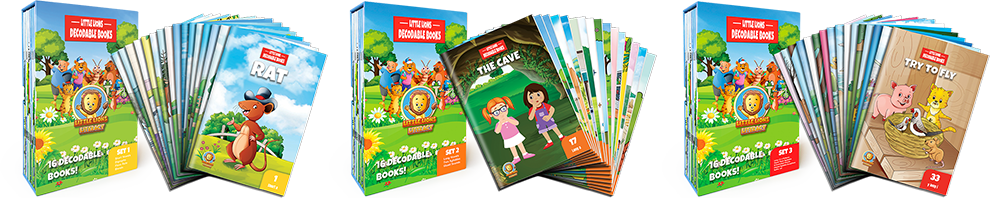
The Little Lions Decodable Books include stories focused specifically on short a CVC words, so your child practices the exact patterns from the word lists above in a real reading context.

These hands-on activities keep kids engaged while reinforcing the short a sound. Each one takes less than 15 minutes and needs minimal materials.
Draw a hopscotch grid with chalk outside (or tape on the floor inside). Write a short a word in each square. As your child hops, they read each word aloud. Miss a word? Go back and try again.
Create bingo cards with short a words. Call out words one at a time. Children cover the word on their card with a token. First to get a row wins. This is perfect for classrooms because it gets the whole group practicing simultaneously.
Start with a word like cat. Change one letter at a time to make a new word:
– cat → bat → bad → bag → big (oops, that is short i!)
Word ladders teach children that changing a single sound changes the entire word, which is a core phonemic awareness skill.
Give kids three piles of cards: beginning sounds, word family endings, and simple sight words (the, a, on, is). Challenge them to build the silliest sentence they can using only short a words. “A fat cat sat on a sad mat” becomes a source of giggles and genuine reading practice.
Pick a room in your house or a page in a book. Challenge your child to find every word with the short a sound. Keep a tally. Can they beat their record tomorrow? This builds phonemic awareness, the ability to hear individual sounds within words, which is the foundation of all reading.
Shop Little Lions Short Vowel CVC Decodable Books
Once your child can confidently read and spell short a CVC words, they are ready for the next step. In most systematic phonics programs, the typical progression is:
After mastering all five short vowels, children move on to consonant blends, digraphs, and eventually long vowel patterns. The key is to not rush. Let your child build fluency with short a before introducing the next sound. Rereading decodable books at this level multiple times builds speed and confidence.
The short a sound is the vowel sound /ă/ heard in words like cat, hat, and nap. It is produced with an open mouth and the tongue positioned low. It is different from the long a sound (as in cake), which says the letter’s name.
Common short a words include cat, bat, hat, mat, sat, ran, man, can, map, nap, cap, bag, tag, and flag. These all follow the CVC (consonant-vowel-consonant) pattern, making them ideal for beginning readers.
Start by introducing the /ă/ sound in isolation. Then practice blending simple CVC words like cat and map. Use word family sorts to help your child notice patterns. Read short a decodable books together, and use hands-on activities like letter tiles and word ladders to keep practice engaging.
Short a is the sound in cat and map. Long a says the letter’s name, as in cake, rain, and day. The key difference is in the vowel pattern: short a appears in closed syllables (CVC), while long a appears in open syllables, silent-e words, and vowel team patterns.
Short a is the most common short vowel sound in English CVC words. It is easy for young children to hear and say, and it appears in a large number of simple, familiar words. Teaching it first gives children quick wins, building the confidence and decoding skills they need before tackling other vowel sounds.
Browse All Little Lions Decodable Books
Written by Karina Richland, M.A., author of the Little Lions Decodable Books and the PRIDE Reading Program. Karina has an extensive background in working with students of all ages and various learning modalities, with many years of research into learning differences and differentiated teaching practices.