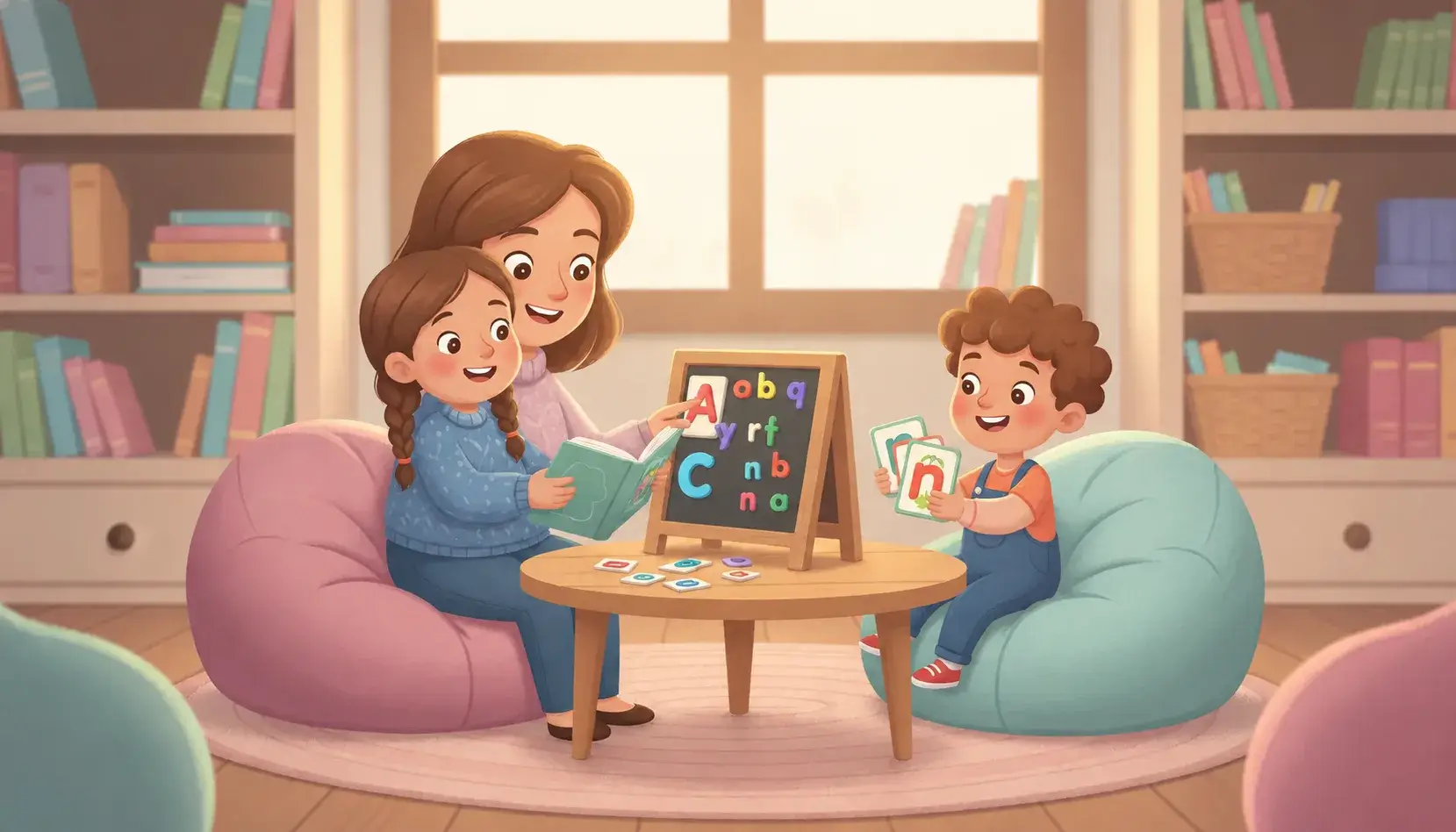
Phonics word building activities help children connect the sounds they hear to the letters they read and write. Instead of memorizing a whole word shape, a learner listens for each phoneme, represents it with a grapheme, and blends the sequence back into a word. The routines below move from sound mapping to changing one sound at a time, then using the built words in connected text while choosing examples that match the patterns the child has already been taught.
A strong activity has a clear sound-to-spelling purpose. The learner should do more than move letters or fill a page. They should say the word, listen for its sounds, select spellings that represent those sounds, read the completed word, and connect it to meaning. Keep the focus narrow: one taught pattern at a time is easier to notice and practice than a mix of unfamiliar spellings.
For example, if a child is working with short-vowel CVC words, use familiar words such as map, mop, and nap. If the lesson is about a consonant digraph, introduce words with that digraph only after the child has been taught that the two letters represent one sound. An activity should reinforce instruction, not ask a learner to guess a pattern they have not met.
Word building is most helpful when it links reading and spelling. A child builds a word from spoken sounds, reads it aloud, and later finds or reads the same spelling pattern in connected text. For more on the larger instructional context, see what phonics is and how children learn to decode and this Reading Rockets overview of phonics and word recognition instruction, which notes that spelling activities should relate to words children read and write.
Choose a small set of words that share the target pattern. Check that the child can say the words and understand them. Then gather letter tiles, cards, a reusable writing surface, or paper and pencil. Tiles make it easy to change a single grapheme; writing makes the learner form the spellings. Either format can work when the child is actively listening and thinking.
If the child is unsure about how to separate a word into sounds and spellings, use a deliberate phoneme-grapheme mapping routine before asking for a longer chain. The goal is accurate attention to sounds and spellings, not speed.
Draw one box for each phoneme in a selected word. Say the word, then have the child stretch it and move a counter into each box for each sound. Next, replace the counters with the corresponding graphemes. For ship, for instance, there are three phonemes: /sh/, /i/, /p/. The first box receives sh, because that digraph represents one sound; the next two receive i and p.
Start with words that fit the child’s taught spellings. Use the boxes to make the sound sequence visible, then remove the supports as the process becomes familiar. For a child who needs more support, model the first word and complete the next one together. For a child who is ready, dictate a word and ask them to explain how each spelling represents a sound.
Give the learner letter tiles and say a starting word. After the child builds and reads it, tell them to change one sound to make a new word. A short chain might be sat → sit → sip → tip → tap. Ask the learner which sound changed and which letters need to move or be replaced. They should read each new word before changing it again.
Keep each chain within the spelling patterns taught so far. Avoid asking a beginner to move between multiple patterns at once. If a child gets stuck, return to the sound: say both words, identify what is different, and then adjust the tile. This develops careful word analysis instead of trial-and-error guessing. For more guidance on the oral-to-print step, explore how to teach blending for beginning readers.
A word ladder is a planned sequence in which each new word changes one sound or spelling. Write or say the direction clearly: “Change the first sound in mat to make sat.” Then ask, “Change the vowel in sat to make set.” The learner can build each answer with tiles, write it, and read it. Select a sequence with only familiar spellings, and check that every step makes a real word the child knows.
To focus on a spelling pattern, keep the pattern in place while other sounds change. For example, when a child has learned a silent-e pattern, a ladder may contrast cap and cape, then build another familiar word with the same taught pattern. Do not present a rule as universal when there are exceptions. A quick review of CVCe words and the magic-e pattern can help adults select suitable examples.
Place a small group of consonant and vowel tiles in front of the child. Say a word and ask them to choose the spellings, arrange them from left to right, and blend the result. Then have them write the word on a whiteboard or paper. The shift from movable tiles to handwriting helps make the learner responsible for retrieving and forming the spelling, not only recognizing a tile among choices.
For a digraph or vowel team that has been taught, provide the two-letter tile as one unit or explicitly show that the letters work together. For example, a child practicing a familiar vowel team can build a word, read it, and sort it with other words using that same spelling. See examples and teaching tips for vowel digraphs and ways to teach long and short vowels for pattern-focused practice ideas.
After building several words, ask the child to sort them by a meaningful feature: short a versus short i, words with a taught digraph versus words without one, or a familiar vowel team in different words. Have the learner read each word as it is placed and explain the sorting choice. A sort is not a substitute for building, but it helps children compare spellings and notice which parts stay the same.
Use only categories that have been taught and words that are decodable for the child. If the child cannot explain the difference, model a contrast and say the sounds together before continuing. Keep the set small enough that every word receives a careful read.
Ask the child to build a word from dictation, read it, and use it in a short oral sentence. Then write a sentence containing the word for the child to read, or ask the learner to write a simple sentence using spellings they know. Keep the sentence meaningful and accessible. The point is to show that the word-building work supports real reading and writing, not just isolated tiles.
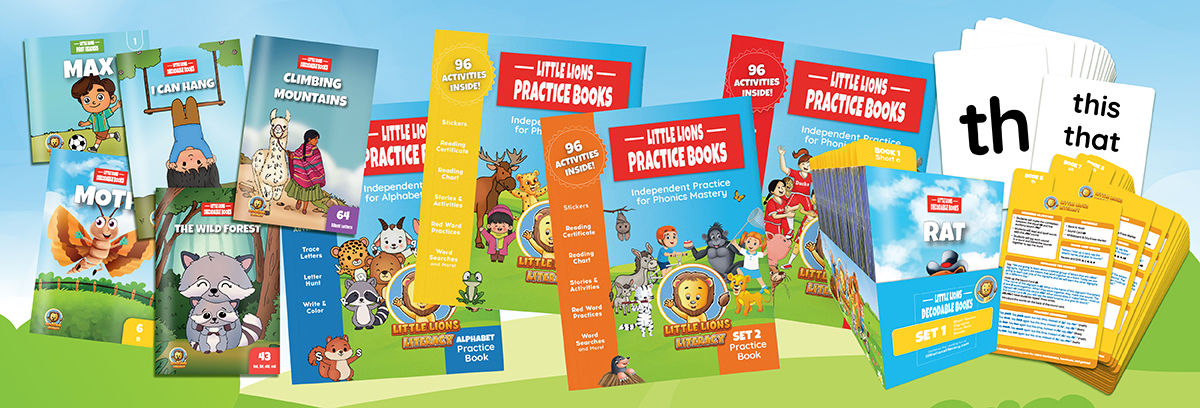
When selecting connected text, choose a passage whose spelling patterns match the instruction. A child can reread a decodable sentence and locate a word they have just built. Little Lions Literacy’s decodable books are designed as controlled practice that progresses through phonics skills; match a book to the patterns a learner has encountered rather than choosing by age alone.

Use the current lesson or scope and sequence as your boundary. A useful activity can be simple, but its words must be appropriate to the code the learner knows. The following table is a planning aid, not a required order for every child. Move to a pattern when it has been explicitly taught and the learner is ready to practice it.
| Practice focus | Word-building task | Example of a suitable next step | What to check |
|---|---|---|---|
| Short vowels and simple CVC words | Map sounds, build a word, then change one phoneme | map → mop, if both vowels are known | Does the child hear and represent each sound? |
| Digraphs and blends | Build and read words with the taught consonant pattern | Contrast a word with a familiar digraph and one without | Does the child treat a digraph as one sound and attend to each blend sound? |
| Long-vowel patterns such as CVCe | Compare a short-vowel word with a taught silent-e word | cap → cape | Can the child identify the spelling change and read the result? |
| Vowel teams or more advanced patterns | Build, sort, and read words sharing the taught team | Use familiar words with the same vowel-team spelling | Can the learner read each word without relying on a picture or guess? |
Little Lions Literacy’s four sequential decodable sets introduce skills progressively: Set 1 includes short vowels, digraphs, the floss rule, and blends; Set 2 includes long vowels, two-syllable words, and glued sounds; Set 3 includes long i and e patterns and vowel-team syllables; Set 4 includes diphthongs, vowel teams, and open syllables. Use that sequence as a reference when browsing the decodable book collection, while checking the individual learner’s taught skills. You can also review r-controlled vowel patterns and practice when that skill is part of instruction.
A beginning reader is learning the code for the first time. Begin with a clear model, a small number of known letter choices, and words containing the sound-spelling relationships just taught. Say the sounds together, build the word together, and blend it. Gradually ask the child to do more of each step independently. Short, successful practice is more useful than a long list of words with unfamiliar patterns.
A struggling reader may need remediation of skills that were taught earlier but are not secure. Do not assume that the learner needs faster pacing or harder words. Check the exact breakdown: Can the child hear the separate phonemes? Recall the grapheme? Blend a built word? Spell the pattern when it is dictated? Return to the missing step and provide explicit modeling, supported practice, and repeated chances to read and spell matched words. If the child’s needs are not clear, coordinate with the classroom teacher or appropriate reading specialist.
For both groups, make adjustments based on what the child does. If tiles distract, use sound boxes and a pencil. If the child guesses from the first letter, cover the rest of the word until they are ready to blend all the way through, then reveal and reread. If writing letters takes attention away from the sound task, build with tiles first and write just one or two words afterward. Helpful teaching resources can support structured practice, but the selected words should still fit the lesson and learner.
Look for observable actions, not just a completed worksheet. Can the child say the word, identify its sounds, choose appropriate spellings, read the built word, and explain a change? Note which step is independent and where a prompt is needed. If the same error repeats, reduce the task to the specific sound or spelling that needs attention, model it, and try again with another known word.
End by asking the child to read a short connected phrase or decodable passage containing the practiced pattern. A successful build should transfer to reading beyond the tile board. If the child can build a word but cannot read it in print, add guided blending and connected-text practice. If they read it but cannot spell it from dictation, return to mapping and encoding.
Choose practice text that follows the skills a child has learned, and use word building to make those spellings visible before and after reading. Little Lions Literacy publishes decodable books and phonics resources for early readers, with materials organized to support a progressive sequence from Pre-K through elementary reading instruction.
Explore our decodable book collection

Choose a small enough set for the child to build and read each word accurately. The right number depends on attention, familiarity, and the difficulty of the target pattern. Stop or simplify if the child is guessing or losing track of the sounds.
They serve different purposes. Tiles make it easy to manipulate spellings and change one sound, while writing asks the learner to retrieve and form the letters. A practical routine can use tiles first and then ask the child to write a few of the same words.
A picture can help establish meaning, but it should not prompt the child to guess a word from the image. Say the word clearly, focus on its sounds and spellings, and then use a picture or sentence to confirm meaning after the child has decoded it.
Model the word slowly without distorting it, say the sounds together, and use counters or sound boxes before adding letters. Work with a simple word whose spellings are familiar. If difficulty persists, return to the learner’s instructional plan and seek guidance from the teacher or reading specialist.
When word building stays connected to explicit instruction, accurate spelling, and decodable reading, each activity gives children a clear reason to listen closely to sounds and work through words from left to right.