It’s August. You’re sipping your coffee, enjoying the last sweet weeks of summer vacation, and suddenly that thought pops into your head:
“How am I going to teach my small group literacy instruction while keeping 20 other tiny humans quiet, engaged, and actually learning?”
We’ve all been there. The biggest August headache isn’t planning your targeted phonics lessons—it’s managing the rest of the class so you can actually teach those lessons without getting interrupted every 45 seconds for a glue stick emergency.
The secret? Don’t jump into heavy, skill-based small groups on day one. Instead, spend your first 14 days building routines, boosting independent stamina, and establishing rock-solid station expectations. Here is your ultimate, stress-free roadmap to launching small group literacy smoothly this school year.
Research on effective small group literacy instruction, emphasizes the importance of consistent classroom management to support focused small group time.
Your primary goal for Week 1 isn’t assessing reading levels—it’s teaching students how to work independently.
Teach your class how to transition between stations quickly and quietly. Use a timer or a playful sound chime, and turn transitions into a game (e.g., “Can we quietly get to our stations in under 30 seconds?”).
Introduce “Ask 3 Before Me.” Practice what to do if a pencil breaks, glue runs out, or a paper rips—before you sit down at the teacher table.
Set a timer for 5 minutes of independent work. When someone gets off task, stop the timer, reflect as a class, and try again.
Slowly work your way up to 10–12 minutes of focused, independent work. Celebrate success!
Teacher Tip: Resist the urge to call a guided group during Week 1! Float around the room, praise great station behavior, and reinforce expectations.
Now that your students know how to move and manage simple problems, introduce low-prep stations that require minimal teacher intervention. Keep activities predictable and easy to understand for Pre-K–2nd learners.
Letter Tracing & Sound Sandboxes: Tactile tracing sheets or shallow trays with salt/sand for letter formation practice.
Picture-to-Sound Matching: Simple card-sorting activities where students match initial sounds to pictures.
Independent Decodable Re-Reads: Place familiar, previously read decodable books in individual book bins for fluency practice.
Listen to Reading: Audiobooks or digital decodable read-alongs with clear listening expectations.
Teacher Tip: Roll out stations one by one rather than all at once. Model exactly how to use the materials and cleanup expectations, then let students practice that specific station before introducing the next one.
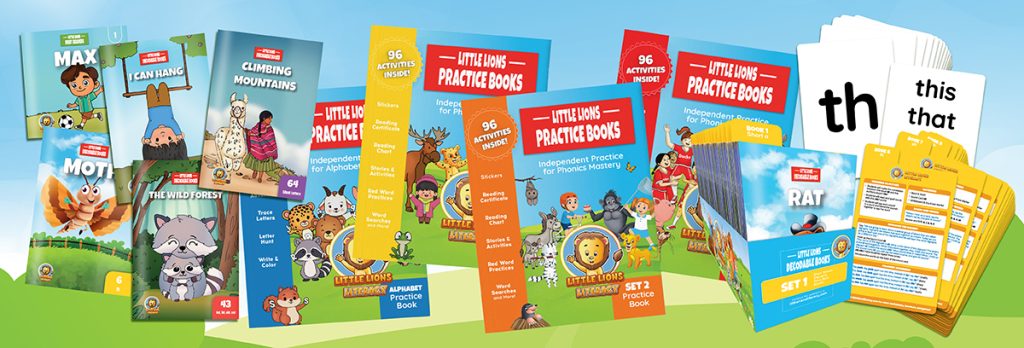
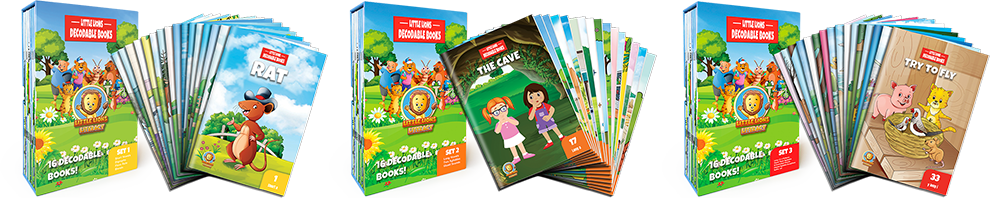
Little Lions Classroom Sets are specifically designed to support small group literacy by pairing six decodable books with a teacher sound card guide. These resources are grounded in Orton-Gillingham principles and are listed by UFLI and the Reading League as recommended decodable titles.
The Little Lions Classroom Sets serve as your all-in-one toolkit for structured literacy, designed to save you planning time while maximizing student engagement. Each set provides everything you need for explicit, systematic phoneme-grapheme reinforcement during your targeted small group time.
Each set includes:
When you’re trying to establish small group literacy independence, you don’t need complex, multi-step crafts that require your help. You need intuitive, structured materials that students already know how to navigate.
That’s where Little Lions Practice Books and a huge variety of FREE Printables shine as your secret weapon for stress-free stations:
Teacher Tip: Take five minutes to explicitly model the layout of your independent practice materials before students use them for the first time. By showing them exactly where to write and how to use the tools, you prevent ‘I don’t know what to do’ questions, keeping your small group time interruption-free.
By spending these first two weeks front-loading expectations and using intuitive, student-friendly materials, you’re setting yourself up for a whole year of calm, impactful small-group instruction.
Take a deep breath—you’ve got this! Grab your Little Lions printables, print your transition charts, and get ready for your smoothest August yet.
Mastering how to launch small group literacy does not require an elaborate setup or an exhausting amount of prep work. By front-loading your expectations, protecting your routines during the first two weeks, and utilizing predictable, high-engagement materials, you can create a calm and productive classroom environment. Take a deep breath, trust your roadmap, and get ready for your most successful, stress-free school year yet!
It is highly recommended to wait. Instead of jumping into complex instruction on day one, spend the first 14 days of the school year front-loading routines, teaching transitions, and building independent stamina. This ensures that when you do begin your small group literacy sessions, your students are already capable of working independently, which minimizes classroom interruptions.
The secret is consistency and clear expectations. Implement strategies like “Ask 3 Before Me” to handle minor problems—like a broken pencil—without your intervention. Additionally, use timers to slowly build independent work stamina, starting with 5-minute intervals and working up to 12–15 minutes, celebrating these successes as a class.
Focus on activities that provide consistent, skill-based practice without requiring your direct help. Excellent options include tactile letter tracing, simple picture-to-sound matching, and independent re-reads of familiar decodable books. Utilizing predictable, high-engagement materials ensures students remain on task, allowing you to focus entirely on your targeted instruction.