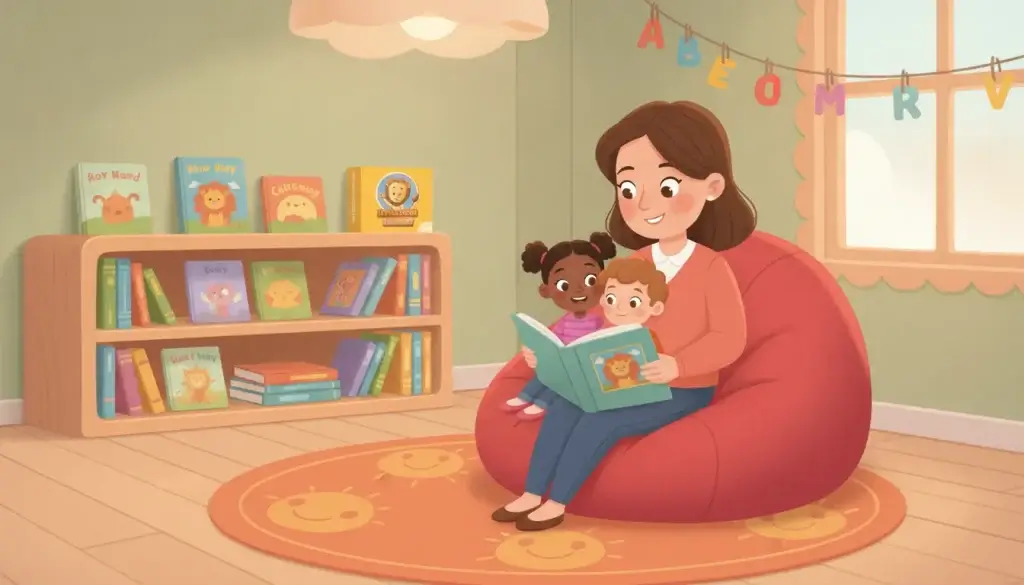
Young readers make stronger progress. Practice should follow a clear sequence. Avoid changing activities every day. A short routine gives children repeated practice. They hear sounds, connect them to letters, build words, and read those words in context.
Effective phonics activities for kindergarten teach one skill explicitly, review previously taught patterns, and pair sound-to-letter work with decodable reading practice. The goal is not to make children guess from pictures. It is to help them apply what they know about sounds and letters to read simple words accurately.
Browse our decodable books for kindergarten phonics practice.
The most useful sequence begins with the difference between hearing and manipulating sounds and connecting those sounds to print. That distinction helps teachers choose activities that build a dependable foundation for each new reading skill.
Effective instruction begins by separating two related skills. Phonemic awareness is the ability to hear and manipulate sounds in spoken words. Children can blend or segment sounds without seeing print. Phonics connects those sounds to letters, then uses the letter-sound relationships to read and spell words.
Strong phonics activities for kindergarten make that connection explicit. The teacher models the sound or task, students practice it, and the lesson returns to skills they have already learned. The National Reading Panel describes systematic phonics as a sequence of elements taught explicitly. Its review found significant benefits for kindergarten students and children who have difficulty learning to read. See the National Reading Panel findings for the research summary.
A useful activity should fit the instructional sequence. Begin with oral work, such as identifying the first sound in sun. Then show the letter s, say its sound, and have students connect the sound to the symbol. Once children know a small set of correspondences, use those letters to build and read simple words. Kindergarten guidance recommends connecting sounds with letters and applying those associations to decode simple words.
For example, after teaching m, s, a, and t, a teacher might say, “Listen: /m/ /a/ /t/. What word?” Students blend mat, build it with letter cards, read it, and then change m to s to make sat. The teacher briefly reviews earlier sounds before adding a new one. This routine is explicit, systematic, cumulative, and tied directly to decoding rather than guessing from pictures.
Use a predictable sequence, then adjust the examples and pacing to match the skills your class has been taught. A practical lesson moves from listening to speech sounds toward reading and spelling with letters. This follows guidance to progress from easier phonemic-awareness tasks to isolation, blending, segmentation, and manipulation, while modeling each task before students respond. See the kindergarten instructional guidance for the underlying sequence.
| Routine | Purpose | Teacher move |
|---|---|---|
| Oral sound work. | Hear and manipulate sounds. | Model, then invite students to identify or blend. |
| Letter-sound review. | Connect sounds to print. | Point, say the sound, and review cumulatively. |
| Word building. | Blend, segment, and encode. | Use only taught correspondences. |
| Decodable reading. | Apply phonics in context. | Preview, read, reread, and check meaning. |
Sound-to-letter work helps kindergarten students connect spoken phonemes with the graphemes that represent them. Phonemic awareness is auditory: students listen for, separate, or manipulate sounds without seeing print. Phonics adds letters and asks students to connect those sounds to symbols. Use both, but do not treat them as the same activity.
Say two sounds, such as /m/ and /s/. Students show one of two gestures or move to a labeled side of the room based on the sound they hear. After several rounds, ask students to identify the beginning sound in simple words. Quick check: say three new sounds and note whether each student sorts all three accurately without letter prompts. For more ideas, see these phonemic awareness activities.
Say a short word that uses taught patterns, such as map. Students push one counter for each phoneme, then place the matching letter above each counter. Model the process: “I hear /m/ /a/ /p/. I will match each sound to its letter.” Quick check: remove one letter and ask which sound is missing. Students should name the sound before choosing the replacement grapheme.
Place three to five magnetic letters in front of each student. Say one sound at a time, and have students select the matching letter, say its sound, and place it on a sound card. Keep the set limited to letters already taught. Quick check: mix the letters and ask students to respond in a new order. You can connect this routine with kindergarten letter recognition activities.
Reserve a few minutes to review previously taught sound-letter correspondences alongside the new one. Show a sound card, have students say the sound, write or build the letter, and read a matching word when ready. Quick check: record which correspondences each student recalls independently, then begin the next lesson with the ones that need another brief review.
Blending and segmenting work best as a pair. In blending, children combine separate sounds to read a word. In segmenting, they pull a spoken or printed word apart into its sounds. Moving between both skills helps children connect speech to print instead of memorizing a pattern. The IRIS Center’s kindergarten study summary includes letter identification, blending words, orally blended words, and reading aloud as part of instruction.
Choose a CV or CVC word that uses only the letter sounds students have learned. For example, if m, a, and t are familiar, write mat. Point under each letter while stretching the sounds together: “Mmmmaaat. What word?” Slide your finger smoothly beneath the word rather than stopping between every sound. Then have students repeat the blend and read the word normally.
If a child says the sounds separately but does not combine them, model the continuous blend again. Say, “Keep your voice moving. Mmmmaaat. Now say it fast: mat.” Avoid asking the child to guess from a picture or the first letter.
Give each child letter tiles or a small whiteboard. Start with a word such as at. Change one sound at a time: at to am, am to mat, and mat to sat, if those letters are in the taught set. After each change, ask, “What sound changed?” Students read the old word, replace the target letter, and blend the new word. This keeps attention on sound-to-letter relationships.
Say a CVC word, such as sat, without showing it. Students tap three spaces, one for each sound: /s/ /a/ /t/. They push a token into each space, then map the sounds with the letters s, a, and t. Finally, they blend and read the word. For dictation, say the word again and ask students to write it. Prompt, “Say it slowly. What sound do you hear first? Which letter spells that sound?” If the spelling is incorrect, return to the sound boxes. Have the child identify the missing or mismatched sound, change the letter, and reread the word.
For more guided practice, see these blending sounds activities. Keep examples within the current letter set, and add cumulative review as new sounds are introduced.
Choose a story that matches the letter-sound patterns students have already learned. Decodable text gives children controlled practice with those skills, helping them work toward accurate and fluent reading without relying on pictures or guessing.
Review the story before assigning it. For example, Little Lions Set 1 covers short vowels, digraphs, the FLOSS rule, and beginning and ending blends. Select a book that lets students apply the patterns they can read, while limiting unfamiliar word types. A close match builds a clear connection between the phonics lesson and the reading task.
Use the book’s new-word list to preview a few words. Have students say the sounds, blend them, and read the words. Then model how to approach the first sentence. Think aloud briefly: “I see the letters, so I will say each sound and blend the word.” Avoid supplying every word too quickly. Give students time to use the decoding process.
On the first read, focus on accurate decoding. On a second read, invite students to reread the same story with smoother phrasing and appropriate expression. You can read one sentence, then have the group reread it together. A partner or small-group reread also gives each child another supported opportunity to practice.
Decoding is necessary, but students also need to think about what they read. Ask a few questions about the characters, events, or problem in the story. Ask students to point to the words or sentences that support their answers. Books with comprehension questions and extension activities can help you continue the discussion after the reading.
Explore decodable books for controlled-text practice, or browse the decodable first readers for kindergarten reading routines.
Children enter kindergarten with different experiences and skill levels. Adjust the amount of modeling, practice, and text difficulty while keeping the instructional goal consistent. The National Reading Panel notes that children vary greatly in the skills they bring to school, so observation should guide flexible grouping and support.
Use a small set of taught letter-sound correspondences. Model each sound, then invite students to identify it, blend a simple word, and read a matching sentence or decodable text. Keep the routine predictable. Offer frequent opportunities to respond without rushing to add new patterns.
Reduce the number of items and increase guided practice. Say the sounds together, use letter tiles or a sound card, and repeat the same word pattern across several examples. Return to previously taught sounds during each lesson. Cumulative review and ample practice are recommended features of kindergarten instruction. Avoid diagnosing based on one activity. Instead, document the skill students can complete independently and the prompt that helps them.
Keep the same target pattern, then add controlled challenge. Students might build and read more words, explain a spelling choice, write a short sentence, or reread a decodable passage for smoother phrasing. Extension should deepen application, not introduce untaught patterns simply to make the task harder.
Once or twice each week, ask each student to identify a few taught sounds, blend two or three matching words, and read a short sentence. Record accurate responses, self-corrections, and the level of prompting needed. Use the notes to regroup, reteach, or move forward. At home, a 10- to 15-minute routine can include sound review, three word-building examples, and one brief reread of matched text. Keep practice calm and stop before fatigue.
For guidance on sequencing phonemic-awareness practice alongside phonics, see this kindergarten reading instruction guide.
Use a systematic routine that models each sound, connects it to a letter, blends and segments words, and provides cumulative review. Pair each new skill with reading and spelling practice using words that match the letter-sound patterns already taught. This sequence supports both accuracy and transfer. Kindergarten guidance recommends explicit instruction that progresses from easier sound tasks to more complex ones.
Keep the activity brief, active, and focused on one clear skill. Use sound cards, magnetic letters, oral blending, word building, or a quick word sort. Then let students read a short decodable passage that matches the lesson. Engagement comes from successful practice and meaningful reading, not from asking children to guess words from pictures.
Begin with oral sound work, such as identifying the first sound in a word or blending sounds spoken by the teacher. Follow with a sound-to-letter match, a few words built with known letters, and a short cumulative review. Model the task first, then have students respond. This keeps phonemic awareness distinct from phonics while connecting the two skills.
Short, frequent practice is easier to sustain than occasional long sessions. A daily routine might include oral sound work, letter-sound review, word reading, spelling, and connected-text reading. The IRIS kindergarten guide describes 15 to 20 minutes of daily phonemic-awareness practice as a useful format over a 9- to 12-week period. But teachers should adjust timing to student needs and the broader lesson schedule. Read the guidance.
Give students focused reading practice with texts that match the phonics skills you teach. Browse and shop Little Lions Literacy decodable books to find classroom-ready options for systematic kindergarten phonics practice.