
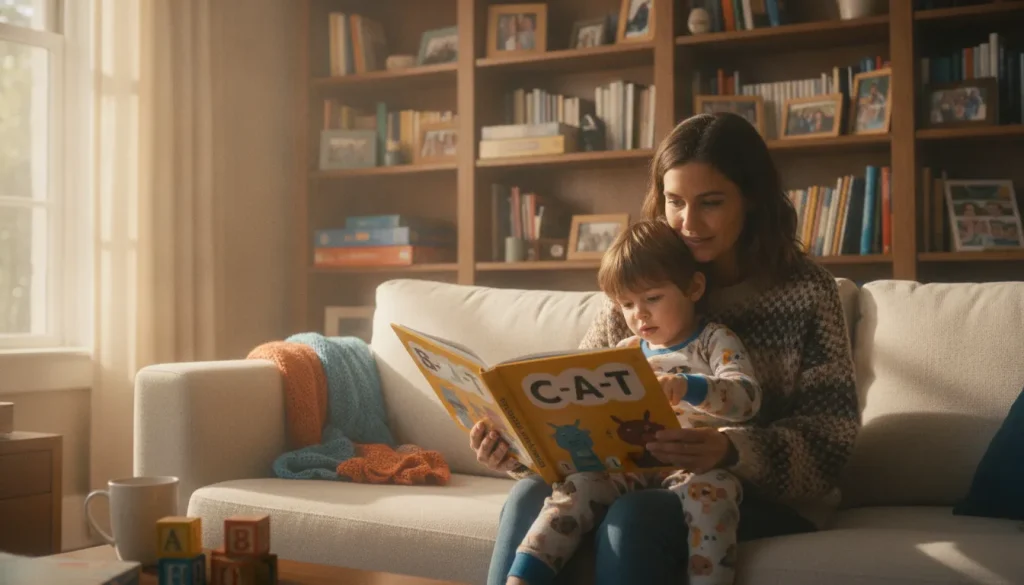
Watching your child guess words from pictures is a sign of reading struggle. This habit stems from teaching methods that miss the core building blocks of language. Structured literacy fixes this by teaching children how to decode words instead of guessing.
Structured literacy is a proven way to teach reading that is explicit, systematic, cumulative, and diagnostic. This method is backed by decades of research on how the brain learns and is grounded in the Science of Reading. It uses five main pillars: phonemic awareness, phonics, fluency, vocabulary, and comprehension. Instead of asking children to guess words from pictures, this approach teaches them the clear rules of the English language. According to the International Dyslexia Association, students learn how to blend sounds, recognize word parts, and understand sentence structure in a logical order. This path ensures that no child has to guess or struggle without help. It is the best way to support students with dyslexia and helps all children become strong readers.
Knowing the how and why of reading instruction helps parents at home. To know how this works, start with the basics. Learning exactly What Is Structured Literacy? is the first step toward a solid base for your young reader. The path begins with
Structured Literacy is a proven way to teach children how to read and write. It is not just a trend or a single set of books. Instead, it is a clear method that helps students build strong skills step by step. This approach is defined as being explicit, systematic, cumulative, and diagnostic. These four words mean that teachers show kids exactly what to do and how to do it. They do not leave learning to chance or wait for a child to pick it up on their own.
This method is firmly grounded in the Science of Reading approach. It covers core areas needed to become a strong reader. These five areas are phonemic awareness, phonics, fluency, vocabulary, and text comprehension. By teaching all five parts, this framework makes sure that no child is left behind. It gives every student the tools they need to find the meaning of the words on the page.
The term Structured Literacy refers to both what we teach and how we teach it. It focuses on the actual structure of the English language. This includes the sounds we hear, the letters that represent those sounds, and how words are built. When kids learn this way, they do not have to guess at new words. They learn how to look at a word and sound it out with confidence.
Instruction covers several key strands of language. Students start with phonology, which is the study of speech sounds. They then learn sound-symbol association, which connects those sounds to letters. As they grow, they study syllable types, word parts like prefixes and suffixes, and sentence grammar. Each new skill builds on the one before it. This cumulative path helps students feel successful as they tackle more complex texts.
Many people think this approach is only for students with dyslexia or other reading struggles. While it is true that this method is vital for those students, it is actually helpful for everyone. Decades of cognitive science research show us how the brain learns to read. This data confirms that most children benefit from direct and clear instruction. It helps them move past simple guessing and into true decoding of every word.
In other systems, kids might be told to look at a picture or guess a word based on the story. Structured Literacy does the opposite. It teaches kids to look at the letters first. This shifts the focus from guessing to knowing the word. By building these habits early, we help children become fluent readers who can understand what they read. This bridge from sounds to meaning is the heart of the Structured Literacy method.
Choosing the right way to teach reading is a big choice for schools and families. Most schools use one of two paths: balanced literacy or structured literacy. While both aim to help kids read, they work in two different ways. Knowing how they differ helps you see why some kids struggle and how to help them grow.
The biggest change is how kids look at new words. Balanced literacy often teaches kids to use cues to find a word. They might look at the first letter, check the picture, or guess based on the story. This is known as a cueing system. It relies on context to fill in the blanks. While this may help kids finish a book fast, it does not teach them how to read the words on the page. If the picture is gone, the child is often stuck.
In contrast, structured literacy focuses on sounding out words. Students learn to link letters to sounds and blend them together. Instead of guessing, they use a Science of Reading approach to read every part of a word. This builds a strong base that works even when there are no pictures to help. It gives kids the tools to read any book they pick up.
In a balanced literacy room, the teacher often acts as a guide. They give kids time to read on their own and hope they learn without help. They might pull a small group together to work on a skill, but the focus is on a love for books. In a structured literacy setting, the teacher is much more active. They teach skills in a clear, step-by-step way. Every lesson follows a set path from simple sounds to complex words. They do not leave reading to chance or wait for a child to guess the right answer.
| Aspect | Balanced Literacy | Structured Literacy |
|---|---|---|
| How students read words | Guessing from pictures or context clues. | Sounding out words using phonics skills. |
| Teacher’s role | Guides kids as they explore books. | Teaches specific skills in a clear order. |
| Error correction | Encourages kids to keep reading for meaning. | Stops to fix the sound-letter mistake. |
| Research basis | Based on ideas about natural learning. | Backed by decades of brain science. |
| For struggling readers | Can leave kids stuck or falling behind. | The most helpful way to help them grow. |
The reason many experts push for structured literacy is simple. It is what the brain needs to learn. Research shows that our brains are not wired to read in a natural way like they are for speech. We must build new paths in the brain to link sounds to letters. This process requires the clear and steady teaching found in structured literacy.
For parents of kids who find reading hard, this shift is vital. Balanced literacy can often hide reading gaps for a few years. But as books get harder and pictures go away, those gaps become clear. A structured approach ensures that no child is left guessing. It gives a clear map for every student to become a strong reader.
Structured literacy is not just one simple method. It is a full way to teach reading that covers both what kids learn and how they learn it. This approach makes sure no child has to guess at words while they read. By focusing on the clear structure of language, it helps every student build a strong path to reading success.
The first part of structured literacy is the way teachers share new ideas. There are four main rules they follow to make sure kids get the most out of every lesson. These rules keep the work focused and clear for every learner.
First, teaching is explicit. This means teachers show each new skill clearly. They do not think a child already knows how sounds work. Instead, they model the skill and give clear steps for the child to follow. Second, the lessons are systematic. The skills follow a logical order that goes from simple to complex. Kids start with basic letter sounds before they move to long vowel patterns.
Third, the program is cumulative. Every new lesson builds on what the child already knows. They keep doing old skills as they learn new ones so no facts are lost. Finally, the work is diagnostic. Teachers watch how each child does and change the lesson to fit their needs. This careful path is a key part of the Science of Reading approach used in many schools. As noted by the Kentucky Department of Education, this method makes sure students gain full control of every skill.
While the principles show how to teach, the strands show what to teach. Structured literacy covers six big areas of language to build a full reader. Each strand adds a new layer of skill to help a child understand text.
Phonology is the first strand. It focuses on the sounds in our speech. Kids learn to hear and move sounds in words without seeing any letters on a page. Next is sound-symbol association. This is where kids connect those sounds to the actual letters they see. This step is vital for decoding new words and spelling them well.
The third strand is syllable instruction. Kids learn about the six syllable types in English. Knowing these types helps them break down long words into small, easy parts. After that comes morphology. This area looks at the “building blocks” of words. Kids learn how to use prefixes, suffixes, and base words to find the meaning of a word they do not know.
The last two strands are syntax and semantics. Syntax is about how we put words together to make sentences. It covers grammar and word order so kids can follow long texts. Semantics is all about the meaning of words and phrases. By teaching all six parts, structured literacy gives kids a full set of tools for both reading and writing.
Many structured literacy programs also use multisensory tools to help kids learn. This means using more than one sense at a time to build strong learning. Teachers often have kids use their eyes, ears, and hands all at once.
For example, a child might look at a letter, say its sound out loud, and trace it in the air. Using visual, auditory, and kinesthetic paths helps the brain store new facts. This “hands-on” style makes phonics lessons more active and helps the skills stick. It is a great way to help kids who struggle with reading build new paths for success.
When you see a lesson in practice, you will notice it follows a clear path. This method is called structured literacy because it does not leave learning to chance. Instead, a teacher or parent guides the child through six steps to build strong reading skills from the ground up.
A typical lesson is fast and focuses on one new skill at a time. This helps the child stay on track without feeling lost. Here is how a lesson usually looks:
To make this work, you need the right tools. Schools often use classroom literacy resources to give every student the practice they need. These sets have books that match each step of the lesson so no child has to guess a word they cannot yet read.
A good program will also use sound cards and spelling lists. These tools help children see that letters are like a code. Once they learn the code, they can read most words. This makes learning to read much less hard for children who might find some books too tough.
Orton-Gillingham is a key part of structured literacy. It has helped children learn to read for nearly one hundred years. The method was first made for students with dyslexia. But now we know it helps all kids learn to read well. It gives teachers a clear way to help students who find reading hard.
Dr. Samuel Orton and Anna Gillingham made this method in the 1930s. They wanted to help kids who struggled with words. They found that kids learn best when they use more than one sense at a time. This led to a science-backed way to teach the code of English. This system is a core part of the Science of Reading approach used today. It focuses on the link between sounds and symbols.
One big part of this method is multisensory learning. This means kids use sight, sound, and touch all at once to learn. For example, a child might trace a letter in a tray of sand. While they trace the letter, they say the sound it makes. This helps the brain build strong paths for reading and spelling. Using more than one sense makes the lesson stick in a child’s mind.
Other tools include skywriting or using letter tiles. When a child “skywrites,” they use big arm movements to trace letters in the air. This helps them remember the shape and sound of each letter. Using letter tiles lets them build words with their hands. This touch-based work makes sounds feel real to a young learner.
This method fits the four parts of structured literacy perfectly. First, it is explicit. This means teachers teach skills directly to the student. They do not wait for kids to guess or “catch on” by themselves. They show exactly how sounds and letters work together to form words. This gives kids a clear map to follow as they learn.
Second, the method is systematic and cumulative. This means it follows a logical path from start to finish. Kids start with easy sounds, like the ones in “cat” or “sit.” Then they move to harder patterns once they are ready. They do not move to a new skill until they master the old one. Each lesson builds on what they already know. This makes sure there are no gaps in their learning.
You can see this in action when a child reads a decodable book. Imagine a student learning the “ch” sound. They might first trace “ch” in sand and say the /ch/ sound. Then they build words like “chip” and “rich” with letter tiles. Finally, they read a book that only uses the sounds they have learned. This keeps them from guessing. They feel proud because they can truly read every word on the page.
For families who want to try this at home, a complete decodable book bundle is a great tool. It provides a clear path for your child to follow. By using these books, you can help your child master one skill at a time. This build-up of skills is why structured literacy is so helpful for all kids.
Home reading routines are the best way to help your child grow. When you use structured literacy at home, you focus on the same clear steps used in the classroom. This keeps learning steady and fun. You do not need a teaching degree to build a strong base for your child. Follow these simple steps to help them become a confident reader.
Having the right tools at home makes a big difference. Little Lions Literacy provides Reading League-approved materials that follow a logical path. These books ensure your child never has to guess a word. Using these resources helps your child master each skill before they move on to the next one.
You can get a complete decodable book bundle to support your child from their first words to full stories. Most individual books start at just $19.95, and we offer free shipping on all orders over $75. These tools help you turn home reading time into a powerful learning experience.
While structured literacy is the most effective approach for students with dyslexia, it helps all children learn to read. According to the International Dyslexia Association, this method is essential for students with dyslexia but benefits all readers by teaching the sound system of English clearly. It removes the guesswork from reading and builds a strong base for every child, no matter their starting skill level.
Look for programs that teach phonics in a clear, step-by-step order. In these classrooms, teachers do not ask children to guess words based on pictures or context. Instead, they teach students to sound out words using specific rules. A true structured literacy program will be logical and build on itself, meaning each new lesson connects to what the child already knows. You should also see students using decodable books that match the phonics rules they have learned.
Phonics is just one part of a complete structured literacy program. While phonics focuses on the link between sounds and letters, structured literacy covers much more. According to Reading Rockets, this approach also includes teaching about syllables, word parts, sentence structure, and word meanings. It provides a full map of how the English language works. Phonics is the engine, but structured literacy is the entire vehicle that leads to reading success.
Yes, structured literacy is helpful for students as young as preschool. At this stage, it focuses on building phonemic awareness, which is the ability to hear and play with individual sounds in spoken words. By starting early with simple sound games and alphabet tasks, children build the skills they need before they even begin reading books. This early start creates a strong base for future success and makes the transition to kindergarten much easier.
Learning to read is a key skill that forms the base for all school work. If a child does not get the right help early on, they may struggle for years to come. This can lead to a lack of hope and a hard time in every subject. You do not have to wait for your child to fall behind before you take action. By starting a step-by-step plan now, you give them the tools they need to do well. Using books based on the science of reading ensures that your child is not just guessing at words. Instead, they will learn to sound out letters and build real skills that last. Every day you wait is a missed chance to make reading fun and easy. Take the lead today to help your child grow into a strong reader.
Ready to request a set? Browse our decodable books for structured literacy to support your child’s reading path.

