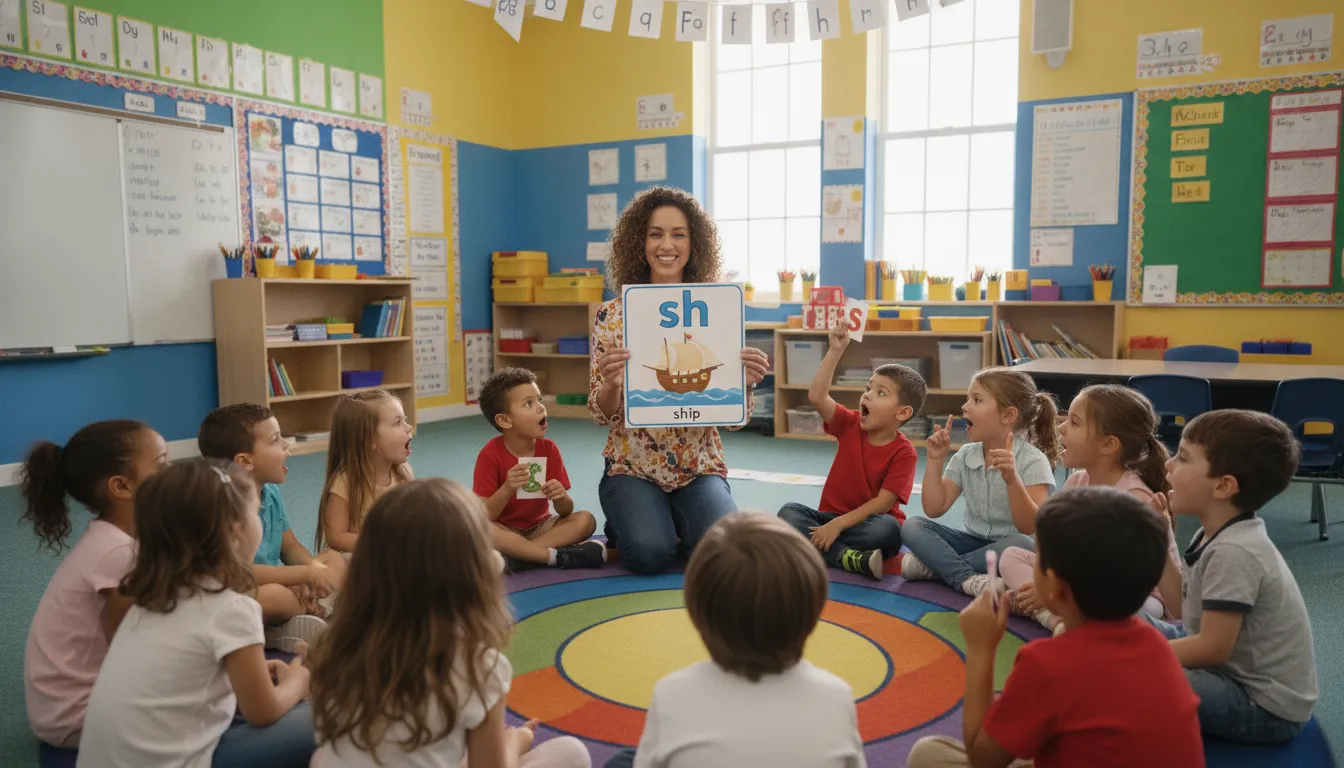
Many students struggle when they first see two consonants that make just one sound. Understanding these combinations is a vital step toward reading fluency and accurate spelling for every early reader.
How to teach consonant digraphs requires a step-by-step approach that moves from direct lessons to hands-on practice with decodable text. Start by introducing one digraph at a time. Such as “sh” or “ch.” Use anchor charts and picture cards to show how two letters combine to make a single sound. According to the Iowa Reading Research Center, skilled reading is the product of decoding and language comprehension. This makes these phonics skills key for long-term literacy. Effective lessons involve phonemic awareness tasks, word sorts, and writing practice to link symbols and speech. By following a clear sequence after students master basic CVC words, you can help them navigate complex words with ease. These early lessons help your students move beyond simple sounds to more fluent reading.
Before you begin your first lesson, it helps to have a clear idea of the language concepts behind these sounds. You must be able to explain the difference between a digraph and a blend to your students. Here is a look at What Are Consonant Digraphs? and how they function in the English language.
A consonant digraph is a set of two letters that make one speech sound. Unlike blends where you hear each separate sound, the letters in a digraph work as a team to make a new sound. Teachers often use the short phrase “two letters, one sound” to help kids remember. You can learn how to teach consonant digraphs by showing students how to find these pairs in common words.
The most common consonant digraphs are ch, th, sh, wh, and ph. Many teachers call these the “h brothers” because they all end with the letter h. For example, in the word “chat,” the letters c and h join to make the /ch/ sound. Other easy examples are “ship” for /sh/ and “duck” for the /ck/ sound. Learning these sounds is a big part of decoding, which helps kids read well.
It helps to know the difference between digraphs and blends. In a blend like “st” in “stop,” you still hear both the /s/ and the /t/ sounds. But in a digraph like “sh” in “shop,” the two letters make one sound that is not like either letter alone. This matters because systematic phonics instruction helps students see letter groups as one unit. Most kids are ready to learn this in kindergarten or first grade.
The “h brothers” are usually the first digraphs a child learns. Each one has a clear sound that students must learn to say and write. For instance, the /th/ sound is in words like “thin,” “math,” and “bath.” These sounds are the building blocks for reading many everyday words. By teaching one digraph at a time, you can help your students build the phonological processing skills they need to read with ease.
Teaching consonant digraphs is a vital step in helping kids become strong readers. Based on data from the Iowa Reading Research Center, skilled reading is the result of two main parts: decoding and language comprehension. Mastering these letter pairs helps kids move past basic sounds to read more complex words. Most kids are ready for these lessons in kindergarten. All typically developing children should know how to read and spell them by first grade.
Consonant digraphs use two letters to make one single speech sound. This is different from blends where you can still hear each individual letter. When you how to introduce consonant digraphs, you give kids the tools to break down hundreds of common words. Without this skill, many simple words like “ship” or “chat” will remain hard for a young student to solve.
Knowing these sounds makes reading much smoother. Digraphs show up in many everyday words. Learning them well helps children read faster and with fewer mistakes. This knowledge also helps with writing. When kids understand that two letters work together to make one sound, they can spell more accurately. You can find more tips on learn how to teach consonant digraphs to help your students reach the next level of reading success.
You should start to teach digraphs once a child knows all their basic letter sounds. Most kids are ready for this step in late kindergarten or early first grade. Before you move to digraphs, make sure the student can read simple three-letter words like “cat” or “sun” without much help. A child must feel good about blending single sounds together before they try to learn how to teach consonant digraphs. They must be ready for pairs that join as one to make a brand-new sound. This skill builds on their skill to hear and say each sound in a short word. They need to be firm in these basic skills to avoid getting stuck later on.
A student is ready when they can blend and segment CVC words with ease. If a child still struggles to tell the difference between “bat” and “bit,” they may need more work on short vowels first. Being fast with these simple words shows that the child’s brain is ready for new patterns. You also want to make sure they know the way how to introduce consonant digraphs differs from consonant blends. In a blend, you still hear each letter’s sound. In a digraph, the two letters work as a team to make one sound. As noted by the Iowa Reading Research Center, most kids should read and spell words with digraphs by the end of first grade.
When you start, teach just one digraph at a time. Do not try to show a student “sh” and “ch” on the same day. Mixing them up too early can lead to a lot of mix-ups and slow down their progress. It is best to wait until they can read the first digraph in many words before you add the next one. A good way to start is with “sh” because it shows up the most in books for kids. From there, move to “ch,” then “th,” and then “wh.” You can save “ck” for the end of this list. This digraph is special because it only comes at the end of a short vowel word. Stick to this slow and steady pace to help your child build a strong base for reading.
Teaching students to read digraphs requires a clear and direct plan. Many kids in kindergarten are ready to start, and most should master these sounds by first grade. Research shows that skilled reading depends on the ability to decode and understand language. You can use this six-step sequence to help your students build a strong phonics foundation.
Success starts with showing students how two letters work together to make one sound. Before you begin, ensure your students can already read basic consonant-vowel-consonant words. You may want to review how to introduce consonant digraphs before moving to this advanced step. This plan moves from simple sound awareness to reading full stories.
Keep a close watch on how each student moves through these steps. Some children may need more time on sound awareness before they are ready to write. Use daily checks to see if they can find digraphs in new words. Constant practice with decodable texts will help them become confident, independent readers.
Many students find it hard to tell the difference between digraphs and blends. Both use groups of consonants, but they work in very different ways. Knowing these facts helps when teaching consonant digraphs versus blends to young kids.
A digraph uses two letters to make one brand-new sound. For example, in the word “chat,” the letters c and h join to make the /ch/ sound. This is a single speech sound that neither letter makes by itself. In contrast, a blend has two or more letters where each letter keeps its own sound. In a word like “stop,” you can still hear both the /s/ and the /t/ sounds.
The Iowa Reading Research Center says that skilled reading needs strong decoding. Mixing up a digraph with a blend can cause reading mistakes. Students might try to say each letter sound in a digraph instead of saying the one new sound it makes.
| Feature | Digraph | Blend |
|---|---|---|
| Main goal | Two letters, one sound | Two letters, two sounds |
| Sound count | One sound | Two sounds |
| Example | sh in ship (/sh/) | st in stop (/s/ + /t/) |
| How to read | Read letters as one unit | Slide sounds together |
Helping kids tell these two groups apart prevents mix-ups in phonics class. Digraphs force students to learn a new link between letters and sounds. Blends ask students to get better at smooth reading. You can find more tips on how to introduce consonant digraphs to keep your students on track.
Once you introduce a new sound through clear teaching, students need many chances to use what they know. Simple and low-prep tasks help kids move from seeing letters to hearing sounds. These tasks should focus on one digraph at a time to build skill and trust. Effective phonics practice for digraphs helps early readers master these tricky letter pairs fast.
Picture card sorts are a great way to start. Give your student cards with images of things that start or end with a digraph like “sh” or “ch.” Ask them to sort the cards into groups based on the sound they hear. This task helps kids focus on ear skills before they start reading words on a page. You can find more tips on how to introduce consonant digraphs to your class through play.
A digraph hunt turns reading into a game. Give your students a book and ask them to find every “th” or “wh” on the page. They can mark the letters or write them on a small board. Using magnetic letters is also a top way to practice. Ask the child to build words using the letters you say. This hands-on work links the sound to the written form. Research from the Iowa Reading Research Center shows that this type of work builds strong skills in young kids.
Worksheets that use color codes can make work more fun. A student might color all “sh” words blue and all “ch” words red. You can also use a sand tray for writing practice. Kids trace the letters in the sand while they say the sound out loud. This step helps the brain remember the new pattern. These tools are key when you learn how to teach consonant digraphs to kids who are just starting to read.
Once a student learns how to say a new sound, they must practice it in real text. Direct phonics teaching helps children find the new digraph on a page. But the true goal is to see that sound work in a story. This move from word lists to full sentences is key for growth. Research from the Iowa Reading Research Center shows that skilled reading comes from both decoding and knowing the meaning. Decodable books provide the bridge between these two skills.
Reading single words on a chart is a good first step. But students need to see digraphs in context to build real fluency. Decodable books use mostly words that students can already sound out. This prevents the child from guessing based on pictures or context. Instead, they must look closely at each letter string. When they find a digraph like /sh/ or /ch/ in a sentence, they feel a sense of pride. You can find many phonics practice for digraphs options that focus on these specific sounds. These stories let children see how digraphs create meaning in everyday speech.
In many standard books, children use the pictures to guess at hard words. This habit can slow down their reading growth in later grades. Decodable books solve this by using controlled text. Every word follows the phonics rules the student has already learned. When a student sees the word “ship” or “chat,” they have the tools to decode it. This focus on the print helps the brain map sounds to letters more quickly. It also builds the strength needed for longer books. Giving these safe texts is a core part of the Science of Reading.
Structured practice is the best way to make these new sounds stick for young learners. The Little Lions Decodable Books Set 1 is built for this exact stage of reading. This set includes 16 books that cover short vowels, digraphs, the floss rule, and blends. For a price of $79.95, you get a full set of tools to help your students grow. Each book uses a simple plot that keeps young readers engaged while they work on their skills. By using these books, you give your child a safe place to practice without feeling stressed. These stories help them turn new sounds into strong reading skills today.
Most experts suggest a specific order for teaching these new sounds. You should start with common pairs like “sh” and “ch” before you move to “th” and “wh.” The digraph “ck” usually comes last in the first group. According to the Pride Reading Program, this order helps children build their skills slowly. Focusing on one sound at a time helps young readers learn to read new words without getting mixed up.
It is best to teach only one new digraph at a time. Using too many sounds at once can confuse early readers and slow down their growth. You should wait until your student can read and spell one pair easily before you start the next one. This method helps children master each sound with pride. According to Learning at the Primary Pond, separate lessons stop children from mixing up the sounds.
Children are usually ready for digraphs after they know the alphabet and can read simple three-letter words. Most students begin learning these sounds in kindergarten or first grade. According to the Iowa Reading Research Center, all children should master digraphs by the end of first grade. If your student can blend single sounds into words like “cat” or “pig,” they are ready to learn these new letter pairs.
Yes, consonant digraphs can appear at the start or the end of a word. For example. The “ch” sound is at the start of the word “chat,” but it is at the end of the word “rich.” Common digraphs like “th” and “sh” also show up in both spots. Learning that these letter pairs can sit anywhere in a word helps students become better at reading. This skill is vital for reading many common English words the right way.
Students who do not master these phonics skills early often fall behind their peers and struggle to sound out new words as they grow older. If you wait too long to start this work, your kids might lose their love for books and find that reading feels like a task. You can use our phonics practice for digraphs to give your students the tools they need right now to build a strong base for success.
Browse our shop to shop our collection of decodable books for learning consonant digraphs and find the right sets to help your students grow into strong readers and writers today.