Schools often use acronyms that can sound like a secret code. If you’ve heard the term UFLI, you might have brushed it off as just another piece of education jargon. However, this is one term every parent should know. UFLI is a powerful, research-based phonics program that is transforming how kids learn to read. Answering the question of what is UFLI for parents is the first step to understanding your child’s reading instruction. This guide will demystify the program, explaining its simple, step-by-step approach and how it sets your child up for a lifetime of reading success.
If you’ve heard teachers or other parents mention “UFLI,” you might be wondering what it is and why it’s getting so much attention. UFLI stands for the University of Florida Literacy Initiative, and it’s a highly respected program designed to help young children become strong, confident readers. Understanding what it is can help you support your child’s journey and have more informed conversations with their teachers.
At its core, the UFLI Foundations program is an explicit and systematic approach to teaching phonics. “Explicit” simply means that concepts are taught directly and clearly, leaving no room for guesswork. “Systematic” means the lessons follow a logical, step-by-step sequence, building on each other from simple to more complex skills. The program teaches children how to connect sounds to letters, a crucial skill for decoding words. By mastering these foundational skills, kids gain the automaticity they need to read smoothly and confidently.
One of the best things about the UFLI approach is how many different learners it can help. The program is primarily designed for children in the early grades, like kindergarten through second grade, who are just beginning their reading journey. However, its clear and structured format also makes it an excellent tool for older students who may be struggling with reading. Whether your child is just starting to sound out words or needs extra support to catch up, UFLI provides a solid framework to help them succeed.
So, why is this structured approach so important? UFLI’s main goal is to prevent future reading difficulties by building a solid, evidence-based foundation for literacy from the very beginning. When children have a strong grasp of phonics, they are better equipped to tackle new words and read with greater comprehension. The program’s effectiveness isn’t just theoretical; it has made a real-world impact. This approach has helped improve the reading skills of millions of children, according to the University of Florida. Giving your child this kind of support early on sets them up for a lifetime of successful reading.

UFLI Foundations demystifies reading by breaking it down into clear, predictable steps. Instead of asking kids to memorize whole words, the program focuses on teaching them the code of the English language. It’s a systematic approach that builds skills sequentially, ensuring no child is left behind. This structure helps children see how sounds and letters work together, turning what seems like a huge challenge into a series of achievable wins.
At its core, UFLI is an explicit and systematic phonics program. This means it directly teaches children the relationships between letters (graphemes) and sounds (phonemes) in a carefully planned order. The lessons progress from simple to more complex concepts, so your child builds a strong foundation before moving on. This methodical process helps children achieve automaticity, which is the ability to recognize words quickly and accurately without having to sound them out every time. It’s this confidence and fluency that transforms hesitant guessers into skilled readers. The goal is to make decoding second nature, freeing up brainpower to focus on what the text actually means.
Every UFLI lesson follows a consistent, eight-step routine that reinforces skills and introduces new concepts in a predictable way. This structure helps kids know what to expect and allows them to focus on learning. The steps include:
This comprehensive lesson plan ensures all aspects of early reading are covered.
UFLI lessons are designed to be interactive and engaging for young learners. The program uses a multi-sensory approach, which means kids learn through sight, sound, and touch. You’ll often see children participating in hands-on activities like “pounding out” the sounds in a word, using magnetic letter tiles to build words, or writing on small whiteboards. This physical engagement helps cement the connection between letters and sounds in their brains. By involving more than just their eyes and ears, UFLI makes abstract concepts like phonics feel concrete and easier to grasp, which is especially helpful for active little learners.
You might be used to the term “sight words,” but UFLI calls them “heart words.” This is a small but important shift. Instead of encouraging pure memorization, UFLI teaches children to analyze these high-frequency words. They learn to decode the parts that follow the rules and identify the tricky parts they need to learn “by heart.” This empowers them to see that even irregular words have predictable elements. After practicing these skills, children apply them by reading connected text. Using decodable books that align with the concepts they’ve just learned allows them to experience real reading success and build the confidence they need to keep going.
One of the best things about the UFLI program is how easily its strategies can be woven into your daily life. You don’t need a teaching degree or a perfectly quiet house to support your child’s reading journey. Reinforcing what they learn in the classroom can be as simple as playing a quick game while dinner is cooking or spending a few focused minutes together before bed. These small, consistent moments are incredibly powerful. They show your child that learning isn’t confined to school and can be a fun part of your family routine.
These activities are designed to be hands-on and effective, helping to solidify the connection between sounds and letters. By incorporating these simple practices, you become a powerful partner in your child’s literacy education. You’re not just helping them with homework; you’re building a positive attitude toward reading that can last a lifetime. The key is to keep it light and encouraging. When you celebrate their effort and progress, you help them see themselves as capable learners, which is the most important foundation of all.
A fantastic way to help your child hear the individual sounds in words is with a technique called “Pound and Sound.” It’s a physical, hands-on activity that makes an abstract concept much more concrete. For a word like “cat,” your child would say the word, then pound their fist on the table for each sound: /k/ (pound), /a/ (pound), /t/ (pound). This simple action helps them isolate and identify each phoneme. You can see a great demonstration in this UFLI home practice video. This practice is crucial for developing the phonemic awareness skills that are essential for both reading and spelling.
Word Chains are another engaging game that feels more like a puzzle than practice. You start with one word, like “map,” and ask your child to change one sound to make a new word, like “mop.” Then, you might change “mop” to “top.” This activity is brilliant for strengthening phonics skills and showing kids how words are connected. Using magnetic letters on the fridge or a whiteboard makes it even more interactive. It sharpens their listening skills and reinforces their understanding of how letters and sounds work together to form different words.
There’s something about a whiteboard and a colorful marker that just makes learning feel more fun. A small personal whiteboard can be a great tool for practicing at home. You can use it to write words your child is learning, practice spelling, or build short sentences together. The erasable surface takes the pressure off, making it okay to make mistakes. It’s a simple way to make learning more interactive and gives your child a hands-on way to work on everything from letter formation to proper punctuation without the formality of a pencil and paper.
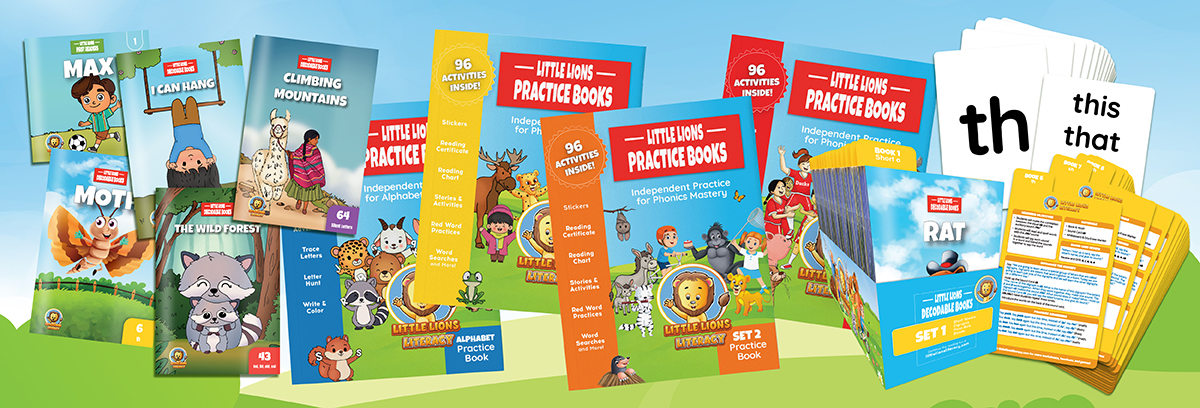
Reading decodable books is one of the most powerful ways to support your child. These books are special because they are written using only the phonics skills your child has already learned. This allows them to apply their knowledge and actually read on their own, which is a huge confidence builder. As you reinforce the phonics skills they’re learning, they’ll build fluency and start to read more smoothly. Our Little Lions Literacy book sets are designed to follow a clear progression, ensuring your child has the right books at every step of their reading journey.
If your child is finding reading to be a challenge, remember that your patience and encouragement are the most important tools you have. The goal is to build skills and confidence at a pace that feels right for them. It’s essential to provide targeted support through fun, low-pressure activities like phonics games or taking turns reading sentences from a decodable book. Celebrate small victories and focus on effort over perfection. Creating a positive and supportive reading environment at home can make a world of difference and help your child see themselves as a capable, growing reader.
One of the best parts of the UFLI program is that you’re not left on your own to figure things out. The University of Florida Literacy Institute provides a fantastic collection of resources designed specifically for parents. Whether you want to understand the curriculum better or find activities to do at home, there are tools available to guide you. These resources make it simple to stay involved and reinforce what your child is learning in the classroom, turning you into a confident partner in their reading journey.
Think of the UFLI Parent Resource Hub as your online home base for all things UFLI. The university created this special section of its website to give parents direct access to materials that support their child’s language and reading development. It’s a well-organized space where you can find everything from informational guides to hands-on activities. Instead of searching all over the internet, you can go straight to the source for trusted, high-quality information that aligns perfectly with the UFLI Foundations lessons. It’s an invaluable tool for any parent whose child is using the program.
When your child brings home UFLI practice sheets, you don’t have to guess how to help them. UFLI provides a Parent’s Home Practice Guide that walks you through how to support your child with their homework. Available in both English and Spanish, this guide explains the purpose behind the activities, which often include reading, writing, and word-sorting. These exercises are designed to reinforce what your child learned in school that day. There are even videos that model the lessons, so you can see exactly how to practice different skills with your child, making homework time more effective and a lot less stressful.
It’s helpful to know what reading and writing skills are typical for your child’s age and grade level. UFLI offers clear guidance on the key reading milestones children should be reaching from kindergarten through fifth grade. This isn’t about creating pressure or a rigid checklist. Instead, it’s about giving you a general roadmap so you can celebrate your child’s progress and spot potential areas where they might need a little extra support. Understanding these developmental steps helps you have more informed conversations with your child’s teacher and ensures you’re on the same page about their growth as a reader.
Every child learns at their own pace, and some face more challenges than others. UFLI acknowledges this by providing resources specifically for children who might have reading difficulties like dyslexia. The program’s core mission is to prevent future reading struggles by building a solid, evidence-based foundation from the very beginning. If you’re concerned your child is having a tough time, UFLI offers materials that can help you understand the issue and find the right support. This proactive approach empowers you to address hurdles early on, ensuring your child gets the help they need to become a confident, successful reader.

You might be wondering what makes UFLI stand out from other reading programs. Its effectiveness isn’t magic; it’s the result of a thoughtful design rooted in research, trusted by educators, and proven to deliver real results for young readers. The program’s success comes from its strong scientific foundation and its dedicated support for both students and the teachers guiding them. It’s a comprehensive approach that builds confident, capable readers from the ground up.
At its core, UFLI is an explicit and systematic phonics program built on the science of reading. “Explicit” means it directly teaches children how to connect sounds to letters, leaving no room for guessing. “Systematic” means the lessons follow a logical, step-by-step sequence, with each new skill building on the last. This structured approach ensures children develop a deep understanding of how words work. Instead of memorizing whole words, they learn the code to decode them on their own, which builds true reading independence and confidence.
When your child’s school uses UFLI, you can feel confident they are using a program with a massive track record of success. UFLI isn’t a small, experimental program; it’s a powerhouse in literacy education. It is used in every U.S. state, across Canada, and in dozens of other countries, helping millions of children learn to read. This widespread adoption by educators speaks volumes about its reliability and effectiveness. The University of Florida has documented how this reading program is reaching classrooms worldwide, giving parents peace of mind that their child is learning with a globally trusted resource.
The ultimate test of any reading program is whether it works for kids, and the evidence for UFLI is compelling. Studies show that students who receive UFLI instruction make significant gains in essential reading skills. They get better at hearing and manipulating sounds (phonemic awareness), sounding out words (decoding), and reading smoothly and accurately (oral reading fluency). This progress is seen in both beginning readers and those who may have been struggling, making it a powerful tool for getting all children on the path to literacy.
A great curriculum is only as effective as the teacher who delivers it, and UFLI excels by supporting educators. The program focuses on two key goals: helping students build reading skills and helping teachers learn better ways to teach reading. By providing teachers with clear lesson plans, resources, and training, UFLI ensures that the instruction your child receives in the classroom is consistent, high-quality, and effective. This dual focus on empowering both the learner and the teacher is a major reason why the program has such a positive impact.
How is UFLI different from just memorizing sight words? UFLI takes a very different approach than memorizing whole words. Instead of asking kids to learn hundreds of words by sight, it teaches them the underlying code of the language. The program focuses on “heart words,” where children learn to sound out the parts of a word that follow the rules and only have to learn the tricky parts “by heart.” This empowers them to tackle new words they’ve never seen before, rather than relying on memory alone.
Is UFLI only for kids who are struggling to read? Not at all. While UFLI is an excellent tool for helping students who have fallen behind, it’s primarily designed as a core reading program for all children in early elementary grades, like kindergarten through second grade. Its clear, step-by-step structure builds a strong foundation from the very beginning, which helps prevent reading difficulties before they can start.
Do I need special materials to try UFLI activities at home? You really don’t need to buy anything special to get started. Many of the most effective activities use things you already have. You can practice sounding out words while driving in the car, use magnetic letters on your fridge to build words, or grab a small whiteboard from a dollar store for spelling practice. The goal is to make learning a natural and fun part of your day, not to replicate a classroom.
What makes decodable books so important for this approach? Decodable books are a key part of the process because they give children a chance to actually use the skills they are learning. These books are carefully written with words that only contain the letter-sound patterns your child has been taught. This allows them to read a whole book successfully, which builds immense confidence and makes them feel like a real reader. It turns practice into a rewarding experience.
How much time should we spend on these activities at home? Consistency is much more important than duration. You don’t need to set aside an hour every day. Just five to ten minutes of focused, fun practice a few times a week can make a huge difference. You could play a quick word game while waiting for dinner or read a decodable book together before bed. Keeping it short and positive ensures your child stays engaged and doesn’t feel overwhelmed.