Hey there! If you’ve ever sat down with a toddler or a preschooler and opened a book that says “A is for Apple,” you’ve already taken the first step in a massive journey. It seems so simple, right? Just some letters and some pictures. But under the surface, alphabet books for early literacy are doing some serious heavy lifting for a child’s brain.
At Little Lions Literacy, we’re obsessed with making sure that first step is a solid one. We know that teaching a child to read isn’t just about memorizing a song; it’s about building a bridge between those squiggly lines on a page and the sounds we make when we talk.
In this Alphabet Books for Early Literacy guide, we’re going to dive deep into why alphabet books are the “secret sauce” of early literacy and how you can use them like a pro: whether you’re a classroom teacher or a parent at the kitchen table.
It’s easy to think of alphabet books as “baby books,” but in the world of literacy, they are foundational tools. Research consistently shows that a child’s knowledge of letter names and sounds is the single best predictor of how well they will read later on.
When you use an alphabet book, you aren’t just teaching a list of 26 characters. You are teaching symbolic representation. You’re helping a child understand that this specific shape “B” makes a specific sound “/b/” and represents a specific thing like a “bear.”
According to the Science of Reading, this process: called orthographic mapping: is how the brain learns to recognize words automatically. Alphabet books for early literacy provide the raw materials for this process to begin.
Words are just a code. For a young child, that code is a total mystery. Alphabet books for early literacy act as the “decoder ring.” By pairing a letter with a familiar object, you’re giving the child a mental hook.
Not all “reading” is created equal. While flipping through a book is great for bonding, if you want to build a solid reading foundation, you can be a bit more intentional.
It’s great if a child can sing the Alphabet Song, but knowing that the letter “M” is called “em” doesn’t actually help them read the word “mat.” Knowing that “M” makes the sound “/m/” does!
When you’re reading, point to the letter and say, “This is the letter M. It makes the /m/ sound, like in monkey.” This explicit connection is what the UFLI Foundations program emphasizes for successful early literacy.
Don’t just read to them: read with them.
The quality of the alphabet book for early literacy matters. You want books that use clear, unambiguous pictures. If a book uses “Owl” for the letter “O,” it might be confusing because “Owl” doesn’t use the standard short /o/ sound found in “Octopus.”
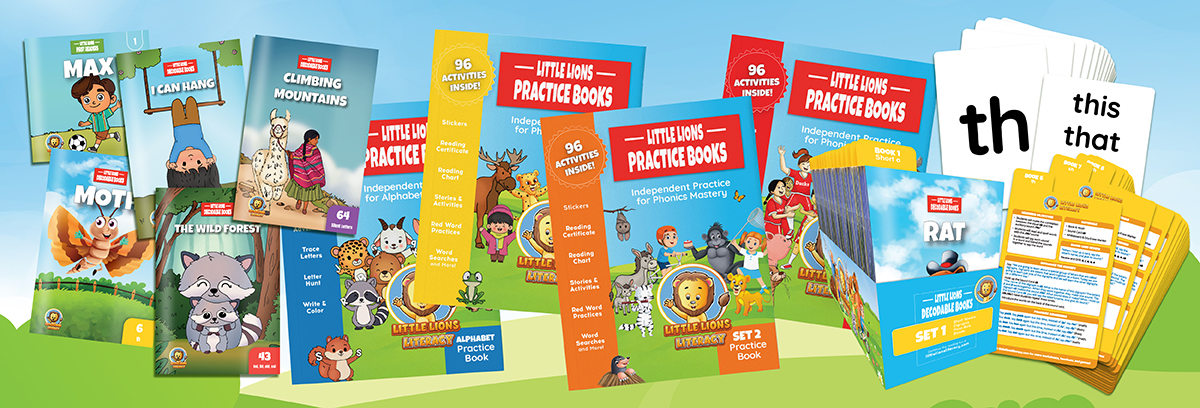
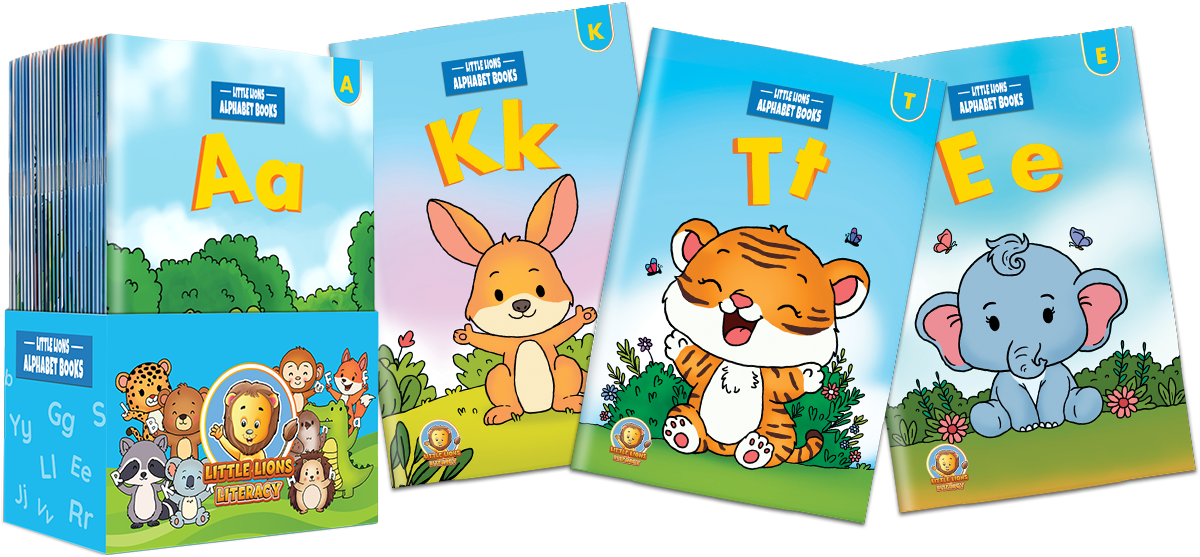
At Little Lions Literacy, our Alphabet Books are designed by teachers who understand these nuances. Every book in our 16-book set is crafted to ensure the pictures and sounds align perfectly with Science of Reading principles.


You don’t need a PhD in education to help your child become a great reader. You just need consistency and a few good alphabet books for early literacy. Creating a “literacy-rich” environment simply means making letters and sounds a normal, fun part of your day.
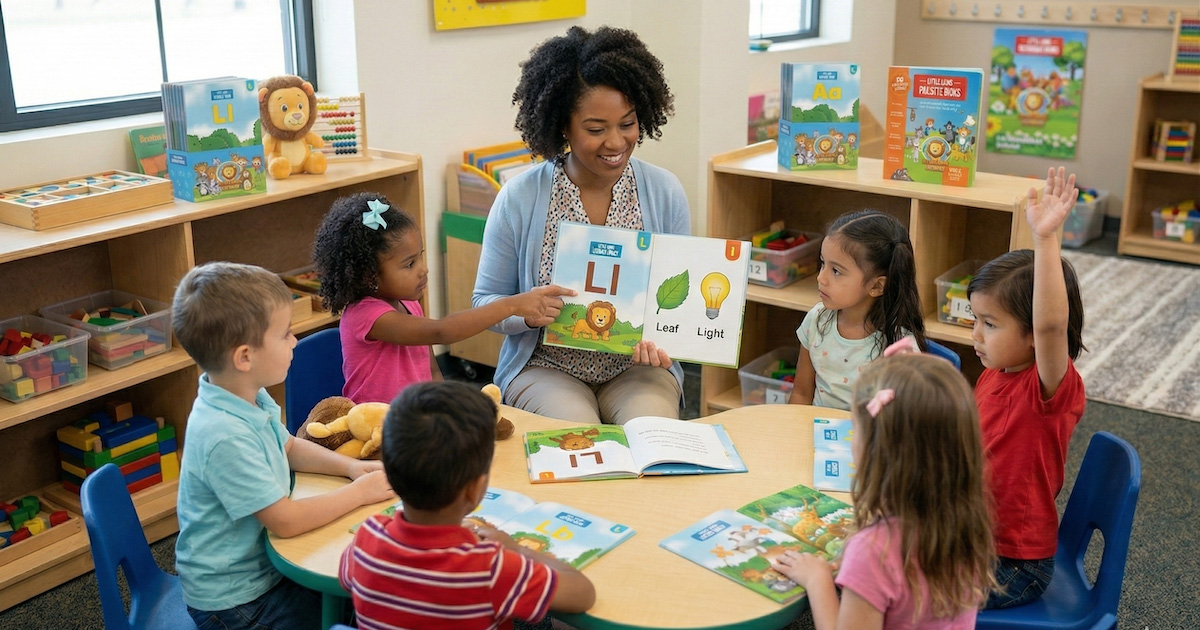
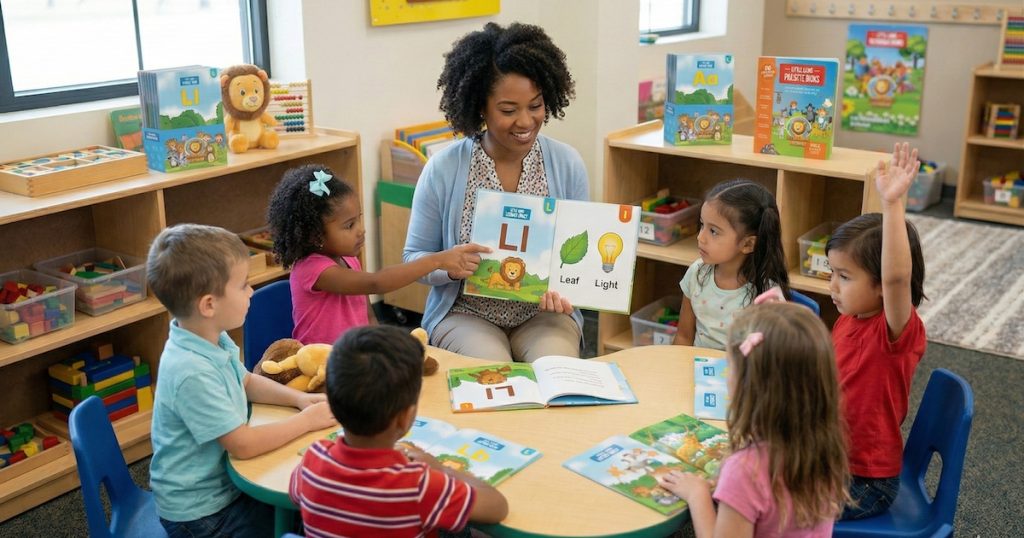
Set up a small corner with a rug, some pillows, and a basket of books. When books are accessible, children are more likely to pick them up on their own. Alphabet books are perfect for “independent” reading for Pre-K kids because they can “read” the pictures even before they can decode the words.
Kids love reading the same book 500 times. While it might drive you a little crazy, it’s actually doing wonders for their brain. Repetition builds fluency and confidence. Each time they see that letter “S” and hear you say “/s/ snake,” that neural pathway gets stronger.
Alphabet books are the starting line, but where are we heading? The goal is to move from recognizing letters to blending them together to read words. This is where decodable books come in.
Once a child has a solid grasp of their letter sounds, they can start reading simple CVC (Consonant-Vowel-Consonant) words like “cat,” “sit,” and “hop.”
In the Science of Reading, we talk about a “Scope and Sequence.” This is just a fancy way of saying we teach things in a specific order that makes sense.
If you skip the alphabet foundation, the rest of the tower becomes very wobbly. That’s why we recommend starting with our Alphabet Book series before moving into our Set 1 Decodables.
We take literacy seriously. Our materials aren’t just “cute”: they are effective. Little Lions Literacy resources are:
Ready to start building that foundation? Check out our complete set of Alphabet Books. Each book features engaging stories and vibrant illustrations that make learning letters an absolute blast.
At the end of the day, the most important thing you can do is foster a love for reading. Alphabet books are an invitation to a world of stories. When you approach these early lessons with joy and curiosity, your child will too.
So, grab a book, find a cozy spot, and let the adventure begin. You’re building a reader, one letter at a time!