Have you ever sat with your child, listening to them stumble through an “early reader” book, guessing words from the pictures? It’s a common and frustrating experience. The truth is, many of these books aren’t designed for a child who is just learning to sound out words. They set kids up to guess, not to read. This is where phonic story books change the game entirely. These special books are carefully crafted with words your child can actually decode using the skills they’ve just learned. They turn reading practice into a series of small, confidence-building wins. This guide will walk you through what makes these books different and how to find the perfect ones to help your child become a strong, successful reader.
Ever wonder what makes a “phonic story book” different from the other picture books on your child’s shelf? While both are wonderful, they serve very different purposes. Phonic story books are special tools designed to support new readers by giving them texts that are perfectly aligned with their phonics lessons. These books use a “controlled vocabulary,” which is a fancy way of saying the words are carefully chosen to only include the letter-sound patterns your child has already learned.
This intentional design means your child can actually read the book by sounding out the words, not by guessing from pictures or memorizing the story. This approach turns reading practice into a series of small wins. Instead of feeling overwhelmed by unfamiliar words, your child gets to successfully apply their new skills in the context of a real story. These books are the bridge between learning letter sounds and reading fluently, building the confidence your child needs to see themselves as a reader.
Phonics instruction is all about teaching the brain to see letters and connect them to their sounds. It’s like learning a code. Once a child knows the code, they can unlock almost any word they come across. This method gives children effective decoding strategies that will support them long after they’ve mastered their first books. Instead of relying on memorization, which can fail them when they see a new word, they learn a system for figuring words out. This systematic approach helps build strong neural pathways for reading, making the process more automatic over time. It empowers kids to move from sounding out “c-a-t” to tackling more complex words with confidence.
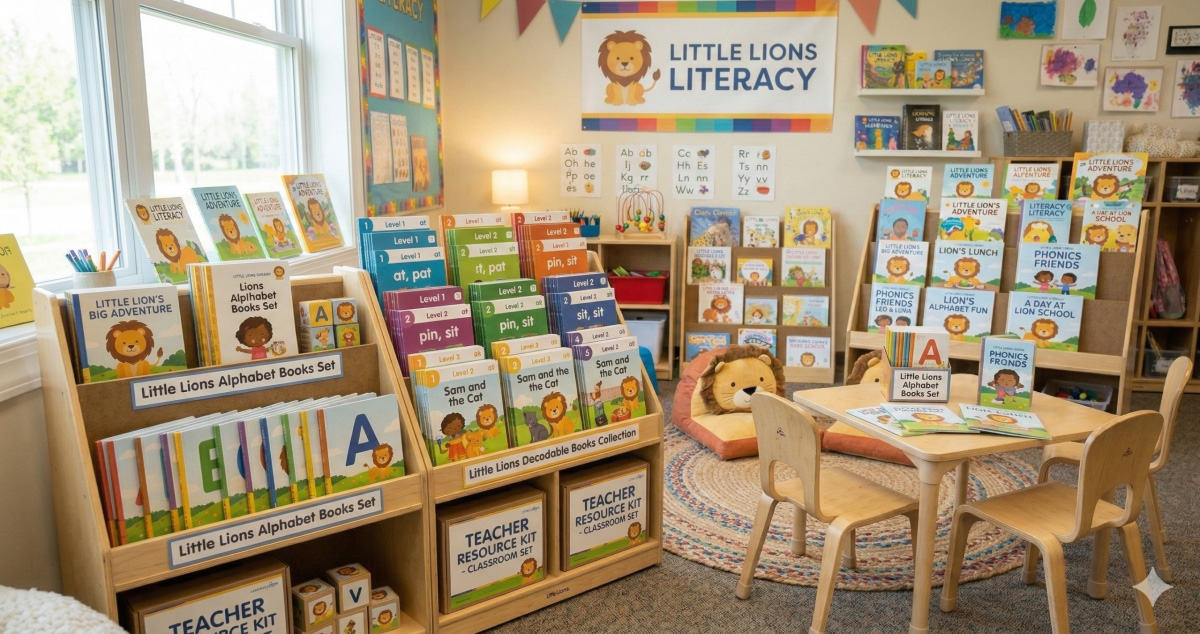
It’s important to know that phonic story books and regular picture books have different, but equally valuable, jobs. A regular picture book is wonderful for building vocabulary, exploring complex stories, and sharing a love of reading. You read it to your child. A phonic story book, on the other hand, is designed for your child to read to you. Because their main goal is to provide decoding practice, the text is much simpler. The stories in our Little Lions Literacy decodable book sets are carefully written to align with a step-by-step phonics sequence, ensuring your child only encounters words they are equipped to read. This targeted practice is essential for building a solid foundation for every single student, not just those who are struggling.
When you’re helping a child learn to read, you want to give them every tool for success. Phonic story books are one of the most powerful tools in your kit. Unlike regular picture books that often contain words a child has to guess at, these books are intentionally crafted to include words that align with the phonics skills they are currently learning. This strategic approach does more than just teach reading; it builds a strong, confident reader from the ground up by focusing on three key areas: decoding skills, reader confidence, and reading comprehension.
At its heart, learning to read is about learning a code. Phonics instruction teaches children how to crack that code by understanding the relationship between letters and sounds. Phonic story books are the perfect practice field for these new skills. Each story is carefully written with words your child can successfully sound out, or “decode.” Instead of getting frustrated by unfamiliar words, they get to apply what they’ve just learned in a meaningful context. This repeated, successful practice is what solidifies their decoding abilities, turning a challenging task into a manageable and rewarding one. It’s how they build the foundational skills needed to tackle any word they come across.
There’s nothing quite like the look on a child’s face when they read a sentence all by themselves for the first time. Those moments are pure magic, and they are what build a lifelong love of reading. Phonic story books are designed to create these moments of success. Because the text is controlled and predictable, children can read page after page with minimal help. This sense of accomplishment is a huge confidence booster. Effective phonics instruction fosters confidence and independence, showing kids that they can do it. They start to see themselves as readers, which encourages them to pick up more books and read on their own.
The ultimate goal of reading isn’t just to say the words correctly—it’s to understand the story. Phonics is the bridge that gets your child there. When a child struggles to decode words, all of their mental energy is spent just trying to figure out what the words are. There’s no brainpower left to think about the characters, setting, or plot. By providing decodable text, phonic story books help make the act of decoding more automatic. This frees up a child’s mind to focus on what the story actually means, making phonics a critical component of reading comprehension. They move from simply reading words to reading for meaning.
Not all phonics books are created equal. When you’re in a bookstore or scrolling online, it can be tough to tell which books will actually help your child and which might cause frustration. The good news is that the best phonic story books share a few key ingredients. Knowing what to look for makes it much easier to choose books that will get your child excited about reading and set them up for success. From readable text to fun activities, here’s what to keep an eye out for.
The most important feature of a great phonic story book is that your child can actually read it. This might sound obvious, but many “early reader” books are filled with words kids have to guess. Look for books that are truly “decodable,” meaning they use words that match the specific phonics rules your child has learned. For example, if they know short ‘a’ sounds, the book should feature words like ‘cat,’ ‘Sam,’ and ‘ran.’ This allows them to practice their skills and feel the accomplishment of reading a whole book on their own.
Learning to read is a journey, and the best books act as a reliable map. A high-quality phonics series follows a structured learning plan, often called a “scope and sequence.” Each book introduces new sounds and skills in a logical order, building on what your child has mastered. This step-by-step progression prevents them from feeling overwhelmed and ensures there are no gaps in their learning. It creates a smooth path from one skill to the next, helping them build confidence as they go.
Just because a book is educational doesn’t mean it should be boring. The best phonic story books wrap important skills in fun, engaging narratives with characters kids can connect with. A silly plot or a sweet friendship can make your child want to pick up a book again and again. The illustrations play a big role, too. They should support the story and provide context clues without giving the words away. This encourages your child to do the decoding work themselves while still enjoying a visually rich story.
Reading the story is just the beginning. To help new phonics skills stick, look for books that include fun, hands-on activities. Things like word searches, coloring pages, and mazes are fantastic for reinforcing what your child just read. These activities give them another way to interact with the letters and sounds they’re learning, turning practice into playtime. When learning feels like a game, kids are more likely to stay engaged and retain information, making the entire process more effective and fun.
Picking the right phonic story book can feel like searching for a needle in a haystack, but it doesn’t have to be. The goal is to find a book that meets your child exactly where they are—one that feels like a fun, achievable challenge rather than a frustrating chore. When a child opens a book and realizes, “Hey, I can read this!” their confidence soars. Let’s walk through how to find that perfect-fit book for your little reader.
Before you can choose the right book, you need a clear picture of what your child already knows. This is the most important step. Are they still mastering their letter sounds? Can they blend three-letter words like “sit” and “mop”? Or are they ready to tackle more complex sounds like “sh” and “ch”? You don’t need a formal test to figure this out. Simply observe them during playtime or reading time. Listen to the sounds they make and the words they try to sound out.
Starting with books that match their current abilities is key. Strong phonics instruction gives children the decoding strategies they need to become successful, independent readers. By meeting them at their level, you set them up for success and prevent them from feeling overwhelmed.
Phonic story books are not one-size-fits-all. The best ones are designed to follow a clear, step-by-step progression, introducing new skills in a logical order. When you’re choosing a book, look for one that focuses on the specific phonics skill your child is currently learning or has just mastered. If their teacher sent home a note about short vowel sounds, find a book filled with words like “cat,” “pen,” and “log.”
This targeted practice is what makes these books so effective. Each story gives kids a chance to use their new phonics knowledge in the context of real reading. High-quality series, like our Little Lions Literacy decodable sets, clearly outline the scope and sequence so you know exactly which skills are covered in each book. This makes it easy to align their reading practice at home with what they’re learning in the classroom.
While most phonic story books are designed for children between the ages of three and seven, age is more of a guideline than a strict rule. A child’s individual skill level is a much better indicator of which book to choose. Some four-year-olds are ready to start blending sounds, while some six-year-olds are still building that foundation. That’s completely normal—every child learns at their own pace.
The key is to find books that are developmentally appropriate in both their content and the skills they target. The right book helps a child build confidence and fluency, whether they are just beginning to sound out their first words or are starting to read more complex sentences. Look for stories with engaging characters and supportive illustrations that your child will enjoy, ensuring that their reading practice always feels like fun.
With so many options out there, it can be tough to know where to start. To make it easier, I’ve put together a list of my go-to phonic storybook series. These are the collections I consistently recommend to parents and educators because they are effective, engaging, and designed with young readers in mind.
What I love about the Little Lions Literacy Decodable Books is how they thoughtfully guide children through their reading journey. Each set of books builds on the last, introducing new phonetic patterns in a way that feels manageable, not overwhelming. The stories are genuinely fun and interactive, which keeps kids excited to pick up the next book. They aren’t chapter books, but rather a carefully crafted series that provides focused practice on specific skills. This systematic approach helps children master phonics concepts and see their own progress, which is a huge confidence builder for little learners.
Pioneer Valley is another fantastic option, especially for helping kids see their new phonics skills in action. Their Phonics Storybooks are known for being high-quality decodable readers that give children plenty of chances to practice what they’ve learned in an authentic reading context. Each set introduces charming characters and fun plots, all supported by lovely pictures that help with comprehension without giving away the words. It’s a wonderful way for kids to transfer their phonics knowledge from drills to actual stories, helping them feel like successful, independent readers. The clear alignment with a phonics scope and sequence means you can trust the progression.
If your child learns best with a mix of activities, the DK Super Phonics series is an excellent choice. It goes beyond just books, offering a whole system of learning tools, including activity books, card games, and reference guides. This multi-sensory approach is perfect for keeping kids aged 3 to 7 engaged and making phonics feel like playtime. The series supports children at every stage, from those just beginning to sound out their first words to those who are ready for more complex texts. It’s a comprehensive and flexible option that can adapt to your child’s unique learning style and pace.
Building a home library doesn’t have to break the bank. For a high-quality, free resource, I often point families toward Progressive Phonics. They offer a complete beginner phonics reading program that you can download and print right from home. The books and materials are designed to be easy to use for both parents and kids, making it a very accessible starting point for children aged 4 to 7. It’s a great way to supplement your child’s reading practice or get started with phonics instruction without any financial commitment. Having a reliable, free option like this is a huge help for so many families.
Choosing the right books can feel like a big responsibility, but you’ve got this. A little awareness goes a long way in avoiding the common bumps in the road that can slow down a new reader. When you know what to look out for, you can confidently pick books that set your child up for success and make the entire process more enjoyable for both of you. Let’s walk through a few mistakes that are easy to make—and even easier to fix.
It’s tempting to think that if we surround our kids with enough books, they’ll just magically start reading. While a book-rich environment is wonderful, most children need direct, structured support to connect the dots. A frequent misstep is encouraging kids to guess words based on pictures or the first letter. This can become a hard habit to break and gets in the way of developing true decoding skills. Instead of guessing, children need to learn how to sound out words. This is one of several common misconceptions about learning to read that can unintentionally slow a child’s progress. The goal is to give them the tools to read the words on the page, not just guess what they might be.
Have you ever watched your child open a book and immediately feel defeated? This can happen when a book contains letter sounds and word patterns they haven’t been taught yet. Handing a child a book that doesn’t align with their current phonics lessons forces them to guess, which can shake their confidence. It’s like asking them to solve a math problem using a formula they’ve never seen. To build momentum, it’s vital to choose books that directly correspond with the phonics skills they are learning. This allows them to practice what they know and experience the success of reading a book all by themselves. This alignment is a core principle of the science of reading approach.
You’ve probably heard a few of them: “Phonics is boring,” “It kills the love of reading,” or “Smart kids don’t need it.” These ideas are some of the most persistent myths about phonics instruction and can lead parents and educators to skip this foundational step. The truth is, phonics is the key that gives children access to written language. It’s not about memorizing rules; it’s about understanding how our language works. Far from being boring, mastering these skills is what empowers children to become confident, independent readers who can pick up any book and enjoy the story.
The best phonic story books do more than just teach phonics—they make reading feel like an adventure. When a child is just starting out, every small success matters. The right features can turn moments of frustration into moments of triumph, building a foundation of confidence and a genuine love for stories. These books are carefully crafted with specific elements designed to engage young minds and keep them turning the page.
Imagine your child learning the “short a” sound and then immediately opening a book about a “cat” that “sat” on a “mat.” That instant connection is powerful. Great phonic story books follow a clear and logical progression, introducing new skills one step at a time. Each book gives readers a chance to practice what they’ve just learned in the context of a real story. This structure, often called a scope and sequence, ensures that children are never asked to read something they haven’t been taught. This clear path builds momentum and shows kids that the rules they are learning actually work, making them feel capable and eager to see what comes next.
Every child learns at their own pace, and a one-size-fits-all approach rarely works. High-quality phonic books are designed to support every kind of learner. Good phonics instruction isn’t just for struggling readers; it helps all children build effective decoding strategies that they’ll use throughout their lives. The systematic nature of these books provides a sturdy scaffold for children who need more support while allowing others to move ahead confidently. By providing decodable text that aligns with their skills, these books empower children to become independent problem-solvers, fostering resilience and a can-do attitude toward reading challenges.
Vibrant, engaging illustrations do more than just make a book look good—they are a vital part of the learning experience. In a well-designed phonic story book, the pictures provide crucial support for the text. They offer context clues that help a child understand the story and confirm they’ve decoded a word correctly, all without encouraging them to guess. When a child sounds out “pig” and sees a picture of a pig, it provides immediate, positive feedback. Fun characters and lively scenes capture a child’s imagination, making the story more memorable and giving them a reason to feel invested in the words on the page.
Building a collection of high-quality phonics books doesn’t have to break the bank. With a little planning and some savvy shopping, you can create a rich library that supports your child’s reading journey without a huge investment. The key is to focus on resources that offer real value and grow with your reader. A thoughtful approach can make your budget stretch further than you might think, providing your child with all the tools they need to become a confident reader.
Knowing where to look is half the battle. Instead of grabbing any book with “phonics” on the cover, seek out publishers who specialize in decodable texts. For example, Pioneer Valley Books sells excellent phonics storybooks made specifically to help new readers practice their skills. Another fantastic resource is the DK Super Phonics series, which includes decodable stories that are perfect for practice. Shopping from trusted sources ensures you’re getting effective, well-structured books that are worth the investment. Keep an eye out for sales and bundle deals, which can make these high-quality sets even more affordable.
You don’t need a floor-to-ceiling library overnight. A better approach is to build your collection strategically as your child masters new skills. Start with a foundational set that covers the basics and add new books as they progress. You can also find complete, free programs online. Progressive Phonics offers an entire curriculum with downloadable e-books that you can print at home or read on a tablet. This is an amazing way to get started without spending a dime. By adding books incrementally, you ensure every book is relevant to your child’s current learning stage and you avoid overwhelming your shelves (and your wallet).
Your local library is a goldmine, but there are also incredible free resources online. Many phonics programs offer printable worksheets, games, and even full-length books. The free books from Progressive Phonics come with fun activities like mazes and coloring pages to help reinforce learning. It’s also important to educate yourself on what makes phonics instruction effective. Understanding the difference between genuine phonics rules and common myths will help you choose the best resources and avoid wasting money on materials that don’t work. A little research can save you a lot of time and money in the long run.
Think of it this way: you read a regular picture book to your child, but a phonic story book is designed for your child to read to you. Regular books are fantastic for building vocabulary and sharing complex stories. Phonic books have a different job—they provide targeted practice with words your child can actually sound out, which is how they build the skill and confidence to become an independent reader.
It’s less about a specific birthday and more about their readiness. A child is typically ready for their first phonic story books when they know most of their letter sounds and are beginning to blend those sounds together to make simple words. For some kids, this happens around age four, while for others it’s closer to six. The key is to follow your child’s lead and introduce the books when they are ready to start decoding.
Not at all, because you shouldn’t stop reading regular picture books to them! The two types of books work together as a team. Continue to read beautiful, engaging picture books aloud to your child every day to build their vocabulary and love for stories. Use the phonic story books for short, successful practice sessions where they get to be the one doing the reading.
You don’t need to be a reading specialist to figure this out. A great first step is to simply ask their teacher what phonics patterns they are currently working on in class. You can also observe your child. If they can comfortably sound out words like “cat” and “sun,” they are likely ready for books that focus on short vowels. If they struggle, it’s a sign to find a book that focuses on an earlier skill.
Absolutely not. This is a common misconception. Phonic story books are for every child who is learning to read. Learning to decode is a necessary skill for everyone, and these books provide the systematic practice needed to build a strong foundation. They ensure that all children learn the code of our written language, which empowers them to read with confidence and understanding.
Share via: