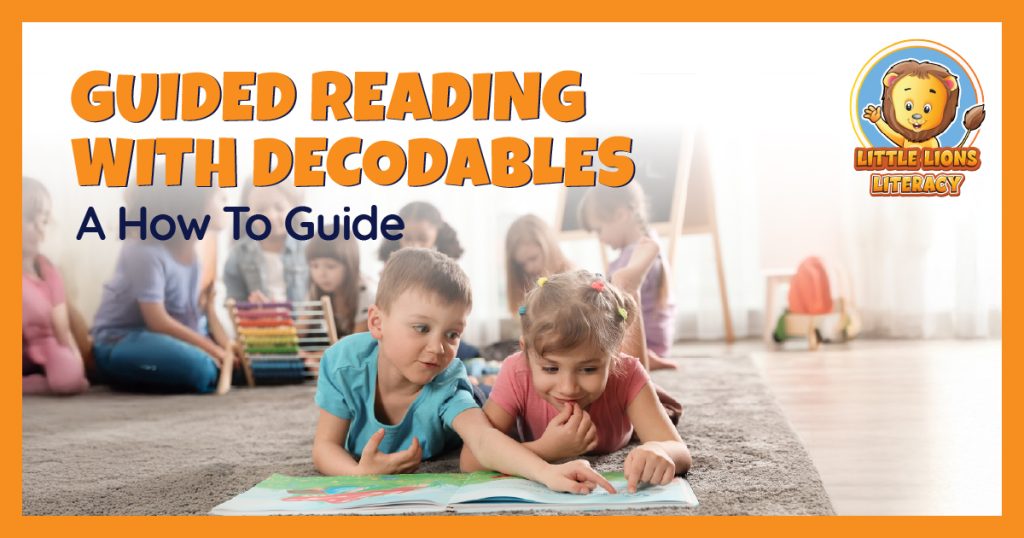
There’s often a huge gap between a child knowing their letter sounds and being able to read a story. It can feel like they’re standing on one side of a canyon with no way to get across. Decodable books are the bridge. They connect isolated phonics skills to the real act of reading, allowing children to immediately apply what they’ve learned in a meaningful context. A well-structured guided reading decodable book session is your chance to walk them across that bridge, one successful word at a time. This guide will give you a clear, step-by-step plan for using these powerful books to build skills, confidence, and a love for reading.
If you’re new to the world of early literacy, you’ve probably heard the term “decodable books” pop up. So, what are they, exactly? Think of them as the perfect training ground for new readers. Decodable books are stories written specifically for children who are just learning to connect letters to their sounds. Instead of using complex words or relying on pictures to tell the story, these books are carefully crafted with words a child can actually sound out based on the phonics skills they’ve already been taught.
This intentional design is what makes them so powerful. It allows a child to practice their new skills in a real, meaningful context. They aren’t just memorizing sight words or guessing from pictures; they are actively decoding the text. This process builds a strong foundation for reading, giving kids the tools and the confidence they need to become successful, independent readers. It’s all about turning that abstract knowledge of letters and sounds into the concrete, exciting skill of reading a story from start to finish.
The magic of decodable books lies in their controlled vocabulary. This means the words in the story are intentionally selected to align with specific phonics rules a child is learning. For example, if a child has just learned the short “a” sound, their decodable book will be full of words like “cat,” “Sam,” and “ran.” This approach gives early and struggling readers lots of practice with specific spelling patterns. This matters because it creates a safe and successful reading experience. Instead of feeling overwhelmed by unfamiliar words, children can apply their knowledge and feel the immediate reward of reading correctly. This targeted practice reinforces their skills and builds a huge amount of confidence.
You might be wondering how decodable books differ from the predictable, patterned books many of us grew up with (e.g., “I see a ball. I see a doll.”). While those books can be fun, they often encourage children to memorize sentence patterns or use picture clues to guess the words. Decodable books do the opposite. They are what experts call “controlled texts,” designed to make a child use their phonics knowledge. The focus is squarely on decoding, not guessing. This distinction is critical because it teaches children to rely on the letters on the page, which is the core skill of reading. It helps them build a reliable strategy for tackling new words, rather than developing habits that may not serve them as texts become more complex.
Decodable books are a cornerstone of effective reading instruction because they bridge the gap between learning phonics and reading fluently. When children use decodables, they get to apply their skills immediately, which helps solidify the connection between sounds and letters. This practice is essential for building accuracy and speed, which are the building blocks of reading fluency. Every page they successfully read reinforces their abilities and proves to them that they can do it. This sense of accomplishment is incredibly motivating and helps children become more fluent and confident readers. It encourages them to keep practicing, creating a positive cycle of learning and growth that can last a lifetime.
Guided reading is a fantastic small-group strategy, and when you pair it with decodable books, you create the perfect environment for new readers to flourish. This approach puts phonics into practice, turning abstract letter-sound rules into tangible reading success. By focusing on what kids can read, you build a solid foundation and help them see themselves as capable readers right from the start.
If you’ve been around the world of early literacy, you’ve likely heard about the Science of Reading. It’s not a program but a massive body of research that shows us how kids really learn to read. A key takeaway is that reading isn’t something we pick up naturally; it has to be taught explicitly. This is where phonics comes in. Decodable books are designed to work hand-in-hand with phonics instruction. They primarily use words that children can sound out based on the letter-sound relationships they’ve already been taught. This systematic approach reinforces their lessons and gives them a clear, reliable strategy for tackling new words, rather than leaving them to guess.
Decodable texts are the bridge between learning a phonics rule and actually reading. Think about it: when a child learns the sound for the letter ‘a’ and then immediately sees it in words like ‘cat,’ ‘sam,’ and ‘pat,’ the connection clicks into place. This is why new readers benefit so much from texts that allow them to apply what they learned in phonics. Instead of being overwhelmed by words with complex or unlearned spelling patterns, they get to practice the specific skills they’re working on. This targeted practice is what solidifies their understanding and builds the groundwork for reading more complex texts later on. It’s a focused, effective way to turn phonics knowledge into reading fluency.
Nothing motivates a child like success. When kids feel like they can do something, they want to do it more. Decodable books are engineered for these moments of victory. Because the vocabulary is carefully controlled, children can read most of the words in the book successfully. This high success rate is a huge confidence builder and is essential for keeping them engaged and motivated. It’s a powerful way to support your child’s reading journey by showing them, page after page, that they have the skills to be a reader. Every book they finish becomes proof of their growing ability, which reduces reading anxiety and fosters a positive, can-do attitude toward literacy.
Not all decodable books are created equal. When you’re choosing books for your little reader, you want to find ones that are not only effective but also engaging. A great decodable book feels like a fun story, not a chore. It strategically builds on what a child already knows, giving them the perfect mix of practice and challenge to turn them into a confident, independent reader.
So, what should you look for? A high-quality decodable book has a few key ingredients that set it apart. It carefully controls the words used, follows a logical skill progression, uses illustrations to support—not spoil—the story, and provides a clear path for growth. Let’s break down what each of these means for your child.
The magic of a decodable book lies in its controlled vocabulary. This just means the book is intentionally written using only the letter-sound patterns a child has already been taught. Think of it like building with LEGOs—you can only use the bricks you’ve been given so far. This approach allows kids to practice what they know without getting overwhelmed by unfamiliar spelling patterns.
As Practice Readers explains, these books “limit the use of certain spelling patterns… to allow children to practice reading with texts designed according to what they have already learned.” This intentional design ensures that your child can successfully sound out the majority of the words on the page, which is a huge confidence builder.
A great decodable book doesn’t just use words your child knows; it’s part of a series that follows a clear and logical phonics progression. Each book or set of books should introduce a new phonics skill while reviewing the ones that came before it. This systematic approach is the foundation of strong reading instruction.
This structure gives early and struggling readers lots of practice with specific spelling patterns before moving on. For example, a child will master CVC (consonant-vowel-consonant) words like “cat” and “sun” before being introduced to consonant blends like “stop” or “frog.” This step-by-step scope and sequence ensures there are no gaps in their learning and helps them build a solid foundation for tackling more complex words later on.
We all love beautiful illustrations, but in a decodable book, their job is to support the story, not give it away. If a child can guess the words just by looking at the pictures, they aren’t actually reading—they’re picture-guessing. This is a common habit that can be hard to break.
High-quality decodables often present the text before the pictures or ensure the illustrations don’t make the words too obvious. This encourages the child to focus on the letters and sounds, using their decoding skills to figure out the words. The pictures are there to make the story more engaging and help with comprehension after the child has read the text, not to be used as a crutch.
Finally, a great decodable book provides a clear path for growth by offering plenty of repetition. Children need to see and practice a new phonics skill many times before it becomes automatic. Quality decodables are designed to provide this repetition in a natural, story-based context.
As a child works through a decodable series, they get plenty of practice with newly learned skills before moving on to harder words. This repetition is crucial for building reading fluency—the ability to read with speed, accuracy, and proper expression. Each book they finish successfully reinforces their skills and proves to them that they can read, motivating them to keep going on their reading journey.
A guided reading session is more than just listening to a child read. It’s a structured time to build skills, offer support, and watch their confidence grow. When you use decodable books, these sessions become powerful opportunities to connect phonics instruction directly to reading practice. The key is to have a simple, repeatable routine that covers what to do before, during, and after reading. This structure helps children know what to expect and allows you to focus on providing targeted support where they need it most.
A great guided reading session starts before your reader even opens the book. Your first step is choosing the right text. The book should align perfectly with the phonics skill you’re currently teaching while also reviewing concepts they’ve already learned. For example, if you’ve just taught the “sh” digraph, the book should feature words like “ship” and “fish” alongside familiar CVC words. This careful selection ensures the child feels successful because they have the tools to decode the majority of the words. When you choose a decodable book that matches their skills, you’re setting the stage for a positive experience that reinforces their learning.
Once the reading begins, your role shifts to that of a supportive coach. Listen carefully as each child reads, either aloud or in a whisper. Your goal is to provide immediate, gentle feedback. If a child gets stuck, prompt them to use their phonics knowledge. You might ask, “What sound does that letter make?” or “Let’s sound it out together.” A helpful step-by-step guide can offer more ideas for structuring this part of the session. It’s also important to ask simple questions about the story to make sure they are thinking about what they’re reading. Encourage them to reread sentences or even the whole book. Rereading is fantastic for building fluency, automaticity, and confidence.
The learning continues even after the last page is turned. This is the perfect time to solidify the new phonics skill. A simple and fun activity is to go on a “word hunt,” asking your reader to find all the words in the book that have the target skill (like finding all the “-at” words). You can have them read the words from their list. Then, connect reading to writing. Ask them to write a few of the words they found or even create a simple sentence using one of them. This step reinforces the sound-spelling patterns they just practiced, helping to move that new knowledge into their long-term memory.
It’s rare for every child in a small group to be at the exact same reading level, and that’s completely okay. The beauty of using decodable books is that you can anchor the group’s instruction in a shared phonics skill. While one child might read more slowly and need more support with decoding, another might read with greater fluency. The core task remains the same: applying the target phonics skill to read the text. You can provide individual support as needed while the group works toward a common goal. It’s also important to balance the use of decodable readers with exposure to other rich literature by reading more complex stories aloud to the group to build everyone’s vocabulary and comprehension.
Watching a child’s reading skills click into place is one of the most rewarding parts of teaching. But how do you know what’s working and where they might need a little extra support? Tracking progress is less about formal testing and more about being a good reading detective. It’s about observing, listening, and gathering clues that tell you exactly what a student needs next on their journey. When you know what to look for, you can tailor your instruction to meet each child right where they are.
The goal isn’t to assign a grade but to gain insight. Are they applying the phonics skills you’ve taught? Are they understanding the stories they decode? Are they reading with more confidence and ease? By regularly checking in on a few key areas, you can get a clear picture of a student’s growth. This information is gold—it helps you plan your next steps, choose the right books, and celebrate every bit of progress along the way. Let’s walk through a few simple, effective ways to monitor how your young readers are doing.
A running record is essentially a quick check-in to see how a student handles a specific text. When used with decodable books, it’s a powerful tool. It’s not just about accuracy; it’s about seeing if a child can apply their phonics knowledge in the context of a real story. As a student reads aloud, you can make simple notes on a copy of the text, marking correct words, errors, and self-corrections. This process gives you a window into their thinking. Are they stumbling on a specific vowel team? Are they guessing based on pictures? This information helps you pinpoint exactly which skills need more practice, making your instruction much more targeted and effective.
Decoding the words is the first hurdle, but understanding the story is the ultimate goal. Since decodable books are built around phonics skills students are actively learning, they provide a perfect opportunity to build a bridge to comprehension. After a child finishes reading, you can check for understanding in a low-pressure way. Ask simple questions like, “Who was the main character?” or “Where did the story take place?” You can also ask them to retell the story in their own words or find a sentence that proves a point. These quick conversations confirm that they aren’t just reading words but are also making meaning from them.
Fluency is the ability to read with accuracy, a good pace, and natural expression. It shows that a reader’s decoding skills are becoming more automatic, freeing up their brain to focus on what the text means. To assess fluency, you can time a student reading a passage for one minute. As they read, mark any errors or self-corrections. Afterward, you can calculate the Words Read Correctly per minute. More important than the number, though, is how the student sounds. Are they reading smoothly, or is it choppy and slow? Listening for their expression and phrasing will give you a great sense of their growing confidence and skill.
All the information you gather from running records, comprehension checks, and fluency assessments is your roadmap for future lessons. This data isn’t meant to live in a spreadsheet; it’s meant to inform your instruction. If you notice several students are struggling with words containing the ‘ch’ digraph, you know it’s time to reteach or review that skill. If a student can decode perfectly but can’t retell the story, your focus should shift to comprehension strategies. Using this data allows you to be responsive to your students’ needs, ensuring that your guided reading time is always productive, purposeful, and tailored for success.
A great guided reading session starts long before the kids sit down with their books. Creating a physical and emotional environment that supports learning can make all the difference. When your space is organized, your materials are ready, and everyone feels supported, you set the stage for major reading breakthroughs. Let’s walk through how to create a space that helps young readers thrive.
Whether it’s a corner of a classroom or a spot in your living room, a dedicated reading nook makes reading time feel special. Keep it cozy with comfy seating like beanbags or pillows, and make sure it has good lighting. The key is to minimize distractions so kids can focus. Organize your decodable books on low, accessible shelves, perhaps with the covers facing out to catch their eye. Having these books as a central part of the space reinforces that they are a powerful tool in their reading toolkit. When the environment is calm and inviting, children are more likely to settle in and connect with the text.
Nothing slows down a guided reading group faster than having to search for supplies. Before you begin, gather everything you’ll need. This includes the decodable books for the session, along with tools like reading pointers, small whiteboards for word work, and magnetic letters. Having your materials organized in a caddy or bin makes for a smooth transition. When students are learning to read, they need to immediately apply what they learned in phonics, and being prepared allows you to dive right into that essential practice. A little prep work beforehand ensures the focus stays on reading, not on logistics.
Guided reading in small groups is a fantastic opportunity for kids to learn with and from each other. Foster a supportive, team-like atmosphere where students feel comfortable taking risks. You can have them practice reading a page to a partner or work together to sound out a tricky word. Celebrating each other’s efforts builds confidence and makes reading a positive, social activity. Decodable books are perfect for this, as they provide a shared foundation of phonics skills that encourages collaboration. When children see their peers succeeding and helping one another, it motivates them to keep trying and reinforces that they’re all in this together.
The connection between school and home is crucial for a child’s reading development. Keep parents in the loop about the phonics skills their child is working on and send home decodable books for extra practice. It’s helpful to provide a simple explanation of what decodable books are and why they are so effective. A parent’s guide can clarify that these books help children practice actual reading skills, rather than guessing from pictures. When parents understand the “why” behind decodables, they can provide consistent support at home. This partnership ensures the child is getting a clear, unified message about how to read, which accelerates their progress and builds their confidence.
Finding the right decodable books for your young reader can feel like a treasure hunt, but it’s one of the most rewarding things you can do to support their journey. The right book at the right time can make a child feel like a reading superstar. But it’s not just about picking a book off the shelf; it’s about how you use it. The magic happens when a quality decodable text is paired with thoughtful instruction and practice.
Think of it this way: you wouldn’t hand a beginner pianist a complex piece by Mozart. You’d start with simple scales and songs that match the notes they’ve just learned. Decodable books work the same way for reading. They provide the exact practice a child needs with the phonics skills they’re currently learning. This targeted approach builds a strong foundation, turning what could be a frustrating process into a series of confidence-building wins. By being intentional about the books you choose and how you introduce them, you can create a positive and effective reading experience that helps your child grow.
A great decodable book follows a clear and systematic phonics progression. This means the words in the book are made up of letter-sound patterns the child has already been taught, along with a few essential high-frequency words. When you’re looking at a book, ask yourself: Does this align with our current phonics lessons? A high-quality text ensures that at least 80% of the words are decodable for the reader. This careful construction is what allows children to practice their skills successfully. Choosing good decodable books is important, but how you teach with them is just as crucial for student success.
The goal is to find that sweet spot where a book is challenging enough to promote growth but not so difficult that it causes frustration. Before handing a child a book, consider the specific phonics skills they have mastered. If they’ve just learned short ‘a’ sounds, find a book that focuses heavily on words like ‘cat,’ ‘ran,’ and ‘map.’ Decodable books give early and struggling readers lots of practice with specific spelling patterns. This perfect match between skill and text is what builds momentum and makes a child feel capable and confident. Our Little Lions Literacy sets are designed to grow with your reader, making it easy to find the right fit.
Building a library of decodable books is an investment in your child’s literacy. Start with a core set of books that follows a logical scope and sequence from simple to more complex phonics skills. This ensures you have a clear path forward. From there, you can add individual books or smaller sets that offer more practice on specific skills your reader might need to reinforce. While decodables are essential for practice, it’s also important to balance them with exposure to a variety of other literature. Reading rich, engaging stories aloud to children builds their vocabulary and love for reading, complementing the foundational skills they’re building with their decodable texts.
Creating a robust decodable library doesn’t have to be expensive. Start by focusing on quality over quantity. A single, well-structured set of books that you can use systematically is more valuable than a random assortment of mismatched texts. Look for classroom sets or bundles, which often provide the best value. You can also explore school or local library resources, as many are expanding their decodable sections. For parents, decodable books are a fantastic tool to support reading practice at home, reinforcing what’s being taught in the classroom. Remember, every book you add is another step toward building a confident reader.
Even with the best plans and materials, running guided reading groups can feel like juggling. You’re managing different personalities, skill levels, and attention spans all at once. It’s completely normal to hit a few bumps along the way! The key is having a few go-to strategies in your back pocket for those common challenges. Whether you’re trying to keep a wiggly reader focused or figuring out how to support a child who needs a little extra help, there are simple, effective solutions. Let’s walk through some of the most frequent hurdles and how you can handle them with confidence, turning potential frustrations into opportunities for growth.
Decodable books are the absolute best tool for students to practice the specific phonics skills you’ve taught them. But they aren’t the only books your readers should experience! To create a rich and well-rounded reading life, it’s important to balance skill practice with exposure to a wide variety of literature. Continue to share beautiful picture books, funny stories, and engaging non-fiction through read-alouds. This helps build their vocabulary and background knowledge. Think of it this way: decodables are for the how of reading, while read-alouds and other books fuel the why—fostering a genuine, lifelong love for stories.
One of the biggest wins with decodable books is how they build a child’s confidence. When kids can successfully sound out the words on a page, that feeling of accomplishment is incredibly motivating. You can keep that excitement high by celebrating their effort and progress. Make reading practice feel like a fun challenge, not a chore. If a child is struggling, the decodable text helps you pinpoint exactly which skill needs more review, removing the frustration that comes from guesswork. Using a series of books that slowly builds in complexity, like the Little Lions Literacy sets, gives children a clear path to follow and lets them see how far they’ve come.
Getting a small group of kids to work together productively can be tricky. A great way to keep everyone focused is to create a structured routine where each child has a specific role. This encourages participation and gives every student a sense of ownership. You could assign jobs like a “Word Wizard” who looks for a specific phonics pattern, a “Picture Detective” who uses illustrations to make predictions, or a “Leader” who gets to point to the words. By giving each child a clear and simple task, you can create a collaborative environment where everyone feels important and stays on track.
When a student is struggling, you need to know exactly what’s holding them back. Decodable books are the perfect diagnostic tool for this. As you listen to a child read, you can take a quick running record to see if they are applying the phonics rules you’ve taught. Are they stumbling on CVCe words? Are they forgetting a specific digraph? This assessment strategy shows you precisely which skills need reinforcement. Instead of just knowing a child is having trouble, you’ll understand why. This allows you to provide targeted, effective support that addresses the root of the issue and helps them get back on track.
Having a library of high-quality decodable books is the first step, but the real magic happens in how you use them. Creating a predictable and supportive routine helps young readers know what to expect, which allows them to focus their energy on the important work of learning to read. It’s about building a system where every piece—from your lesson plan to independent practice—works together to build skills and confidence.
Think of it as building a house. The decodable books are your high-quality materials, but your teaching strategy is the blueprint that ensures everything fits together perfectly. A solid plan helps you intentionally guide children from learning a new phonics skill to applying it successfully in their reading. By creating a consistent schedule, mastering your small group time, providing meaningful practice, and celebrating every step forward, you create an environment where every child can become a successful, confident reader.
Choosing the right decodable book is important, but how you teach with it is just as crucial for success. A little planning goes a long way in making your reading instruction effective. Start by mapping out your week. Decide which phonics skill you’ll focus on and select a decodable book that targets it. Schedule dedicated time for direct instruction, small group reading, and independent practice. A consistent literacy block schedule helps children feel secure and ready to learn. When kids know what’s coming next, they can put all their brainpower into mastering the new skill instead of wondering about the day’s activities.
Small group time is where you can really see the learning click. To make the most of it, establish a simple and repeatable routine. Before your students even open the book, explicitly teach the target phonics skill for that story. You can practice reading and writing the new letter sounds together on a small whiteboard. This pre-teaching warms up their brains and prepares them to find the new skill in the text. Once they start reading, your job is to listen, prompt, and support them as they apply what they just learned. This focused approach ensures they are building skills, not just guessing their way through the pages.
For a new skill to stick, kids need plenty of practice. After a guided reading session, give students opportunities to work with the book and the phonics concept on their own. One of the most powerful and simple activities is rereading. Encourage children to read the same decodable book multiple times. This builds their fluency, automaticity, and confidence. You can also set up fun literacy centers with activities like building words from the story with magnetic letters, sorting pictures by their beginning sound, or writing a sentence using one of the new words. This reinforces learning in a hands-on, engaging way.
Think of decodable books as the “training wheels” for reading. They provide the exact support a child needs to get going until they’re ready to ride on their own with more complex books. Because this is a journey of small, incremental steps, it’s important to celebrate every single win. Did a child sound out a tricky word all by themselves? Celebrate it. Did they read a whole page without help? High-five! Acknowledging their hard work and progress—no matter how small—builds the resilience and confidence they need to stick with it when reading gets tough. This positive reinforcement turns reading from a challenge into a rewarding adventure.
It’s less about a specific age and more about skill readiness. Once your child can confidently identify a handful of letter sounds and has started to blend those sounds together to make simple words, they are ready for their first decodable book. The right book will only use the letter-sound patterns they already know, giving them the perfect opportunity to practice their new skills and feel like a real reader from day one.
There isn’t a sudden graduation day from decodable books. Instead, you’ll notice a gradual shift. As your child becomes a more automatic and fluent decoder, they’ll be able to tackle books with more complex words and varied sentence structures. Decodables build the strong foundation they need to do this. Even after they start reading more widely, you might still use a decodable book to introduce and practice a particularly tricky new spelling pattern.
This is a common concern, but it helps to reframe the experience. The simplicity that might seem “boring” to us is exactly what allows a child to feel successful and confident. You can keep it exciting by celebrating their effort and making it a game. Go on a “word hunt” for the target phonics skill or take turns reading pages. Continue to read rich, complex, and funny stories aloud to them to fill their world with a love of literature while they use decodables to master the mechanics.
That’s an excellent question. Most high-quality decodable books strategically include a very small number of high-frequency words like “the,” “a,” or “is.” These words are often taught explicitly before reading the story. This allows the sentences to sound more natural while keeping the primary focus on sounding out words. It teaches children that while most words follow the rules, there are a few they will learn by heart to help them read smoothly.
This is a very common habit that you can gently correct. The goal is to guide their attention back to the letters on the page. Try covering the picture with your hand and saying, “Let’s use our sounds to be a word detective.” Prompt them by pointing to the first letter and asking for its sound, then help them blend the sounds together. Consistently praising their effort to decode, rather than their ability to guess, will help them build the strong reading habits they need.
Share via: