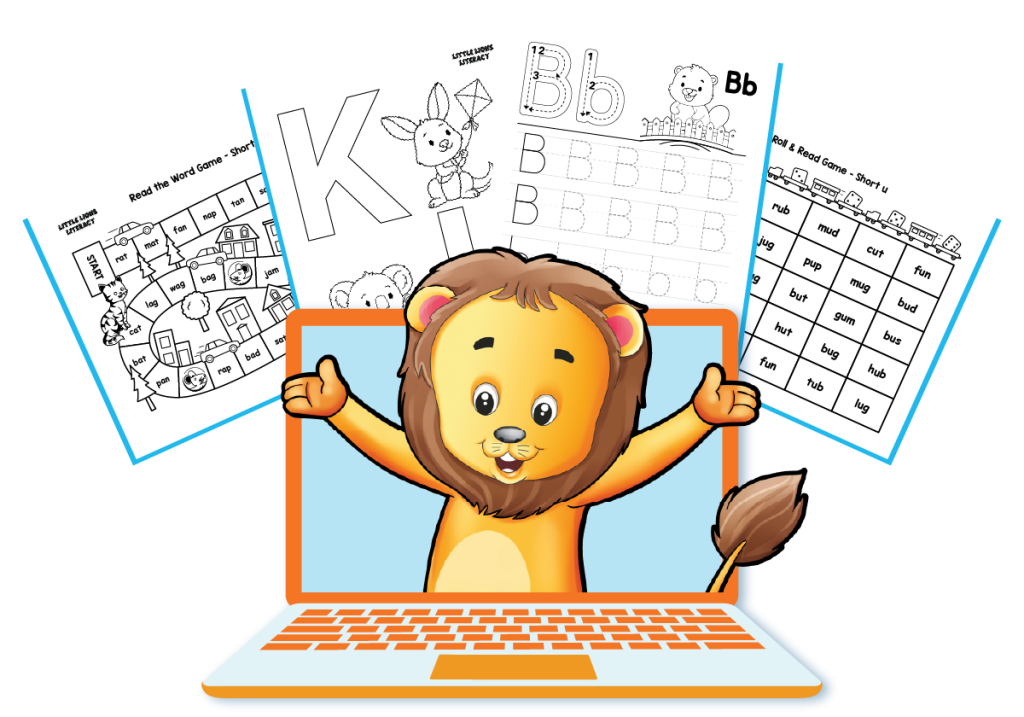
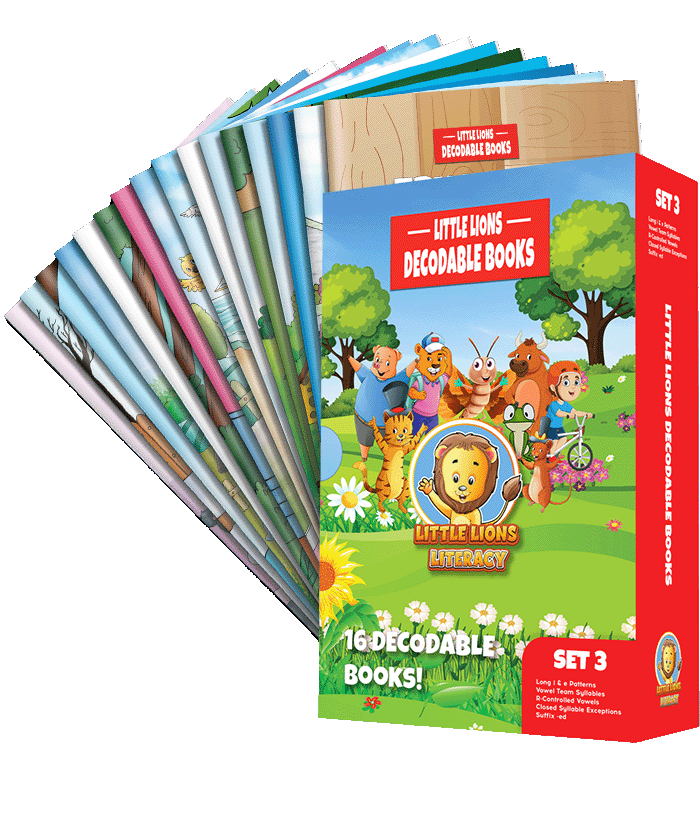
The Little Lions Decodable Books series gives young readers the chance to strengthen phonics skills through a structured approach. Each title builds on earlier lessons, allowing beginners to practice, apply, and gain confidence in reading and phonics.
*Get the Little Lions Alphabet Books for FREE ($119.95 value!) when you purchase the Alphabet and Decodable Book Bundle!
Valid from Friday Nov. 29th – Monday Dec. 2nd 2024 only
Decodable books are carefully structured reading materials that use a controlled set of letter-sound patterns, allowing children to practice phonics skills they have already been taught. Unlike leveled readers that rely on picture clues and memorization, decodable readers follow a systematic phonics progression so young learners can independently sound out every word on the page.
Research from the science of reading confirms that decodable texts build reading accuracy, fluency, and confidence during the critical early stages of literacy development. Each book in a decodable series introduces new phonics patterns while reinforcing previously mastered skills, creating a clear path from letter sounds to fluent reading.
Why Decodable Readers Work
Decodables succeed because they align with how the brain learns to read. Instead of guessing from context or memorizing whole words, children apply explicit phonics knowledge to decode each word. This approach:
Builds real decoding skills — Children learn to blend sounds rather than guess, creating a foundation that transfers to all reading
Follows a scope and sequence — Each book builds on the last, so phonics skills are introduced in a logical, research-based order
Boosts reading confidence — When children can read every word independently, they develop the self-assurance to tackle new texts
Supports struggling readers — Decodables provide the structured practice that children with dyslexia and other reading difficulties need
Aligns with structured literacy — Decodable texts are a core component of Orton-Gillingham, UFLI, and other evidence-based reading programs
Who Are Decodable Books For?
Decodable books serve a wide range of readers and learning environments:
Parents looking for research-based reading materials to support their child at home
Special education teachers working with students who have dyslexia or other reading challenges
ESL/ELL teachers — the controlled phonics patterns help English language learners focus on one sound at a time
Frequently Asked Questions About Decodable Books
What is the difference between decodable books and leveled readers?
Decodable books use a controlled set of phonics patterns that children have been explicitly taught, so they can sound out every word. Leveled readers are organized by difficulty but may include words children cannot decode, encouraging guessing from pictures or context. Research supports decodable texts for building strong foundational reading skills.
At what age should children start reading decodable books?
Most children are ready for decodable books around age 4-5, when they begin learning letter sounds. Pre-K students can start with simple CVC (consonant-vowel-consonant) decodable texts, while kindergarten through second grade students progress through increasingly complex phonics patterns.
How many decodable books does my child need?
A comprehensive decodable library should cover the full phonics scope and sequence, from short vowels through vowel teams and multisyllabic words. The Little Lions series provides 64+ titles across four sets, giving children extensive practice at each level before moving on.
Can decodable books help children with dyslexia?
Yes. Decodable readers for dyslexia are a recommended resource because they provide the systematic, explicit phonics practice these learners need. The controlled text ensures children are not overwhelmed by irregular words and can focus on building decoding automaticity.
Are decodable books aligned with the science of reading?
Absolutely. Decodable books are a core component of science of reading instruction. They support the phonics and decoding strand of Scarborough’s Reading Rope and align with structured literacy frameworks including Orton-Gillingham, UFLI, Fundations, and LETRS.
How do I choose the right decodable book set?
Start by assessing which phonics skills your child has mastered. If they know their letter sounds but are just beginning to blend, start with Set 1 (Short Vowels). If they have mastered short vowels and are ready for long vowel patterns, start with Set 2. Each set builds directly on the skills taught in the previous one.
English Language Learners
Our decodable books are especially helpful for children who are learning English as a second language. The controlled pattern in decodable books helps these children focus on one particular skill or sound at a time.