Every primary teacher and reading specialist knows the feeling of searching for the perfect text to match a weekly phonics skill. You are running a small group, teaching the McGraw Hill Wonders curriculum, and your students have just learned a specific short vowel or an initial consonant blend. You reach into your book bin, but the provided text contains unlearned vowel teams, complex multisyllabic words, and irregular high-frequency words that force struggling readers to rely on guessing strategies. To prevent this instructional mismatch, integrating decodable books aligned with Wonders offers a systematic, stress-free way to bridge the gap between whole-group phonics instruction and independent reading fluency.
When a school district adopts a core curriculum like Wonders, it secures a powerful framework built on evidence-based reading instruction. However, even the most robust core programs require highly targeted supplemental materials to ensure every child achieves mastery. By mapping the engaging narratives of Little Lions Literacy directly to the core phonics progression, educators can access a reliable library of decodable books aligned with Wonders that prevent cognitive overload, eliminate guessing, and build authentic reading confidence.
The core philosophy of the Science of Reading emphasizes that reading is not a visual guessing game; it is a process of breaking down words into individual speech sounds (phonemes) and linking them to print symbols (graphemes). According to research published by Reading Rockets, providing students with controlled, decodable text is one of the most effective strategies for cementing phonics pathways in the developing brain.
In many traditional classrooms, children are handed leveled books containing words they do not yet have the skills to sound out. This forces them to look at the first letter, check the picture, and guess—a habit that breaks down completely as text becomes more complex in upper grades. In contrast, utilizing decodable books aligned with Wonders ensures that every single word in a story relies exclusively on phonetic patterns the student has already been explicitly taught, alongside a small, controlled number of pre-taught high-frequency words.
When paired with your daily lessons, these targeted readers turn abstract phonics rules into immediate, successful application. If your Wonders unit focuses on digraphs (sh, ch, th, wh), you can confidently hand a student one of these specialized books knowing they will practice exactly those elements without running into unexpected, untaught roadblocks.
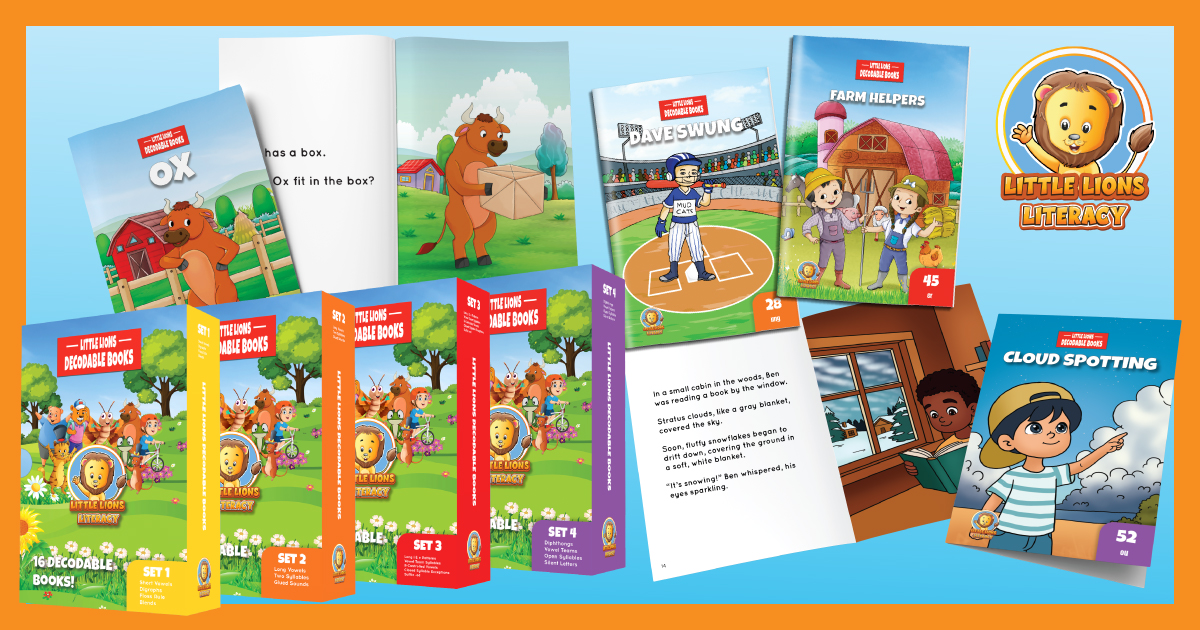
Achieving true reading intervention success requires absolute alignment between what is taught on the whiteboard and what is practiced in the student’s hands. The multi-set collection of Little Lions Literacy readers acts as a mirror to the progressive skill progression found across kindergarten, first grade, and second grade Wonders units.
Early Wonders units focus heavily on alphabet recognition, phonemic awareness, and initial short vowel sounds. During this phase, educators can leverage early literacy readers and alphabet books to establish strong letter-sound correspondence. As students move into simple CVC (consonant-vowel-consonant) pattern instruction, choosing decodable books aligned with Wonders introduces:
As the Wonders scope and sequence advances into complex syllable types, teachers need intermediate decodable books aligned with Wonders to provide the exact reinforcement required for structural mastery:
For older students utilizing Wonders or those receiving Tier 2/Tier 3 intensive instruction, advanced decodable books aligned with Wonders expand into complex linguistic patterns:
Alignment goes beyond simply matching words; it also involves how text is presented to an early or struggling reader. Many core program materials include books with dense illustrations tightly wrapped around lines of text, which frequently distracts students from focusing on the printed words.
Little Lions Literacy solves this issue through a thoughtful, research-backed presentation layout that makes them the ideal choice when shopping for decodable books aligned with Wonders:
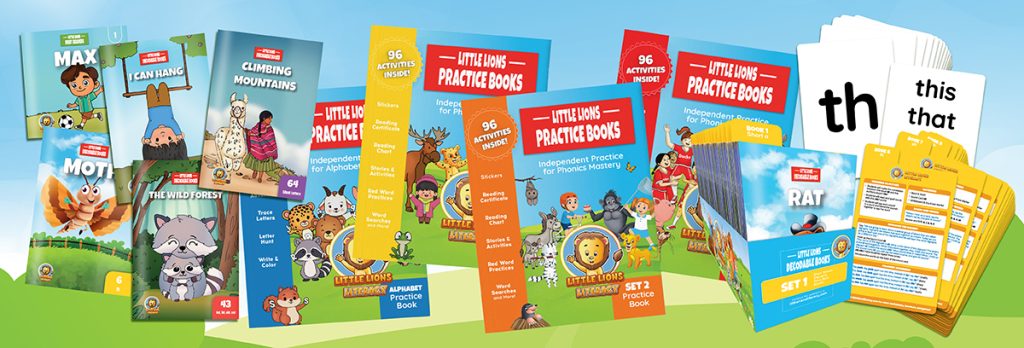
To truly solidify the phonics patterns introduced in your Wonders curriculum, reading instruction must be paired with explicit writing and spelling practice. The Little Lions Practice Books act as a natural companion to your decodable books aligned with Wonders, offering six targeted worksheets for every single phonics concept covered in the readers.
When a teacher completes a core lesson using Wonders, they can seamlessly assign corresponding activities from the practice books, such as Match and Unscramble, Spell and Write, or Red Word Practice. This multi-sensory application—moving from decoding (reading) to encoding (spelling)—is highly recommended by literacy specialists at the International Dyslexia Association for establishing permanent orthographic mapping in young learners.
Integrating decodable books aligned with Wonders into your weekly reading instruction provides a highly effective solution for developing skilled, independent readers. By replacing unpredictable leveled texts with highly systematic, explicit phonics readers, you provide your students with the controlled practice they need to successfully apply their learning. Whether you are an educator managing small-group reading intervention or a parent reinforcing classroom lessons at home, choosing decodable books aligned with Wonders ensures every child builds the skills, stamina, and confidence needed for a lifetime of reading success.
Explore our comprehensive collection of Decodable Books and Classroom Sets today to discover how easy it is to elevate your daily reading routines!
Simply look at the primary phonics focus listed in your Wonders teacher’s edition for the week. Match that specific target skill (such as short o, consonant digraph ch, or silent e) to the concept index of your supplemental readers. Because these books follow a highly systematic, Science of Reading-aligned scope and sequence, finding a parallel text is quick and straightforward.
Yes. While they serve as excellent Tier 1 core supplements for general classroom instruction, their clean, distraction-free formatting and systematic progression make them highly effective tools for intensive Tier 2 small groups and Tier 3 reading intervention settings.
Yes. The stories incorporate common, irregular high-frequency words (often called “Red Words” or “Heart Words”) that are necessary to build natural narrative lines. These words are clearly flagged at the beginning of each book so teachers can explicitly pre-teach them before students begin reading the story.
Yes. The intentional, research-backed layout places the full-color illustrations on the right-hand page and the text on the left. This visual separation prevents students from glancing at the picture to guess a word, forcing them to rely exclusively on their phonics knowledge (decoding).
Absolutely. The Little Lions Practice Books are designed as a companion resource, offering targeted worksheets (like Spell and Write) for every phonics concept in the readers. This helps students move from decoding (reading) to encoding (spelling), a key component of orthographic mapping recommended by the International Dyslexia Association.