
CVC stands for consonant-vowel-consonant. A CVC word is any three-letter word that follows this pattern: a consonant sound, then a short vowel sound, then another consonant sound. Some of the most common CVC words include cat, dog, sit, bed, and cup. These are typically the first real words children learn to read because they are short, phonetically regular, and easy to sound out one letter at a time. CVC words matter because they teach children how the short vowel sounds work inside words. Every CVC word contains one of the five short vowels — /ă/, /ĕ/, /ĭ/, /ŏ/, /ŭ/ — which makes them the perfect starting point for phonics instruction.
Reading is not a natural skill. Children must learn to connect letter shapes to sounds, then blend those sounds together to form words. CVC words are ideal for this because:
Research in the science of reading consistently shows that explicit, systematic phonics instruction — starting with CVC words — produces the strongest outcomes for beginning readers. CVC words are where that instruction begins. 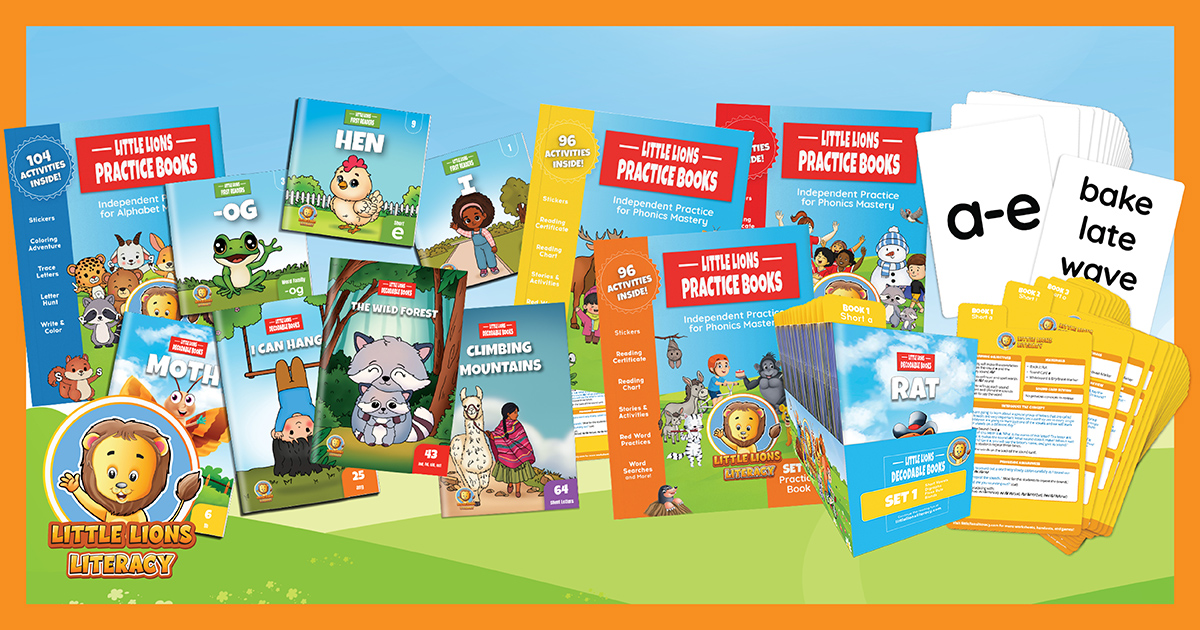
Below is a comprehensive CVC words list organized by short vowel. Use these lists for phonics practice, spelling dictation, word sorts, and reading warm-ups.
| bat | cat | fat | hat | mat |
| pat | rat | sat | van | can |
| fan | man | pan | ran | tan |
| bag | gag | nag | rag | tag |
| wag | bad | dad | had | lad |
| mad | pad | sad | cab | dab |
| jab | lab | nab | tab | cap |
| gap | lap | map | nap | rap |
| sap | tap | zap | jam | ham |
| bed | fed | led | red | wed |
| ben | den | hen | men | pen |
| ten | bet | get | jet | let |
| met | net | pet | set | vet |
| wet | beg | keg | leg | peg |
| pep | rep | web | gem | hem |
The short i sound appears in hundreds of common words. Here are the most useful CVC words with short i:
| sit | bit | fit | hit | kit |
| lit | pit | wit | bin | din |
| fin | kin | pin | sin | tin |
| win | big | dig | fig | jig |
| pig | rig | wig | dip | hip |
| lip | nip | rip | sip | tip |
| zip | bid | did | hid | kid |
| lid | rid | dim | him | rim |
| bib | fib | rib | fix | mix |
| six |
| dog | fog | hog | jog | log |
| hot | cot | dot | got | lot |
| not | pot | rot | tot | cop |
| hop | mop | pop | top | bob |
| cob | job | mob | rob | sob |
| box | fox | cod | god | nod |
| rod | mom | con | don | son |
| cup | pup | bus | gus | pus |
| run | bun | fun | gun | nun |
| sun | bug | dug | hug | jug |
| mug | pug | rug | tug | but |
| cut | gut | hut | jut | nut |
| put | rut | tub | cub | hub |
| pub | rub | sub | bud | dud |
| mud | gum | hum | rum | sum |
Teaching CVC words is most effective when you move from hearing sounds to reading words to reading connected text. Here are five strategies backed by the science of reading.
Before children read CVC words on a page, they need to hear the individual sounds inside spoken words. Say a word like “cat” and ask your child to tap out each sound: /k/ — /ă/ — /t/. Use three fingers, three counters, or three blocks — one for each sound. This phonemic awareness skill is the foundation of all decoding.
Blending is the act of pushing sounds together to form a word. Point to each letter in a CVC word and model the sounds slowly: “/s/… /ĭ/… /t/… sit.” Then have your child try. Start with continuous sounds (like /s/, /m/, /f/) because they are easier to stretch and blend than stop sounds (like /b/, /t/, /k/).
Word families (like -at, -in, -op) help children see that changing just one letter creates a new word. Write cat on a whiteboard, then swap the first letter to make bat, hat, mat, sat. This builds speed and shows children that reading is predictable.
Hands-on manipulation reinforces the connection between sounds and letters. Give your child letter tiles and ask them to build specific CVC words. Then ask them to change one letter to make a new word: “Change cat to cot. What letter did you swap?” This multisensory approach helps the learning stick.
The most important step is giving children books they can actually read. Decodable books use only the phonics patterns a child has learned, so every word on the page is within reach. The Little Lions First Readers are designed specifically for this stage, with simple short vowel CVC stories that build fluency through repetition and engaging storylines. 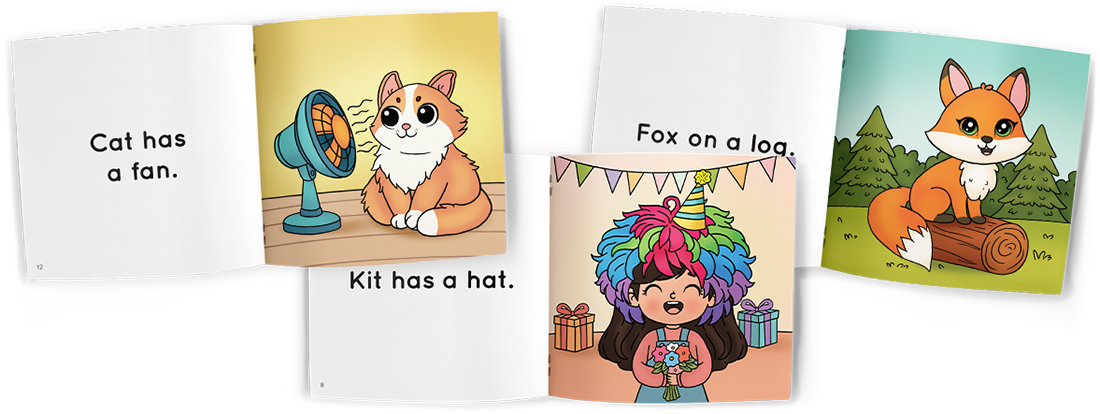
Once your child understands the concept of blending, these activities provide the practice they need to become automatic:
Once children can read CVC words fluently, the next major milestone is CVCe words — also called “silent e” or “magic e” words. In a CVCe word, a silent e at the end of the word changes the short vowel to a long vowel:
| CVC Word (Short Vowel) | CVCe Word (Long Vowel) |
|---|---|
| cap | cape |
| bit | bite |
| hop | hope |
| cub | cube |
| pin | pine |
| kit | kite |
| rod | rode |
| tub | tube |
This transition is smoother when children have a strong CVC foundation. They already understand that the vowel makes a sound — now they simply learn that adding an e changes which sound it makes. Many children find this “magic e” concept exciting because it gives them a clear rule for reading longer words. Between CVC and CVCe, children also begin working with consonant blends (like stop, clap, best) and digraphs (like ship, chip, then). Each new pattern builds directly on the CVC decoding skills they have already mastered. 
CVC words are where reading begins. With the right instruction, word lists, and plenty of practice, every child can learn to decode these foundational words with confidence. The key is giving children books that match their current skill level. The Little Lions First Readers feature simple CVC stories designed to build fluency step by step — from rhyming word families to short vowel decoding to high-frequency sight words. Each set gives your child exactly the practice they need at each stage.  Explore the Little Lions First Readers → For a complete early reading bundle, explore the First Readers 3 Set Bundle.
CVC stands for consonant-vowel-consonant. It describes the letter pattern in simple three-letter words like cat, bed, sit, dog, and cup.
Common CVC words include cat, bat, hat (short a); bed, red, pen (short e); sit, hit, pin (short i); dog, hot, mop (short o); and cup, bus, run (short u). Use the CVC word list in the previous section as a ready-made resource for daily phonics practice, spelling tests, and reading warm-ups. Each vowel group listed above is a complete CVC word list for that short vowel sound.
Most children are ready to begin reading CVC words in pre-kindergarten or kindergarten, once they know the letter names and sounds of the alphabet. This typically happens around ages 4 to 6.
There are roughly 200 to 250 common CVC words in English. Each short vowel sound has about 40 to 50 usable CVC words. The five word lists above cover the most useful ones for teaching beginning readers at preschool, kindergarten, and first-grade levels.
CVC words have a short vowel sound (cap, bit, hop). CVCe words add a silent e at the end that changes the vowel to its long sound (cape, bite, hope).
Pick one short vowel group each day. Read the words aloud with your child, then pick 3 to 5 words for a quick activity: sound out each letter, write the word, and use it in a sentence. Rotate through the short vowel groups across the week so children get repeated exposure to each vowel sound.
CVC word lists are most commonly used in kindergarten and first grade, when children are learning to blend letter sounds into words. Many preschool programs and some second-grade classrooms also use CVC word lists for review or intervention with struggling readers.
Yes. The word lists above are designed for classroom and at-home use. Copy words from the tables for flashcards, word sorts, or dictation practice. Start with one short-vowel group and work through one vowel sound at a time.