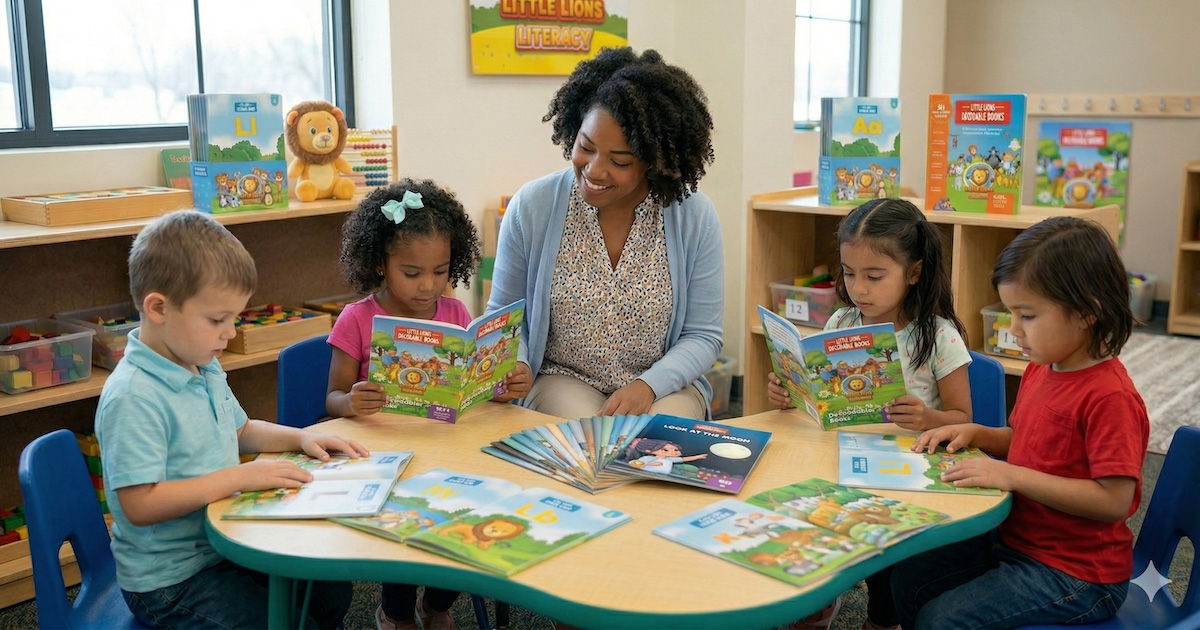
For a six-year-old just starting their reading journey, confidence is everything. When a child feels successful, they want to keep trying. But many early readers encourage guessing from pictures, which can make a child feel like reading is just a memory game they aren’t good at. Decodable books are the perfect antidote. They are designed to ensure success because every word is made up of letter-sound patterns your child has already learned. Each page they read reinforces their skills and proves to them that they are a reader. This positive feedback loop is essential for building a genuine love for reading. Choosing high-quality decodable books for 6 year olds is about giving them a chance to feel that amazing sense of accomplishment, page after page. So let’s find the best decodable books for 6-year-olds.
Have you ever sat with your six-year-old, listening to them try to sound out a word in a so-called “beginner” book, only to realize the words are completely random? It’s a frustrating experience for both of you and can quickly zap their confidence. This is where decodable books come in, and they are a total game-changer for early literacy. Think of them as a perfectly designed practice field for new readers. Instead of containing unpredictable words, these books are carefully written using only the letter sounds and phonics rules your child has already been taught.
This intentional design is what makes them so effective. It means your child can actually read the book by applying their new skills, rather than guessing from pictures or trying to memorize whole words. Each page gives them a chance to succeed, turning what could be a frustrating moment into a confident “I did it!” experience. Decodable books are more than just stories; they are a strategic tool that transforms abstract phonics lessons into tangible reading success. They build a bridge between knowing letter sounds and reading sentences smoothly, giving your child the targeted practice they need to become a fluent, happy reader. For a six-year-old, this sense of accomplishment is everything, setting the stage for a positive relationship with books.
Decodable books are a core component of a literacy approach backed by decades of research, often called the Science of Reading. The “how” is actually quite simple: these books give children a chance to practice what they’ve learned in a controlled setting. They are built with a specific vocabulary that aligns with a phonics sequence, introducing new letter-sound patterns gradually. This means your child won’t encounter words with tricky spelling patterns they haven’t been taught yet. Their main purpose is to help kids learn to sound out words using the reading code, rather than guessing. This systematic practice is what builds strong neural pathways for reading in the brain.
Every time your child successfully reads a decodable book, they are laying another brick in their phonics foundation. This repeated success does more than just teach them to read; it builds their confidence and shows them that they are readers. As they practice decoding words that follow predictable patterns, their reading becomes smoother and more automatic, which is what experts call fluency. The ultimate goal of reading is always comprehension, or understanding the story. By mastering the mechanics of reading with decodable book sets, your child can free up their mental energy to focus on what the words actually mean. This positive feedback loop helps create a genuine love for reading from the very start.
With so many options out there, it can be tough to figure out which decodable books are truly effective. Not all are created equal, and the right ones can make a world of difference in your child’s reading journey. The best decodable books do more than just teach phonics; they build confidence, spark curiosity, and make reading feel like an adventure, not a chore.
So, what should you look for? It really comes down to three key things: a smart, structured approach to phonics, stories that are actually fun to read, and a clean, inviting design. Think of it as a simple checklist. If a book or series ticks these three boxes, you can feel confident that you’re giving your child a powerful tool for success. These elements work together to create a positive and effective learning experience, helping your little one move from sounding out letters to reading words with pride.
The most important feature of a high-quality decodable book is a clear and logical phonics progression. This means the books introduce new letter sounds and patterns in a specific, systematic order. Each new book builds directly on the skills learned in the last one, like adding blocks to a tower. This structure is a core principle of the Science of Reading, ensuring children are only asked to read words containing sounds they’ve already been taught. This careful progression prevents frustration and helps your child build momentum and confidence with every page they turn.
Let’s be honest: if a book is boring, your child won’t want to read it. The best decodable books prove that you don’t have to sacrifice a good story for the sake of phonics practice. Look for books with fun, relatable characters and simple, engaging plots. When a child is invested in what happens next, they’re more motivated to work through challenging words. The goal is to make reading practice feel like storytime. A captivating narrative turns decoding from a task into a joyful experience, fostering a genuine love of reading that will last a lifetime.
Visuals play a huge role in keeping young readers engaged. High-quality decodable books feature bright, appealing illustrations that support the story without giving the words away. The pictures should add context and make the book more exciting, but still encourage your child to do the work of decoding the text. Just as important is the layout of the page. Look for a clean, easy-to-read font, plenty of white space, and only a few sentences per page. This simple, uncluttered design prevents young readers from feeling overwhelmed and makes the task of reading feel manageable and fun.
When you’re ready to find decodable books for your six-year-old, you’ll notice you can buy them as single stories or as a complete series. While a single book can be a great way to test the waters, investing in a full series is one of the best ways to support your child’s reading journey. A series provides a clear, structured path from the simplest letter sounds to more complex words, ensuring your child builds their skills without frustrating gaps. Think of it as a roadmap for reading success, where each book is a planned stop along a carefully designed route.
The best decodable book series are built on a complete, step-by-step system. This means the books follow a specific phonics scope and sequence, introducing new letter-sound relationships in a logical order. Each new book builds directly on the skills learned in the previous one. This systematic approach is a core principle of the Science of Reading, which uses proven methods to teach children how to read effectively. When a series is designed this way, you can feel confident that you’re giving your child consistent, research-based practice. It takes the guesswork out of the process and ensures a strong foundation is built, one skill at a time.
A great decodable series is designed to grow with your child. As your little one masters short vowel sounds, the next set of books should be ready to introduce concepts like consonant digraphs (like ‘sh’ and ‘ch’) or silent ‘e’. This gradual increase in difficulty keeps them challenged but not overwhelmed, which is key for building confidence. Our Little Lions Decodable Book Sets are structured to follow this exact progression. This seamless transition from one level to the next helps your child feel a sense of accomplishment and momentum, making them excited to see what they can read next.
While it can be tempting to pick up a single early reader from the bookstore, a full series offers a more cohesive learning experience. A standalone decodable book might introduce phonics skills your child hasn’t learned yet, leading to confusion. A series, on the other hand, guarantees that every book aligns perfectly with your child’s current reading level. This consistency helps make reading a joyful and successful experience. By providing a clear path forward, a full series helps you and your child celebrate every milestone as they work their way through the set, turning learning to read into an exciting adventure.
When you’re trying to help a six-year-old learn to read, walking into the early reader section of a library or bookstore can feel overwhelming. You’ll see books labeled with letters, numbers, and terms like “decodable” or “leveled.” It’s easy to wonder if you’re picking the right one. Understanding the fundamental differences between these books is one of the best things you can do to support your child’s reading journey.
The two main categories you’ll encounter are decodable readers and leveled readers. While both are designed for beginners, they are built on very different ideas about how children learn to read. Choosing the right type of book at the right time can make the difference between a child who feels confident and one who feels frustrated. Let’s break down what sets them apart and how to use them effectively.
Think of decodable books as the perfect practice field for a new reader. They are carefully written using only the letter-sound patterns your child has already been taught. If your child has learned the sounds for s, a, t, p, i, and n, they’ll get a book filled with words like “sat,” “pin,” and “tap.” This controlled approach allows them to practice their new phonics skills and build confidence by successfully sounding out words. The focus is on decoding, not guessing.
Leveled readers, on the other hand, are organized by a gradient of difficulty (often labeled with letters or numbers). They tend to rely on repetitive sentence structures and picture clues to help a child read. These books often include words that a child has not yet learned how to decode, which can encourage them to guess based on the first letter or the illustration. While they can be fun to share, they don’t systematically build the decoding foundation that is essential for long-term reading success.
So, how do you know which book to hand your child? It’s simple: always use decodable texts when your child is learning and practicing new phonics patterns. This is their time to apply what they’re learning in a safe, controlled context where they can succeed. This practice is what solidifies their skills and turns them into a confident reader who trusts their ability to sound out new words.
The goal isn’t to use decodable books forever. They are the essential bridge that gets your child from learning letter sounds to reading authentic children’s literature. Strong decoding is the key to comprehension; after all, a child can’t understand a story if they can’t accurately read the words on the page.
Choosing the right decodable book can feel like a big decision, but it doesn’t have to be complicated. The goal is to find books that fit your child’s current abilities so they can move forward with confidence. Think of it as a partnership: you provide the right tools, and your child gets to experience the joy of successfully reading on their own. This simple checklist will help you select books that support your 6-year-old’s reading journey, turning practice time into a positive and empowering experience.
The most important job of a decodable book is to give your child a chance to practice the specific phonics skills they’re learning. If they just learned about short vowel sounds, their book should be full of words like ‘cat,’ ‘pen,’ and ‘sit.’ This direct application is what cements new skills and builds true reading confidence. When a book contains too many unfamiliar patterns, children often resort to guessing from pictures or the first letter, which can lead to frustration. A book that lines up perfectly with their current knowledge allows them to say, “I know how to read this!” and feel that amazing sense of accomplishment.
High-quality decodable books use what’s called a “controlled vocabulary.” This just means the words are carefully chosen to include only the letter-sound patterns your child has already been taught, along with a few essential high-frequency words. This structure ensures they are actually decoding, not just memorizing. Look for a series that offers a gradual progression, where each book or set introduces a new skill while reinforcing the old ones. This systematic approach builds a solid foundation, preventing gaps in their learning and making the process feel manageable and rewarding for your young reader.
How do you know when it’s time to move up? Watch for signs of confidence and ease. If your child is reading their current books smoothly, with good accuracy and understanding, they’re likely ready for a new challenge. You’ll notice they spend less time sounding out individual words and start reading with more natural expression. This growing reading fluency is a clear signal that they have mastered the skills at their current level. The goal isn’t to rush through the books, but to keep them in that sweet spot of learning where the text is challenging enough to be interesting but not so difficult that it becomes discouraging.
Choosing the right decodable books is one of the most important things you can do to support your child’s reading journey. Think of it as an investment in their confidence and future academic success. When a child has access to a systematic collection of books that match their growing skills, they feel capable and motivated to keep learning. This is why looking beyond single books and considering a complete set can make all the difference, ensuring you have the right tools on hand at every step.
When you’re helping a child learn to read, the last thing you want to do is scramble to find the right book for their next phonics skill. Investing in a complete set of decodable books takes the guesswork out of the equation. These collections are designed to grow with your child, starting with simple sounds and gradually introducing more complex patterns in a logical order. This systematic approach ensures there are no gaps in their learning. Buying a complete decodable library is often more cost-effective than purchasing books one by one, and it provides a cohesive learning experience that builds a strong and lasting foundation for reading.
We know that teachers are often working with limited budgets to supply their classrooms with high-quality materials. Equipping a classroom with consistent, effective literacy resources is key to supporting every student. That’s why we work directly with schools and districts to make our decodable books as accessible as possible. If you are an educator looking to bring a full phonics-based system into your classroom, we encourage you to learn more about our school and district partnerships. We can help you find the right classroom sets and provide information on bulk pricing to fit your school’s needs, ensuring your students have the tools they need to become confident readers.
Turning reading practice into a positive and cherished part of your day doesn’t require a magic wand. With a few simple strategies, you can create an environment at home that supports your child’s journey and helps them fall in love with books. The goal is to make reading feel less like a chore and more like a special time for connection and discovery. It’s about showing your six-year-old that reading is an adventure, not a test. When you approach reading time with enthusiasm and patience, you set the stage for success. This positive foundation is crucial, as it helps your child build the confidence they need to tackle new words and stories.
Many parents worry about doing it “right,” but the most important thing is to be present and encouraging. Your child will pick up on your attitude toward reading. If you treat it as a fun and exciting activity, they are more likely to feel the same way. By focusing on creating a supportive atmosphere, you can help your little reader build skills that will last a lifetime. The following tips are designed to be simple and effective, helping you transform your home into the perfect place for your child’s reading adventures to begin. Remember, you are your child’s first and most important teacher, and your support makes all the difference in their literacy journey.
The best way to support your child is to make reading an interactive and low-pressure activity. When they’re reading a decodable book, they get a chance to practice the specific phonics rules they’ve been learning. Let them lead the way by sounding out words. If they get stuck, gently guide them by pointing to the letters and making the sounds with them. Celebrate their effort, not just their perfection! Ask fun questions about the story and the pictures to keep them engaged. This approach reinforces their skills and shows them that their hard work is paying off, which is a huge confidence builder for any new reader.
You can make reading feel like a special treat by creating a dedicated space for it. A cozy reading nook doesn’t have to be elaborate; a pile of comfy pillows in a quiet corner, a soft beanbag chair, or even a tent made from blankets can do the trick. The key is to make it comfortable and inviting. Stock the space with their favorite decodable book sets so they are always within reach. Having a special spot just for reading helps build positive associations and signals that it’s time to relax and enjoy a story together. It makes reading a destination, not just an activity.
If your child is hesitant to read, remember that patience and positivity are your best tools. Often, a reluctant reader just needs to feel successful to get motivated. This is where the structured nature of decodable books really shines. Because they use research-based, systematic phonics, they provide a clear path for kids to follow. Try taking turns reading pages, or let them read only the words they feel confident about while you handle the rest. Keep sessions short and sweet to avoid frustration. The goal is to build positive momentum and show them that they can do it, one word at a time.
How do I know which decodable book to start with? The best place to start is with a book that matches the phonics skills your child already knows. If they are just learning short vowel sounds, like the ‘a’ in ‘cat’, find a book set that focuses on those words. The goal is to give them an immediate sense of success. It’s always better to begin with a book that feels a little too easy than one that is too hard and causes frustration.
My child seems to just memorize words. Do they still need decodable books? Memorizing words can seem like a great shortcut, but it isn’t a reliable strategy for the long run. True reading happens when a child can confidently sound out a word they have never seen before. Decodable books are designed to build that essential decoding skill, giving your child a powerful tool to tackle any new word they encounter.
How long will my child need to use decodable books? Think of decodable books as training wheels for reading. They are a temporary but crucial tool to help your child master the mechanics of reading. Once they can confidently sound out words with a variety of phonics patterns and are reading with more fluency, they will naturally be ready to transition to reading a wider range of children’s literature independently.
What if my child gets frustrated and doesn’t want to read them? Frustration is usually a sign that the book is a bit too challenging for their current skill level. If this happens, take a step back to an easier book where they can feel successful again. It also helps to keep practice sessions short and positive. You can take turns reading pages or simply celebrate their effort in trying. The goal is to build positive momentum, not to create a power struggle.
Are decodable books supposed to replace reading regular picture books together? Absolutely not. Reading engaging picture books aloud to your child is one of the most important things you can do to build their vocabulary, comprehension, and overall love for stories. Think of it this way: decodable books are for your child’s reading practice, while reading beautiful picture books together is for connection and enjoyment. You should definitely keep both as part of your routine.